GM Allocates $242 Million to Expand Skilled Trades Apprenticeship Program
General Motors Chair and CEO Mary Barra discusses the impact of auto tariffs and building the business on ‘The Claman Countdown.’
The skilled trades workforce, essential for maintaining the nation’s infrastructure and economy, is facing a significant decline.
In response to this pressing issue, General Motors has committed hundreds of millions of dollars to cultivate its own future workforce. Over the past five years, the automaker has invested more than $242 million in its skilled trades apprenticeship program, aimed at training the next generation of skilled trade professionals. This initiative combines classroom instruction with thousands of hours of hands-on experience at GM facilities, as explained by Michael Trevorrow, GM’s senior vice president of global manufacturing, in an interview with FOX Business.
Apprentices in the program receive up to 672 hours of related technical instruction in a classroom setting, alongside approximately 7,920 hours of on-the-job training under the guidance of a qualified skilled tradesperson. The program covers various focus areas, including diemaker, electrician, experimental assembler inspector, experimental laboratory paint technician, millwright, metal model maker, wood model maker, pattern maker, pipefitter, toolmaker, and machine repair.
FREEDOM ECONOMY RISING: WHY SKIPPING COLLEGE MAY BE THE SMARTEST CAREER MOVE
Interestingly, Trevorrow himself began his career through the apprenticeship program, progressing from a diemaker apprentice to overseeing GM’s global manufacturing operations. Each year, around 600 apprentices graduate from the program, gaining a journeyperson card that certifies their completion of the apprenticeship and qualifies them to work independently in their skilled trade. Veterans entering the program may even complete it in a shorter timeframe due to their prior experience.
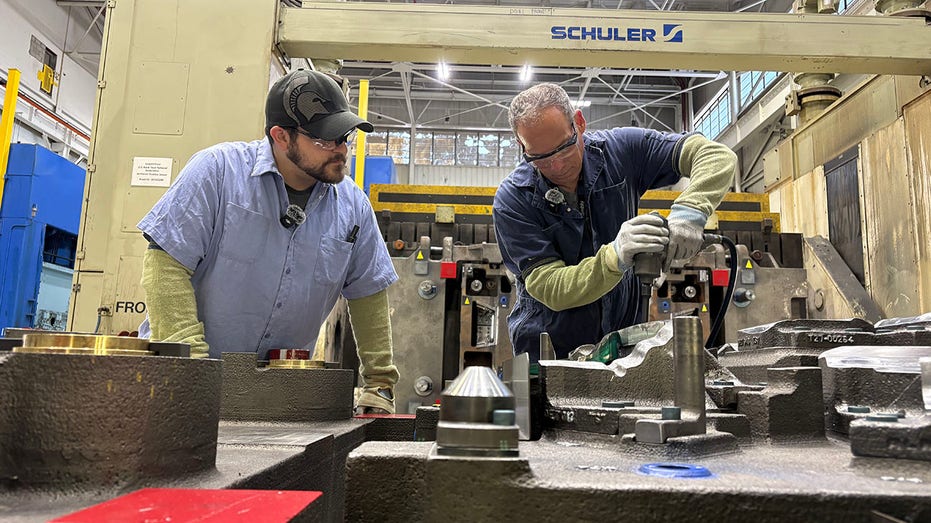
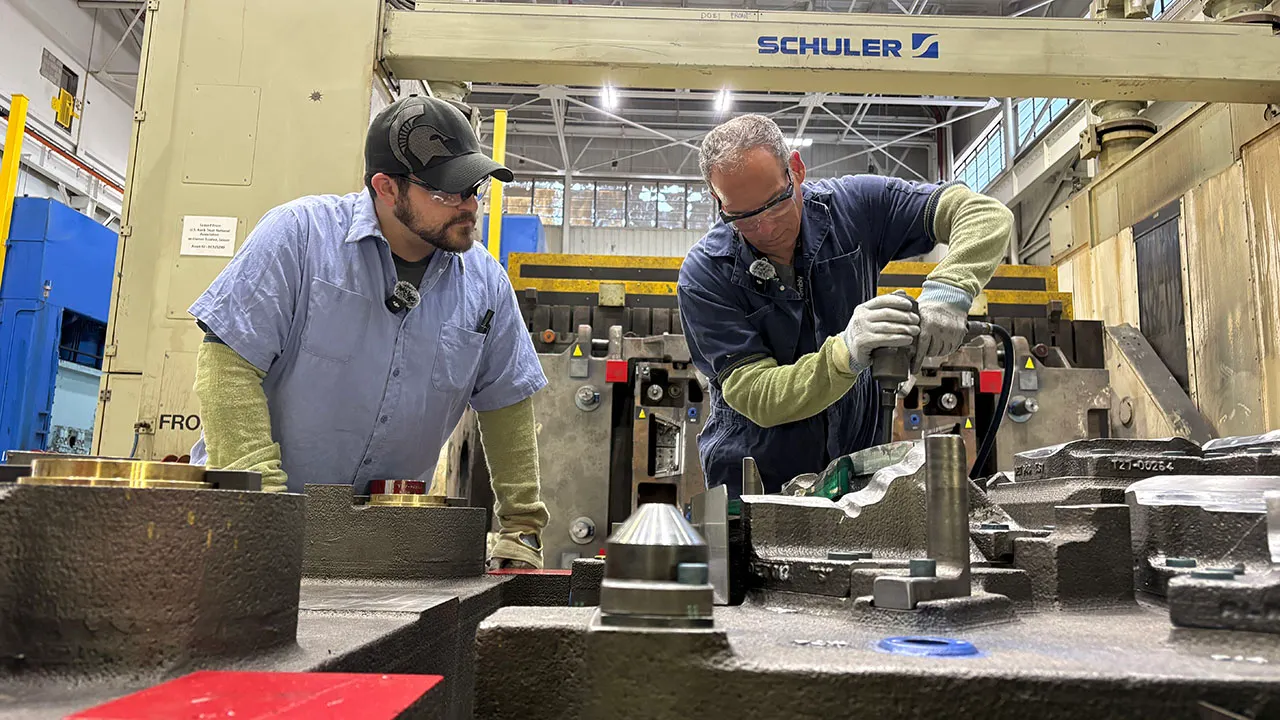
Michael Trevorrow, GM’s senior vice president of global manufacturing, is adjusting part of a metal mold so it fits exactly with the matching top piece. (General Motors)
NVIDIA LEADS AMERICA’S AI ‘INDUSTRIAL REVOLUTION’ WITH MAJOR MANUFACTURING MOVE
Participants in the apprenticeship program not only gain valuable skills but also receive compensation during their training, making it a worthwhile investment for their future. “It’s an investment in the future,” Trevorrow emphasized. “It isn’t what you need tomorrow. It’s about forecasting what you’ll need over the next 10 years.”
This initiative comes at a critical time when the U.S. is grappling with a shortage of skilled labor. A significant number of experienced workers are nearing retirement, and there aren’t enough young workers to fill their shoes. A report from Georgetown University highlights the ongoing skills shortages in essential occupations across the U.S. economy, revealing an unmet demand for workers with the necessary postsecondary credentials.
THINK TANK PRESIDENT URGES GEN Z TO CONSIDER TRADES OVER COLLEGE IN TOUGH JOB MARKET
From 2024 to 2032, approximately 18.4 million experienced workers with postsecondary education are expected to retire, surpassing the 13.8 million younger workers entering the labor market with similar qualifications. During this period, the U.S. economy is projected to add 685,000 new jobs requiring postsecondary education and training.
The National Association of Manufacturers, The Manufacturing Institute, and Deloitte estimate that the manufacturing skills gap could result in 2.1 million unfilled jobs by 2030, potentially costing the economy around $1 trillion.
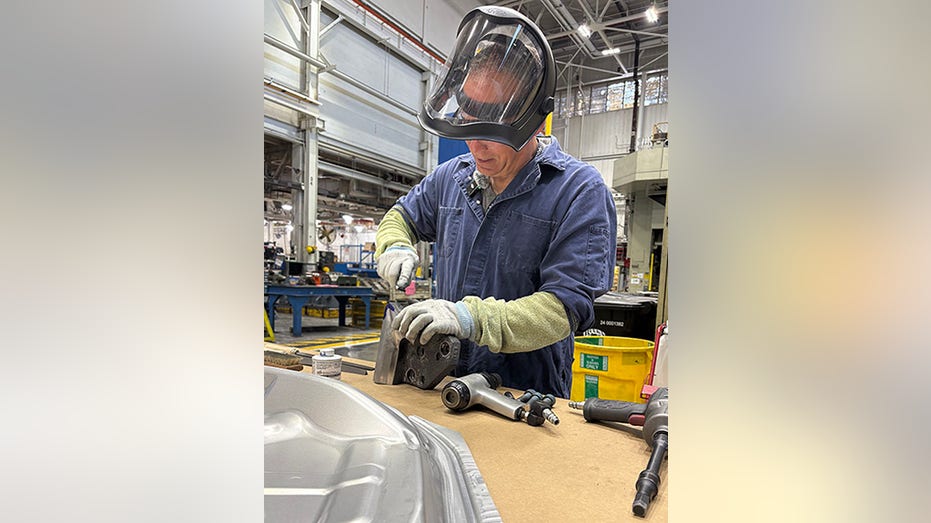
Over the past five years alone, General Motors has invested over $242 million in its skilled trades apprenticeship program. (General Motors)
Paul Wellener, former Deloitte vice chairman and U.S. industrial products and construction leader, expressed concern over the growing number of vacant entry-level manufacturing positions at a time when jobs are in high demand nationwide.
General Motors is not only focusing on adults and veterans transitioning from military service. A significant part of their initiative involves introducing younger generations to career opportunities in automotive manufacturing. GM volunteers engage with communities to expose children from kindergarten through 12th grade to various career paths available in the industry.
TREASURY’S BESSENT SAYS HE DOESN’T SUPPORT SUSPENDING MONTHLY JOBS REPORT
This outreach includes bringing groups of students through GM plants to showcase modern manufacturing, which Trevorrow describes as thousands of robots “working like a symphony.” GM employees also visit schools to assist students with engineering projects, such as building model cars, aiming to instill knowledge about quality, standardized work, and problem-solving.
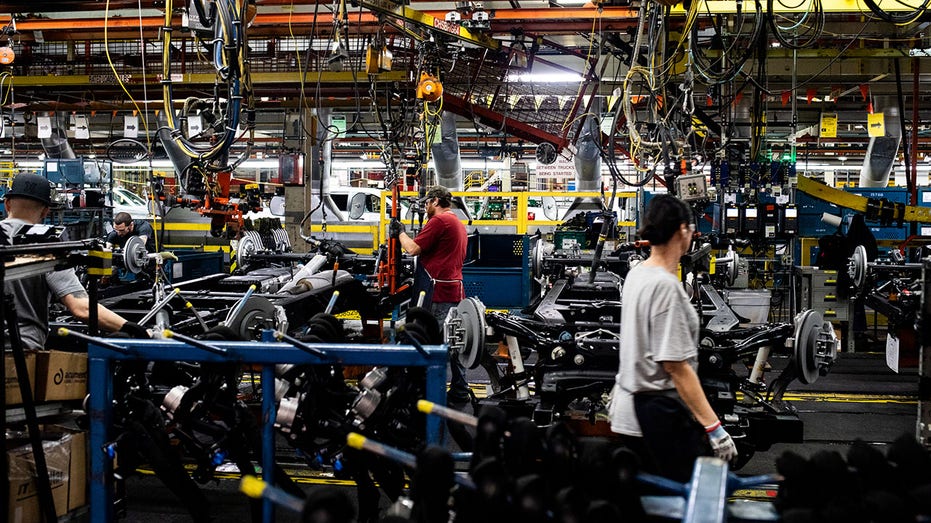
Workers assemble chassis parts for vehicle frames at the General Motors assembly plant in Fort Wayne, Indiana. (Emily Elconin/Bloomberg via Getty Images)
Additionally, General Motors is enhancing the skills of its current workforce through its Technical Learning University, which trains about 2,500 employees annually. This facility allows workers to experiment with new technologies in a hands-on environment, featuring real systems that mirror those used in production plants. Employees from across North America are brought to this facility to learn from subject-matter experts, ensuring they are well-prepared for the evolving demands of the industry.
“As technology improves, we strive to upskill everyone to leverage these advancements, enhancing the quality of our vehicles and increasing efficiency, ultimately benefiting our customers,” Trevorrow stated.
General Motors Chair and CEO Mary Barra discusses the impact of auto tariffs and building the business on ‘The Claman Countdown.’
The skilled trades workforce, essential for maintaining the nation’s infrastructure and economy, is facing a significant decline.
In response to this pressing issue, General Motors has committed hundreds of millions of dollars to cultivate its own future workforce. Over the past five years, the automaker has invested more than $242 million in its skilled trades apprenticeship program, aimed at training the next generation of skilled trade professionals. This initiative combines classroom instruction with thousands of hours of hands-on experience at GM facilities, as explained by Michael Trevorrow, GM’s senior vice president of global manufacturing, in an interview with FOX Business.
Apprentices in the program receive up to 672 hours of related technical instruction in a classroom setting, alongside approximately 7,920 hours of on-the-job training under the guidance of a qualified skilled tradesperson. The program covers various focus areas, including diemaker, electrician, experimental assembler inspector, experimental laboratory paint technician, millwright, metal model maker, wood model maker, pattern maker, pipefitter, toolmaker, and machine repair.
FREEDOM ECONOMY RISING: WHY SKIPPING COLLEGE MAY BE THE SMARTEST CAREER MOVE
Interestingly, Trevorrow himself began his career through the apprenticeship program, progressing from a diemaker apprentice to overseeing GM’s global manufacturing operations. Each year, around 600 apprentices graduate from the program, gaining a journeyperson card that certifies their completion of the apprenticeship and qualifies them to work independently in their skilled trade. Veterans entering the program may even complete it in a shorter timeframe due to their prior experience.
Michael Trevorrow, GM’s senior vice president of global manufacturing, is adjusting part of a metal mold so it fits exactly with the matching top piece. (General Motors)
NVIDIA LEADS AMERICA’S AI ‘INDUSTRIAL REVOLUTION’ WITH MAJOR MANUFACTURING MOVE
Participants in the apprenticeship program not only gain valuable skills but also receive compensation during their training, making it a worthwhile investment for their future. “It’s an investment in the future,” Trevorrow emphasized. “It isn’t what you need tomorrow. It’s about forecasting what you’ll need over the next 10 years.”
This initiative comes at a critical time when the U.S. is grappling with a shortage of skilled labor. A significant number of experienced workers are nearing retirement, and there aren’t enough young workers to fill their shoes. A report from Georgetown University highlights the ongoing skills shortages in essential occupations across the U.S. economy, revealing an unmet demand for workers with the necessary postsecondary credentials.
THINK TANK PRESIDENT URGES GEN Z TO CONSIDER TRADES OVER COLLEGE IN TOUGH JOB MARKET
From 2024 to 2032, approximately 18.4 million experienced workers with postsecondary education are expected to retire, surpassing the 13.8 million younger workers entering the labor market with similar qualifications. During this period, the U.S. economy is projected to add 685,000 new jobs requiring postsecondary education and training.
The National Association of Manufacturers, The Manufacturing Institute, and Deloitte estimate that the manufacturing skills gap could result in 2.1 million unfilled jobs by 2030, potentially costing the economy around $1 trillion.
Over the past five years alone, General Motors has invested over $242 million in its skilled trades apprenticeship program. (General Motors)
Paul Wellener, former Deloitte vice chairman and U.S. industrial products and construction leader, expressed concern over the growing number of vacant entry-level manufacturing positions at a time when jobs are in high demand nationwide.
General Motors is not only focusing on adults and veterans transitioning from military service. A significant part of their initiative involves introducing younger generations to career opportunities in automotive manufacturing. GM volunteers engage with communities to expose children from kindergarten through 12th grade to various career paths available in the industry.
TREASURY’S BESSENT SAYS HE DOESN’T SUPPORT SUSPENDING MONTHLY JOBS REPORT
This outreach includes bringing groups of students through GM plants to showcase modern manufacturing, which Trevorrow describes as thousands of robots “working like a symphony.” GM employees also visit schools to assist students with engineering projects, such as building model cars, aiming to instill knowledge about quality, standardized work, and problem-solving.
Workers assemble chassis parts for vehicle frames at the General Motors assembly plant in Fort Wayne, Indiana. (Emily Elconin/Bloomberg via Getty Images)
Additionally, General Motors is enhancing the skills of its current workforce through its Technical Learning University, which trains about 2,500 employees annually. This facility allows workers to experiment with new technologies in a hands-on environment, featuring real systems that mirror those used in production plants. Employees from across North America are brought to this facility to learn from subject-matter experts, ensuring they are well-prepared for the evolving demands of the industry.
“As technology improves, we strive to upskill everyone to leverage these advancements, enhancing the quality of our vehicles and increasing efficiency, ultimately benefiting our customers,” Trevorrow stated.