What is the Nordic diet? What to eat and benefits

The Nordic diet emphasizes locally sourced and seasonal foods, mirroring the challenging climates of Nordic countries such as Denmark, Finland, Iceland, Norway, and Sweden.
According to Deborah Grayson, a Pharmacist and Nutritional Therapist at Practice With Confidence, the essence of the Nordic diet lies in consuming what naturally grows in the region. This approach not only promotes sustainability but also minimizes environmental impact.
“For instance, root vegetables like potatoes, turnips, and carrots are staples during the colder months,” she explains. “In contrast, summer brings an abundance of berries, including lingonberries and cloudberries.”
This diet also highlights traditional food preservation techniques, such as pickling and smoking, which are integral to Nordic culinary practices.
What is the Nordic diet?
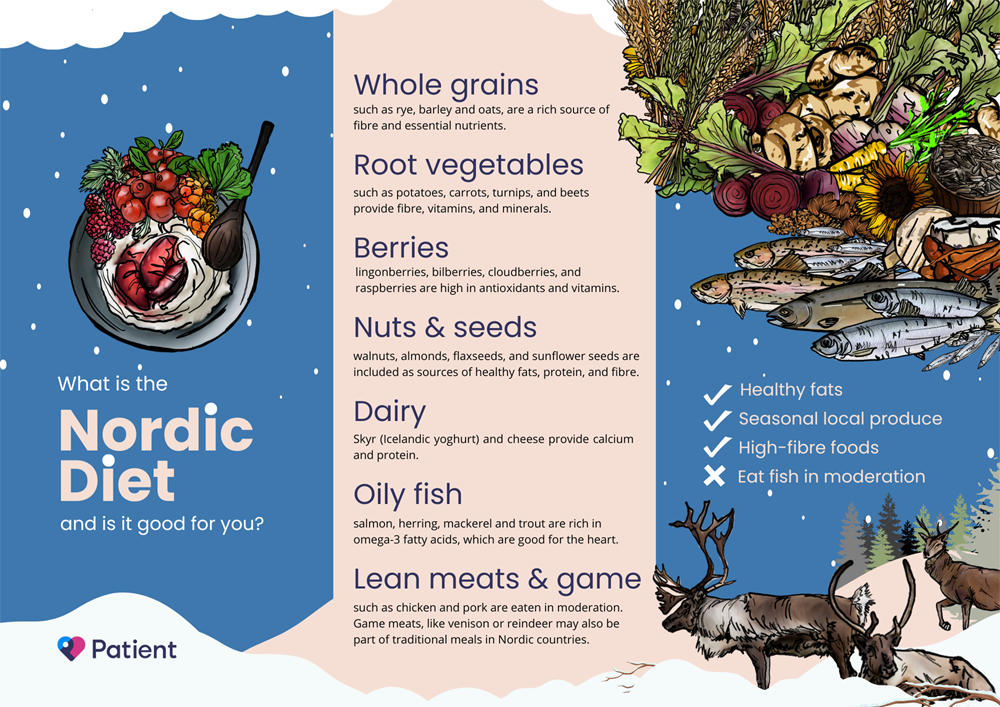
Graphic: Ben Hudson
The main components of the Nordic diet share similarities with other well-known diets, such as the Mediterranean diet. However, it distinguishes itself by focusing on foods suited to colder climates, including root vegetables, game meats, and seasonal produce.
Grayson outlines the Nordic diet’s main components:
-
Wholegrains – such as rye, barley, and oats, which are rich in fiber and packed with essential nutrients.
-
Oily fish – staples like salmon, herring, mackerel, and trout are rich in omega-3 fatty acids, beneficial for heart health.
-
Root vegetables – including potatoes, carrots, turnips, and beets, which provide fiber, vitamins, and minerals.
-
Berries – such as lingonberries, bilberries, cloudberries, and raspberries, high in antioxidants and vitamins.
-
Dairy – important sources of calcium and protein, including yoghurt, Skyr (Icelandic yoghurt), and cheese.
-
Lean meats and game – consumed in moderation, including chicken, pork, and traditional game meats like venison or reindeer.
-
Nuts and seeds – such as walnuts, almonds, flaxseeds, and sunflower seeds, providing healthy fats, protein, and fiber.
-
Healthy fats – emphasizing fish oils, rapeseed oil, and moderate amounts of butter for balanced fat intake.
-
Seasonal and local produce – focusing on fruits and vegetables that are in season, such as cabbage, apples, and leeks during colder months.
The Nordic diet prioritizes fresh, seasonal, and whole foods while minimizing or eliminating processed foods, sugary snacks, and refined grains.
Grayson notes, “The focus is on healthy fats from fish, oils, and nuts, while limiting processed meats, trans fats, and high-sodium foods.” Additionally, it encourages reducing alcohol and dairy consumption and cutting back on artificial ingredients or additives.
This diet can support healthy weight loss by promoting low-calorie foods like vegetables, berries, and lean proteins.
Grayson explains that the fiber-rich foods in the Nordic diet aid digestion and help you feel full longer. The healthy fats from fish and rapeseed oil support metabolism and curb hunger.
“Fill your plate with non-starchy vegetables such as leafy greens, cabbage, carrots, and cruciferous vegetables like broccoli and cauliflower,” she advises. “While whole grains like rye bread are healthier than processed foods, they should be consumed in moderation if weight loss is your goal, as they can still be high in calories.”
A balanced diet featuring lean proteins, healthy fats, and complex carbohydrates is beneficial for overall well-being. The Nordic diet, in particular, is linked to numerous health benefits.
Grayson highlights these benefits:
-
Improved heart health.
-
Weight management.
-
Blood sugar control.
-
Reduced inflammation.
-
Better gut health.
However, like any diet, the Nordic diet requires a careful balance of nutrients. Grayson warns that consuming more plant-based foods and less protein may lead to deficiencies in vitamin B12, iron, or calcium. Additionally, excessive fish intake can expose you to higher mercury levels; two portions of oily fish per week are generally considered safe.
“Failing to balance portion sizes can also lead to higher fat and calorie consumption,” she adds.
You don’t need to be a Nordic native to enjoy Scandinavian-inspired cuisine. Here are some meal examples for a balanced day inspired by the Nordic diet:
For breakfast: hearty and wholesome oatmeal bowl
Ingredients:
-
Rolled oats.
-
Water or milk – preferably from a local dairy.
-
Mixed berries – such as blackberries, blueberries, and raspberries.
-
Chopped nuts – such as almonds and walnuts.
-
Add local honey to taste.
For lunch: smoked haddock and poached egg on wholemeal toast
For dinner: roasted chicken with root vegetables and brown rice
Ingredients:
-
Free-range chicken seasoned with pepper and fresh thyme – roast with wild garlic.
-
Root vegetables – such as carrots, parsnips, and potatoes – tossed with pepper and hazelnut oil.
-
Brown or wholegrain rice.
By reducing the intake of processed foods, refined sugars, and saturated fats, the Nordic diet can help prevent and manage long-term diseases, support cognitive function, and improve overall health.
Grayson states, “This diet is highly flexible and can be adapted to suit various dietary needs and preferences. Whether you’re following a plant-based diet, need gluten-free options, want to control blood sugar, or are trying to lose weight, the foundational principles of the Nordic diet can be tailored to support your health goals.”
The Nordic diet emphasizes locally sourced and seasonal foods, mirroring the challenging climates of Nordic countries such as Denmark, Finland, Iceland, Norway, and Sweden.
According to Deborah Grayson, a Pharmacist and Nutritional Therapist at Practice With Confidence, the essence of the Nordic diet lies in consuming what naturally grows in the region. This approach not only promotes sustainability but also minimizes environmental impact.
“For instance, root vegetables like potatoes, turnips, and carrots are staples during the colder months,” she explains. “In contrast, summer brings an abundance of berries, including lingonberries and cloudberries.”
This diet also highlights traditional food preservation techniques, such as pickling and smoking, which are integral to Nordic culinary practices.
What is the Nordic diet?
Graphic: Ben Hudson
The main components of the Nordic diet share similarities with other well-known diets, such as the Mediterranean diet. However, it distinguishes itself by focusing on foods suited to colder climates, including root vegetables, game meats, and seasonal produce.
Grayson outlines the Nordic diet’s main components:
-
Wholegrains – such as rye, barley, and oats, which are rich in fiber and packed with essential nutrients.
-
Oily fish – staples like salmon, herring, mackerel, and trout are rich in omega-3 fatty acids, beneficial for heart health.
-
Root vegetables – including potatoes, carrots, turnips, and beets, which provide fiber, vitamins, and minerals.
-
Berries – such as lingonberries, bilberries, cloudberries, and raspberries, high in antioxidants and vitamins.
-
Dairy – important sources of calcium and protein, including yoghurt, Skyr (Icelandic yoghurt), and cheese.
-
Lean meats and game – consumed in moderation, including chicken, pork, and traditional game meats like venison or reindeer.
-
Nuts and seeds – such as walnuts, almonds, flaxseeds, and sunflower seeds, providing healthy fats, protein, and fiber.
-
Healthy fats – emphasizing fish oils, rapeseed oil, and moderate amounts of butter for balanced fat intake.
-
Seasonal and local produce – focusing on fruits and vegetables that are in season, such as cabbage, apples, and leeks during colder months.
The Nordic diet prioritizes fresh, seasonal, and whole foods while minimizing or eliminating processed foods, sugary snacks, and refined grains.
Grayson notes, “The focus is on healthy fats from fish, oils, and nuts, while limiting processed meats, trans fats, and high-sodium foods.” Additionally, it encourages reducing alcohol and dairy consumption and cutting back on artificial ingredients or additives.
This diet can support healthy weight loss by promoting low-calorie foods like vegetables, berries, and lean proteins.
Grayson explains that the fiber-rich foods in the Nordic diet aid digestion and help you feel full longer. The healthy fats from fish and rapeseed oil support metabolism and curb hunger.
“Fill your plate with non-starchy vegetables such as leafy greens, cabbage, carrots, and cruciferous vegetables like broccoli and cauliflower,” she advises. “While whole grains like rye bread are healthier than processed foods, they should be consumed in moderation if weight loss is your goal, as they can still be high in calories.”
A balanced diet featuring lean proteins, healthy fats, and complex carbohydrates is beneficial for overall well-being. The Nordic diet, in particular, is linked to numerous health benefits.
Grayson highlights these benefits:
-
Improved heart health.
-
Weight management.
-
Blood sugar control.
-
Reduced inflammation.
-
Better gut health.
However, like any diet, the Nordic diet requires a careful balance of nutrients. Grayson warns that consuming more plant-based foods and less protein may lead to deficiencies in vitamin B12, iron, or calcium. Additionally, excessive fish intake can expose you to higher mercury levels; two portions of oily fish per week are generally considered safe.
“Failing to balance portion sizes can also lead to higher fat and calorie consumption,” she adds.
You don’t need to be a Nordic native to enjoy Scandinavian-inspired cuisine. Here are some meal examples for a balanced day inspired by the Nordic diet:
For breakfast: hearty and wholesome oatmeal bowl
Ingredients:
-
Rolled oats.
-
Water or milk – preferably from a local dairy.
-
Mixed berries – such as blackberries, blueberries, and raspberries.
-
Chopped nuts – such as almonds and walnuts.
-
Add local honey to taste.
For lunch: smoked haddock and poached egg on wholemeal toast
For dinner: roasted chicken with root vegetables and brown rice
Ingredients:
-
Free-range chicken seasoned with pepper and fresh thyme – roast with wild garlic.
-
Root vegetables – such as carrots, parsnips, and potatoes – tossed with pepper and hazelnut oil.
-
Brown or wholegrain rice.
By reducing the intake of processed foods, refined sugars, and saturated fats, the Nordic diet can help prevent and manage long-term diseases, support cognitive function, and improve overall health.
Grayson states, “This diet is highly flexible and can be adapted to suit various dietary needs and preferences. Whether you’re following a plant-based diet, need gluten-free options, want to control blood sugar, or are trying to lose weight, the foundational principles of the Nordic diet can be tailored to support your health goals.”