Trump Implements ‘Blockade’ on Sanctioned Oil Tankers in Venezuela’s Waters
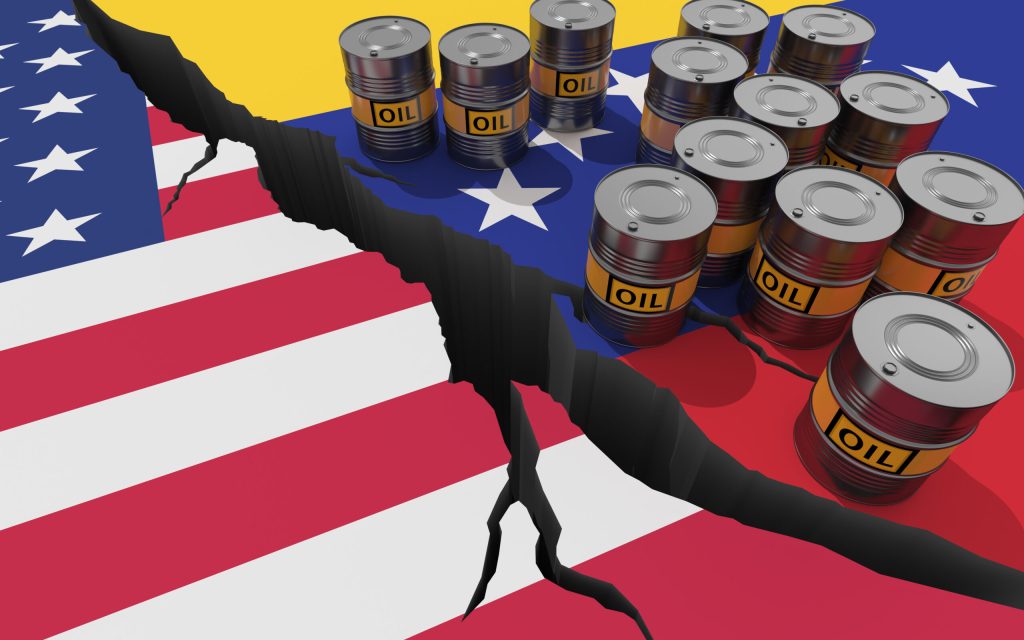
U.S. President Donald Trump has initiated a “blockade” against all sanctioned oil tankers entering and leaving Venezuela, marking a significant escalation in efforts to pressure Nicolás Maduro’s government. This move directly targets Venezuela’s primary source of income—oil exports.
Details on how the blockade will be enforced remain unclear. There is speculation that Trump may utilize the Coast Guard for vessel interdiction, similar to actions taken last week. The U.S. has already deployed thousands of troops and nearly a dozen warships, including an aircraft carrier, to the region.
In a post on Truth Social, Trump stated, “For the theft of our Assets, and many other reasons, including Terrorism, Drug Smuggling, and Human Trafficking, the Venezuelan Regime has been designated a FOREIGN TERRORIST ORGANIZATION. Therefore, today, I am ordering A TOTAL AND COMPLETE BLOCKADE OF ALL SANCTIONED OIL TANKERS going into, and out of, Venezuela.”
Read more: Over 30 Sanctioned Ships in Venezuela at Risk After US Tanker Seizure
Venezuela’s government swiftly rejected Trump’s declaration, calling it a “grotesque threat.”
In response to the announcement, oil prices saw an uptick of more than 1% during Asian trading hours on Wednesday. Brent crude futures rose by 70 cents, or 1.2%, reaching $59.62 a barrel, while U.S. West Texas Intermediate crude climbed 73 cents, or 1.3%, to $56.00 a barrel.
U.S. crude futures also increased over 1% to $55.96 a barrel following Trump’s announcement. This comes after oil prices settled at $55.27 a barrel on Tuesday, marking the lowest close since February 2021. Market analysts noted that the price rise was largely due to expectations of a potential reduction in Venezuelan oil exports, although uncertainty remains regarding the blockade’s enforcement and its implications for non-sanctioned vessels.
Legal Questions
Trump’s blockade raises significant legal questions, according to international law scholar Elena Chachko from UC Berkeley Law School. While U.S. presidents have broad authority to deploy military forces abroad, the legality of such a blockade is contentious. Traditionally, blockades are considered permissible “instruments of war” but are subject to strict conditions. Chachko emphasized that both domestic and international legal frameworks present serious challenges.
U.S. Representative Joaquin Castro, a Texas Democrat, characterized the blockade as “unquestionably an act of war,” asserting that it lacks congressional authorization and does not reflect the will of the American people.
Following the seizure of a sanctioned oil tanker off Venezuela’s coast last week, an effective embargo has been in place, causing loaded vessels to remain in Venezuelan waters to avoid seizure. Consequently, Venezuelan crude exports have plummeted, a situation exacerbated by a recent cyberattack that disrupted state-run PDVSA’s administrative systems.
While many vessels transporting Venezuelan oil are under sanctions, others, including those carrying crude from Iran and Russia, are not. Some companies, notably Chevron, continue to transport Venezuelan oil using authorized ships.
China remains the largest buyer of Venezuelan crude, accounting for approximately 4% of its imports. Analysts predict that shipments in December could average over 600,000 barrels per day.
Currently, the oil market appears well-supplied, with millions of barrels on tankers off the coast of China awaiting unloading. However, if the embargo persists, the potential loss of nearly a million barrels a day could drive oil prices higher.
Two U.S. officials indicated that if the blockade is fully implemented, it could significantly impact Maduro’s regime. David Goldwyn, a former State Department energy diplomat, warned that if Venezuela’s affected exports are not compensated by increased OPEC spare capacity, oil prices could rise by five to eight dollars a barrel. He also predicted a surge in inflation and a wave of migration from Venezuela to neighboring countries.
Since the U.S. imposed energy sanctions on Venezuela in 2019, traders and refiners have resorted to a “shadow fleet” of tankers that obscure their locations, as well as vessels sanctioned for transporting Iranian or Russian oil. As of last week, over 30 of the 80 ships in Venezuelan waters or approaching the country were under U.S. sanctions, according to TankerTrackers.com data.
Increased Tensions
Trump’s campaign against Maduro has included a heightened military presence in the region and numerous military strikes on vessels in the Pacific Ocean and Caribbean Sea, resulting in at least 90 fatalities. Trump has also hinted at the possibility of U.S. land strikes against Venezuela.
Maduro has accused the U.S. of attempting to overthrow his government and seize control of Venezuela’s vast oil resources. In interviews with Vanity Fair, Susie Wiles, Trump’s chief of staff, remarked that Trump “wants to keep on blowing boats up until Maduro cries uncle.”
The Pentagon and Coast Guard have referred inquiries to the White House, while the Trump administration has formally designated Venezuela’s Cartel de los Soles as a foreign terrorist organization, implicating Maduro and other high-ranking officials.
In a statement made prior to Trump’s announcement, Maduro asserted, “Imperialism and the fascist right want to colonize Venezuela to take over its wealth of oil, gas, gold, among other minerals. We have sworn absolutely to defend our homeland and in Venezuela peace will triumph.”
(Reporting by Idrees Ali and Jasper Ward in Washington, Shariq Khan in New York, Marianna Parraga in Houston, additional reporting by Julia Symmes Cobb and Mike Scarcella; editing by Scott Malone and Stephen Coates)
Related:
U.S. President Donald Trump has initiated a “blockade” against all sanctioned oil tankers entering and leaving Venezuela, marking a significant escalation in efforts to pressure Nicolás Maduro’s government. This move directly targets Venezuela’s primary source of income—oil exports.
Details on how the blockade will be enforced remain unclear. There is speculation that Trump may utilize the Coast Guard for vessel interdiction, similar to actions taken last week. The U.S. has already deployed thousands of troops and nearly a dozen warships, including an aircraft carrier, to the region.
In a post on Truth Social, Trump stated, “For the theft of our Assets, and many other reasons, including Terrorism, Drug Smuggling, and Human Trafficking, the Venezuelan Regime has been designated a FOREIGN TERRORIST ORGANIZATION. Therefore, today, I am ordering A TOTAL AND COMPLETE BLOCKADE OF ALL SANCTIONED OIL TANKERS going into, and out of, Venezuela.”
Read more: Over 30 Sanctioned Ships in Venezuela at Risk After US Tanker Seizure
Venezuela’s government swiftly rejected Trump’s declaration, calling it a “grotesque threat.”
In response to the announcement, oil prices saw an uptick of more than 1% during Asian trading hours on Wednesday. Brent crude futures rose by 70 cents, or 1.2%, reaching $59.62 a barrel, while U.S. West Texas Intermediate crude climbed 73 cents, or 1.3%, to $56.00 a barrel.
U.S. crude futures also increased over 1% to $55.96 a barrel following Trump’s announcement. This comes after oil prices settled at $55.27 a barrel on Tuesday, marking the lowest close since February 2021. Market analysts noted that the price rise was largely due to expectations of a potential reduction in Venezuelan oil exports, although uncertainty remains regarding the blockade’s enforcement and its implications for non-sanctioned vessels.
Legal Questions
Trump’s blockade raises significant legal questions, according to international law scholar Elena Chachko from UC Berkeley Law School. While U.S. presidents have broad authority to deploy military forces abroad, the legality of such a blockade is contentious. Traditionally, blockades are considered permissible “instruments of war” but are subject to strict conditions. Chachko emphasized that both domestic and international legal frameworks present serious challenges.
U.S. Representative Joaquin Castro, a Texas Democrat, characterized the blockade as “unquestionably an act of war,” asserting that it lacks congressional authorization and does not reflect the will of the American people.
Following the seizure of a sanctioned oil tanker off Venezuela’s coast last week, an effective embargo has been in place, causing loaded vessels to remain in Venezuelan waters to avoid seizure. Consequently, Venezuelan crude exports have plummeted, a situation exacerbated by a recent cyberattack that disrupted state-run PDVSA’s administrative systems.
While many vessels transporting Venezuelan oil are under sanctions, others, including those carrying crude from Iran and Russia, are not. Some companies, notably Chevron, continue to transport Venezuelan oil using authorized ships.
China remains the largest buyer of Venezuelan crude, accounting for approximately 4% of its imports. Analysts predict that shipments in December could average over 600,000 barrels per day.
Currently, the oil market appears well-supplied, with millions of barrels on tankers off the coast of China awaiting unloading. However, if the embargo persists, the potential loss of nearly a million barrels a day could drive oil prices higher.
Two U.S. officials indicated that if the blockade is fully implemented, it could significantly impact Maduro’s regime. David Goldwyn, a former State Department energy diplomat, warned that if Venezuela’s affected exports are not compensated by increased OPEC spare capacity, oil prices could rise by five to eight dollars a barrel. He also predicted a surge in inflation and a wave of migration from Venezuela to neighboring countries.
Since the U.S. imposed energy sanctions on Venezuela in 2019, traders and refiners have resorted to a “shadow fleet” of tankers that obscure their locations, as well as vessels sanctioned for transporting Iranian or Russian oil. As of last week, over 30 of the 80 ships in Venezuelan waters or approaching the country were under U.S. sanctions, according to TankerTrackers.com data.
Increased Tensions
Trump’s campaign against Maduro has included a heightened military presence in the region and numerous military strikes on vessels in the Pacific Ocean and Caribbean Sea, resulting in at least 90 fatalities. Trump has also hinted at the possibility of U.S. land strikes against Venezuela.
Maduro has accused the U.S. of attempting to overthrow his government and seize control of Venezuela’s vast oil resources. In interviews with Vanity Fair, Susie Wiles, Trump’s chief of staff, remarked that Trump “wants to keep on blowing boats up until Maduro cries uncle.”
The Pentagon and Coast Guard have referred inquiries to the White House, while the Trump administration has formally designated Venezuela’s Cartel de los Soles as a foreign terrorist organization, implicating Maduro and other high-ranking officials.
In a statement made prior to Trump’s announcement, Maduro asserted, “Imperialism and the fascist right want to colonize Venezuela to take over its wealth of oil, gas, gold, among other minerals. We have sworn absolutely to defend our homeland and in Venezuela peace will triumph.”
(Reporting by Idrees Ali and Jasper Ward in Washington, Shariq Khan in New York, Marianna Parraga in Houston, additional reporting by Julia Symmes Cobb and Mike Scarcella; editing by Scott Malone and Stephen Coates)
Related: