Does Medicare Cover CPAP Machines in 2026? Sleep Apnea Coverage Explained
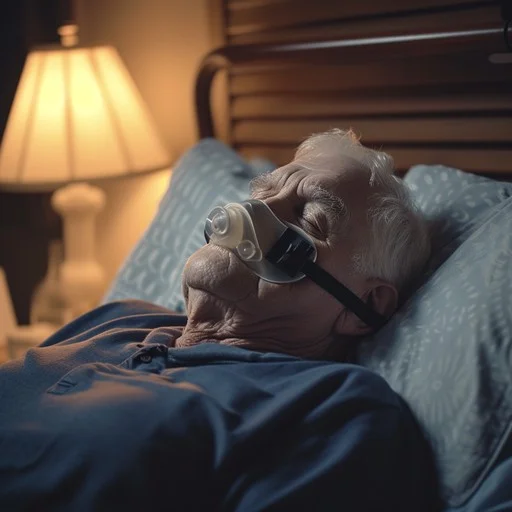
Yes, Medicare Part B covers CPAP machines as durable medical equipment (DME) through a 13-month rental-to-own process. After meeting your Part B deductible, you will pay 20% coinsurance. To qualify for coverage, you must undergo a sleep study, obtain a doctor’s order, and provide proof of usage within the first 90 days.
Sleep apnea affects approximately 39 million American adults, with its prevalence increasing significantly after age 60. Untreated obstructive sleep apnea is linked to serious health issues, including hypertension, heart arrhythmias, stroke, type 2 diabetes, and cognitive impairment during the day. For Medicare beneficiaries, CPAP therapy is a well-covered benefit, but understanding the specific coverage rules is crucial to avoid losing benefits.
1. What Medicare Requires to Cover a CPAP
Medicare will cover a CPAP machine only when all of the following conditions are met:
- Diagnosis of obstructive sleep apnea (OSA): Confirmed by a qualifying sleep study showing an Apnea-Hypopnea Index (AHI) of 15 or more events per hour, or an AHI of 5–14 events per hour with documented symptoms (such as excessive daytime sleepiness, impaired cognition, mood disorders, insomnia, or a history of hypertension, heart disease, or stroke).
- A written order from a treating physician: The doctor must document the diagnosis, sleep study results, and medical necessity for CPAP.
- The CPAP supplier must be a Medicare-enrolled DME supplier: Not all suppliers accept Medicare, so ensure you use an enrolled supplier to avoid claim denial.
- Face-to-face clinical evaluation within 6 months before the sleep study: Your physician must evaluate you within six months prior to ordering the sleep test.
2. Does Medicare Cover the Sleep Study?
Yes, Medicare covers qualifying sleep studies required for CPAP coverage, including both types:
| Test Type | What It Is | Medicare Coverage |
|---|---|---|
| In-lab polysomnography (PSG) | Overnight monitoring at a sleep center with full EEG, breathing, oxygen, and movement tracking | 80% after Part B deductible |
| Home sleep apnea test (HSAT) | Take-home device that monitors breathing and oxygen overnight; simpler than full PSG | 80% after Part B deductible |
| Split-night study (PSG + titration) | Diagnosis and CPAP pressure calibration in one overnight session | 80% after Part B deductible |
Medicare generally accepts home sleep tests as the first-line diagnostic tool for straightforward cases of suspected obstructive sleep apnea. An in-lab study may be required if the home test is inconclusive or if you have complicating conditions such as heart failure or COPD.
3. The 13-Month Rental-to-Own Process
Medicare covers CPAP machines through a unique 13-month rental process rather than outright purchase. Here’s how it works:
- Months 1–3: Initial rental + compliance evaluation
Medicare pays the DME supplier for the CPAP rental, and you pay 20% coinsurance each month. This period is critical for demonstrating compliance. - Month 3 (90-day mark): Compliance review
Your doctor must document that CPAP is helping your symptoms, and you must meet the usage threshold (see Section 4). Failure to do so will result in loss of coverage. - Months 4–13: Continued rental
If you pass the compliance review, Medicare continues to cover the rental, and you keep paying 20% coinsurance monthly. - After Month 13: Ownership transfers to you
After 13 consecutive rental months, the CPAP machine becomes yours at no additional charge.
The total Medicare-approved rental cost for 13 months typically ranges from $500 to $900, depending on the CPAP model and your location. Your 20% share over this period is approximately $100 to $180 after meeting your Part B deductible.
4. The Compliance Rule — This Is the One That Trips People Up
Critical: To maintain Medicare CPAP coverage beyond the first 90 days, you must use your CPAP machine for at least 4 hours per night on 70% of nights during a consecutive 30-day period within the first 90 days. Failure to meet this threshold will result in Medicare stopping rental payments, leaving you responsible for costs.
Modern CPAP machines automatically record usage data, which your doctor and DME supplier will review at the 90-day mark. The review must confirm:
- You used the CPAP for at least 4 hours per night on 70% of nights in a 30-day window within the first 90 days.
- Your physician evaluates and documents that CPAP is benefiting you.
If you struggle with consistent CPAP use—common issues include mask fit, pressure discomfort, or claustrophobia—contact your DME supplier or sleep specialist before the 90-day window closes. Many issues can be resolved with adjustments or different equipment.
Practical tip: Most CPAP machines today feature built-in cellular modems that automatically transmit nightly usage data. Ask your supplier to set up an account on their patient portal so you can monitor your compliance data in real time.
5. What CPAP Supplies Does Medicare Cover?
After your CPAP setup, Medicare covers ongoing supplies on a defined replacement schedule, with you paying 20% coinsurance on each order.
| Supply Item | Medicare Replacement Schedule |
|---|---|
| Full face mask (frame and cushion) | 1 per 3 months |
| Nasal mask (frame and cushion) | 1 per 3 months |
| Nasal pillow mask | 2 per 3 months |
| Cushions/pillows (replacement only) | 2 per month |
| Headgear | 1 per 6 months |
| Chinstrap | 1 per 6 months |
| Tubing | 1 per 3 months |
| Disposable filters | 2 per month |
| Non-disposable filters | 1 per 6 months |
| Humidifier water chamber | 1 per 6 months |
You don’t have to replace items on the maximum schedule—Medicare will cover them as needed up to the listed frequency. Many DME suppliers will ship supplies proactively, so only order what you actually need to avoid complications.
6. What You Pay for CPAP Under Medicare in 2026
| Item | Your Cost (after Part B deductible) |
|---|---|
| Sleep study (in-lab or home) | 20% of Medicare-approved amount (~$50–$120) |
| CPAP monthly rental (months 1–13) | 20% of monthly approved rental (~$8–$15/month) |
| CPAP ownership (after month 13) | $0 — machine is yours |
| Ongoing supplies (mask, tubing, filters) | 20% of Medicare-approved supply cost (~$10–$30 per order) |
| CPAP repair after ownership transfers | Medicare covers medically necessary repairs; 20% coinsurance applies |
| Machine replacement | If machine fails after 5 years, Medicare covers replacement under same DME rules |
7. Does Medicare Cover BiPAP Machines?
Yes, but with more restrictive criteria. BiPAP (Bilevel Positive Airway Pressure) machines are covered under Medicare Part B as DME, but only after CPAP therapy has been tried and documented as ineffective. Specifically, Medicare will approve BiPAP coverage when:
- The patient has been on CPAP for at least 3 months without adequate benefit, or
- The patient is diagnosed with complex sleep apnea, central sleep apnea, or obesity hypoventilation syndrome—conditions where BiPAP is the appropriate first-line treatment.
The same 13-month rental-to-own structure and 20% coinsurance apply to BiPAP as to CPAP. BiPAP machines typically have higher monthly rental rates, so your 20% share may be $15–$30/month during the rental period.
Medicare does not cover ASV (Adaptive Servo-Ventilation) therapy for patients with central sleep apnea caused by heart failure, following a 2015 clinical trial that indicated increased mortality in that population.
8. Frequently Asked Questions
Can I buy my own CPAP machine and have Medicare reimburse me?
No. Medicare requires you to use a Medicare-enrolled DME supplier and follow the rental-to-own process. If you purchase a CPAP from a non-enrolled supplier, Medicare will not reimburse you. Always confirm your supplier’s Medicare enrollment before starting the rental process.
What if I already own a CPAP and need a new one?
If your existing machine is over 5 years old and you have a current valid sleep study and doctor’s order, Medicare will cover a replacement machine under the same rental-to-own process. Updated documentation of medical necessity from your physician is required.
Does Medicare cover travel CPAP machines?
Standard CPAP machines covered by Medicare are generally full-size units. Compact travel CPAPs are not separately covered. However, once your primary CPAP is owned (after 13 months), you may purchase a travel CPAP out of pocket without affecting your Medicare coverage for supplies on your primary machine.
Does Medicare cover dental appliances for sleep apnea?
Oral appliance therapy (mandibular advancement devices) for sleep apnea is covered under Medicare Part B as DME, but only when CPAP has been tried and documented as ineffective. The appliance must be fitted by a dentist or oral specialist and requires the same physician order process as CPAP.
Does Medicare Advantage cover CPAP the same way?
Medicare Advantage plans must cover CPAP at least as generously as Original Medicare. Some plans may have lower coinsurance or waive the deductible for DME. Check your plan’s Evidence of Coverage document for specific CPAP benefits, and be aware that you may need to use an in-network DME supplier under your Advantage plan.
This article is for informational purposes only. CPAP coverage rules and replacement schedules are established by CMS and enforced by your Medicare Administrative Contractor (MAC). Requirements may vary slightly by region. Verify your specific coverage at Medicare.gov or by calling 1-800-MEDICARE.
Yes, Medicare Part B covers CPAP machines as durable medical equipment (DME) through a 13-month rental-to-own process. After meeting your Part B deductible, you will pay 20% coinsurance. To qualify for coverage, you must undergo a sleep study, obtain a doctor’s order, and provide proof of usage within the first 90 days.
Sleep apnea affects approximately 39 million American adults, with its prevalence increasing significantly after age 60. Untreated obstructive sleep apnea is linked to serious health issues, including hypertension, heart arrhythmias, stroke, type 2 diabetes, and cognitive impairment during the day. For Medicare beneficiaries, CPAP therapy is a well-covered benefit, but understanding the specific coverage rules is crucial to avoid losing benefits.
1. What Medicare Requires to Cover a CPAP
Medicare will cover a CPAP machine only when all of the following conditions are met:
- Diagnosis of obstructive sleep apnea (OSA): Confirmed by a qualifying sleep study showing an Apnea-Hypopnea Index (AHI) of 15 or more events per hour, or an AHI of 5–14 events per hour with documented symptoms (such as excessive daytime sleepiness, impaired cognition, mood disorders, insomnia, or a history of hypertension, heart disease, or stroke).
- A written order from a treating physician: The doctor must document the diagnosis, sleep study results, and medical necessity for CPAP.
- The CPAP supplier must be a Medicare-enrolled DME supplier: Not all suppliers accept Medicare, so ensure you use an enrolled supplier to avoid claim denial.
- Face-to-face clinical evaluation within 6 months before the sleep study: Your physician must evaluate you within six months prior to ordering the sleep test.
2. Does Medicare Cover the Sleep Study?
Yes, Medicare covers qualifying sleep studies required for CPAP coverage, including both types:
| Test Type | What It Is | Medicare Coverage |
|---|---|---|
| In-lab polysomnography (PSG) | Overnight monitoring at a sleep center with full EEG, breathing, oxygen, and movement tracking | 80% after Part B deductible |
| Home sleep apnea test (HSAT) | Take-home device that monitors breathing and oxygen overnight; simpler than full PSG | 80% after Part B deductible |
| Split-night study (PSG + titration) | Diagnosis and CPAP pressure calibration in one overnight session | 80% after Part B deductible |
Medicare generally accepts home sleep tests as the first-line diagnostic tool for straightforward cases of suspected obstructive sleep apnea. An in-lab study may be required if the home test is inconclusive or if you have complicating conditions such as heart failure or COPD.
3. The 13-Month Rental-to-Own Process
Medicare covers CPAP machines through a unique 13-month rental process rather than outright purchase. Here’s how it works:
- Months 1–3: Initial rental + compliance evaluation
Medicare pays the DME supplier for the CPAP rental, and you pay 20% coinsurance each month. This period is critical for demonstrating compliance. - Month 3 (90-day mark): Compliance review
Your doctor must document that CPAP is helping your symptoms, and you must meet the usage threshold (see Section 4). Failure to do so will result in loss of coverage. - Months 4–13: Continued rental
If you pass the compliance review, Medicare continues to cover the rental, and you keep paying 20% coinsurance monthly. - After Month 13: Ownership transfers to you
After 13 consecutive rental months, the CPAP machine becomes yours at no additional charge.
The total Medicare-approved rental cost for 13 months typically ranges from $500 to $900, depending on the CPAP model and your location. Your 20% share over this period is approximately $100 to $180 after meeting your Part B deductible.
4. The Compliance Rule — This Is the One That Trips People Up
Critical: To maintain Medicare CPAP coverage beyond the first 90 days, you must use your CPAP machine for at least 4 hours per night on 70% of nights during a consecutive 30-day period within the first 90 days. Failure to meet this threshold will result in Medicare stopping rental payments, leaving you responsible for costs.
Modern CPAP machines automatically record usage data, which your doctor and DME supplier will review at the 90-day mark. The review must confirm:
- You used the CPAP for at least 4 hours per night on 70% of nights in a 30-day window within the first 90 days.
- Your physician evaluates and documents that CPAP is benefiting you.
If you struggle with consistent CPAP use—common issues include mask fit, pressure discomfort, or claustrophobia—contact your DME supplier or sleep specialist before the 90-day window closes. Many issues can be resolved with adjustments or different equipment.
Practical tip: Most CPAP machines today feature built-in cellular modems that automatically transmit nightly usage data. Ask your supplier to set up an account on their patient portal so you can monitor your compliance data in real time.
5. What CPAP Supplies Does Medicare Cover?
After your CPAP setup, Medicare covers ongoing supplies on a defined replacement schedule, with you paying 20% coinsurance on each order.
| Supply Item | Medicare Replacement Schedule |
|---|---|
| Full face mask (frame and cushion) | 1 per 3 months |
| Nasal mask (frame and cushion) | 1 per 3 months |
| Nasal pillow mask | 2 per 3 months |
| Cushions/pillows (replacement only) | 2 per month |
| Headgear | 1 per 6 months |
| Chinstrap | 1 per 6 months |
| Tubing | 1 per 3 months |
| Disposable filters | 2 per month |
| Non-disposable filters | 1 per 6 months |
| Humidifier water chamber | 1 per 6 months |
You don’t have to replace items on the maximum schedule—Medicare will cover them as needed up to the listed frequency. Many DME suppliers will ship supplies proactively, so only order what you actually need to avoid complications.
6. What You Pay for CPAP Under Medicare in 2026
| Item | Your Cost (after Part B deductible) |
|---|---|
| Sleep study (in-lab or home) | 20% of Medicare-approved amount (~$50–$120) |
| CPAP monthly rental (months 1–13) | 20% of monthly approved rental (~$8–$15/month) |
| CPAP ownership (after month 13) | $0 — machine is yours |
| Ongoing supplies (mask, tubing, filters) | 20% of Medicare-approved supply cost (~$10–$30 per order) |
| CPAP repair after ownership transfers | Medicare covers medically necessary repairs; 20% coinsurance applies |
| Machine replacement | If machine fails after 5 years, Medicare covers replacement under same DME rules |
7. Does Medicare Cover BiPAP Machines?
Yes, but with more restrictive criteria. BiPAP (Bilevel Positive Airway Pressure) machines are covered under Medicare Part B as DME, but only after CPAP therapy has been tried and documented as ineffective. Specifically, Medicare will approve BiPAP coverage when:
- The patient has been on CPAP for at least 3 months without adequate benefit, or
- The patient is diagnosed with complex sleep apnea, central sleep apnea, or obesity hypoventilation syndrome—conditions where BiPAP is the appropriate first-line treatment.
The same 13-month rental-to-own structure and 20% coinsurance apply to BiPAP as to CPAP. BiPAP machines typically have higher monthly rental rates, so your 20% share may be $15–$30/month during the rental period.
Medicare does not cover ASV (Adaptive Servo-Ventilation) therapy for patients with central sleep apnea caused by heart failure, following a 2015 clinical trial that indicated increased mortality in that population.
8. Frequently Asked Questions
Can I buy my own CPAP machine and have Medicare reimburse me?
No. Medicare requires you to use a Medicare-enrolled DME supplier and follow the rental-to-own process. If you purchase a CPAP from a non-enrolled supplier, Medicare will not reimburse you. Always confirm your supplier’s Medicare enrollment before starting the rental process.
What if I already own a CPAP and need a new one?
If your existing machine is over 5 years old and you have a current valid sleep study and doctor’s order, Medicare will cover a replacement machine under the same rental-to-own process. Updated documentation of medical necessity from your physician is required.
Does Medicare cover travel CPAP machines?
Standard CPAP machines covered by Medicare are generally full-size units. Compact travel CPAPs are not separately covered. However, once your primary CPAP is owned (after 13 months), you may purchase a travel CPAP out of pocket without affecting your Medicare coverage for supplies on your primary machine.
Does Medicare cover dental appliances for sleep apnea?
Oral appliance therapy (mandibular advancement devices) for sleep apnea is covered under Medicare Part B as DME, but only when CPAP has been tried and documented as ineffective. The appliance must be fitted by a dentist or oral specialist and requires the same physician order process as CPAP.
Does Medicare Advantage cover CPAP the same way?
Medicare Advantage plans must cover CPAP at least as generously as Original Medicare. Some plans may have lower coinsurance or waive the deductible for DME. Check your plan’s Evidence of Coverage document for specific CPAP benefits, and be aware that you may need to use an in-network DME supplier under your Advantage plan.
This article is for informational purposes only. CPAP coverage rules and replacement schedules are established by CMS and enforced by your Medicare Administrative Contractor (MAC). Requirements may vary slightly by region. Verify your specific coverage at Medicare.gov or by calling 1-800-MEDICARE.