Medicare vs Medicaid: What are the Differences?

Medicare plan options and costs can change each year, making it essential to stay informed about your healthcare choices.
- Medicare and Medicaid are two U.S. government programs that provide access to healthcare.
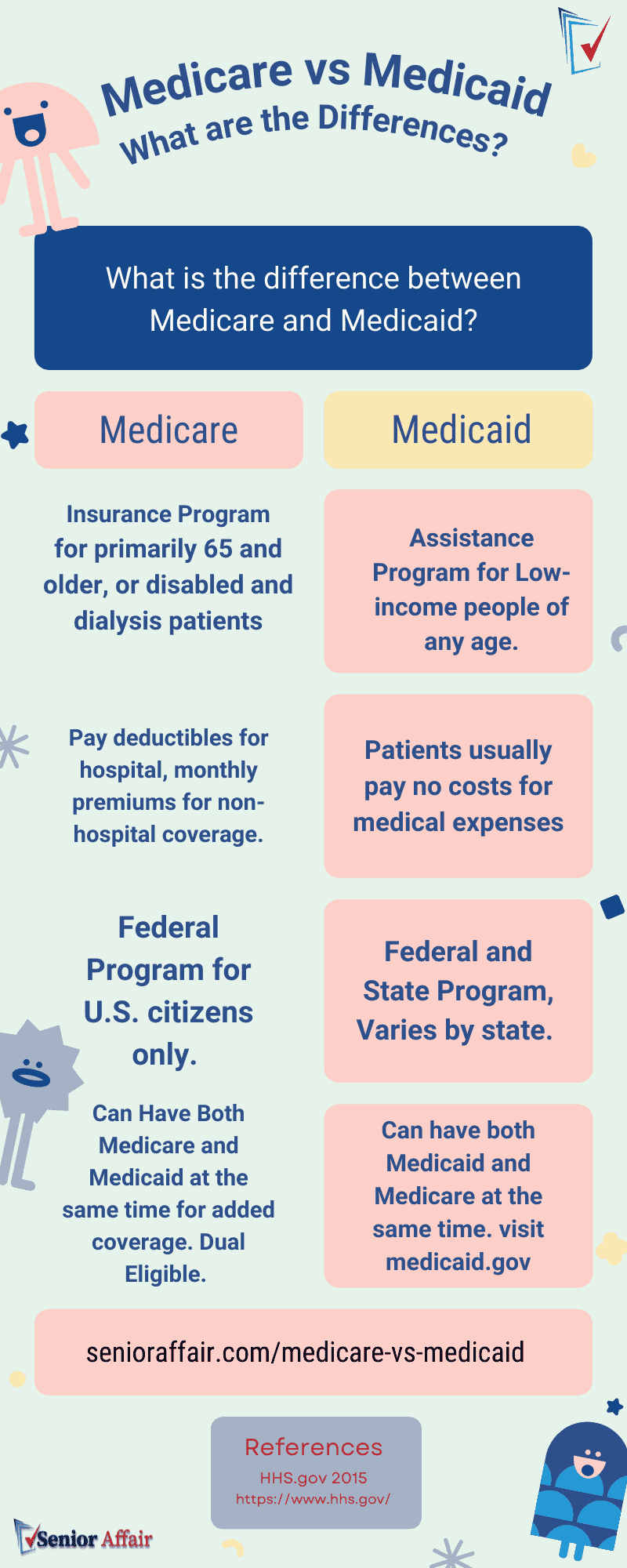
- Medicare covers individuals when they turn 65 and over, as well as those with certain conditions or disabilities.
- Medicaid is typically available to low-income individuals, offering healthcare services at little or no cost.
It’s common to confuse Medicaid and Medicare, as the terms sound similar. However, these two programs serve different purposes and populations.
Each program is governed by its own set of laws and policies, aimed at distinct groups of people. Interestingly, it is possible to qualify for both programs simultaneously.
To help you choose the right program, this
What is Medicare?
Medicare is a program designed to provide financial support for medical needs. Specifically, it serves U.S. citizens aged 65 and older, covering their medical treatments and care.
You may also qualify for Medicare if you have a qualifying condition and are under 65. For instance, individuals in the final stages of certain kidney diseases can apply for Medicare.
Medicare has two main branches: Original Medicare and Medicare Advantage.
Original Medicare
Original Medicare is a government-funded insurance policy designed for older Americans. It covers:
Inpatient hospital services (Medicare Part A) – This includes coverage for hospital admissions, hospice care, limited skilled nursing facility care, and home healthcare.
Outpatient medical services (Medicare Part B) – This covers preventive, diagnostic, and treatment services for various health conditions.
Medicare Advantage
For those seeking more coverage than Original Medicare offers, Medicare Advantage insurance (Part C) may be a suitable option. These policies are provided by private insurance companies and often include additional services such as prescription drug coverage, dental, vision, and hearing care, which are not covered by Original Medicare.
What is Medicaid?
Medicaid is a broader program that provides services for children, adults, and individuals with disabilities. It is income-based and funded by both state and federal governments, aimed at assisting low-income families. In 2020, over 72 million people were enrolled in Medicaid.
What is the Cost of Medicare vs. Medicaid?
Medicare costs – Beneficiaries typically pay deductibles for significant services like hospital stays and may incur out-of-pocket costs for prescriptions. A small monthly premium is required for doctor visits and preventive care. For a comprehensive overview of Original Medicare and Medicare Advantage costs, refer to the relevant resources.
Medicaid Costs
Generally, Medicaid recipients are not responsible for paying for covered expenses, although copayments may apply in some cases.
Your state may charge premiums or enrollment fees as a form of cost-sharing, applicable to specific Medicaid recipients, including:
- Qualified disabled and working individuals with an income above 150 percent of the federal poverty level (FPL).
- Pregnant women and infants with an income at or above 150 percent of the FPL.
- Medically needy individuals and disabled children eligible under the Family Opportunity Act.
- Disabled working individuals eligible under the Ticket to Work and Work Incentives Improvement Act of 1999.
Medicare and Medicaid Eligibility
Eligibility for each program is based on specific criteria.
Medicare Eligibility
Typically, to qualify for Medicare, you must be a U.S. citizen or permanent resident aged 65 or older. Your eligibility and premiums depend on the number of years you have paid Medicare taxes. Exceptions exist for individuals with documented disabilities under 65.
If you receive Medicare, you likely also receive some Social Security benefits. Medicare benefits extend to those eligible for Social Security disability and widows or widowers aged 50 and older.
Medicaid Eligibility
Eligibility for Medicaid is determined by income and family size. The Affordable Care Act was designed to provide coverage for low-income individuals. To check your eligibility in your state, visit Healthcare.gov.
For most adults under 65, your income must be below 133 percent of the federal poverty level to qualify. As of 2021, this amount is approximately $12,880 for an individual and $26,500 for a family of four. You may also qualify if you have a pressing medical need.
Medicare and Medicaid Coverage
Medicare Coverage
Medicare consists of several parts, each offering coverage for different healthcare aspects.
- Medicare Part A – Covers most inpatient medical care, including hospital stays, hospice services, limited skilled nursing care, and home healthcare.
- Medicare Part B – Addresses all outpatient medical needs, such as specific medical equipment, hospital care, doctor visits, and preventive care.
- Medicare Part C – Medicare Advantage plans are provided by private companies and include all benefits of Medicare Parts A and B, along with additional benefits like dental, vision, and prescription drug coverage for an extra cost.
- Medicare Part D – Covers prescription drugs through approved plans.
Medicaid Coverage
Medicaid benefits vary by state, but all plans typically include:
- Lab and X-ray services
- Inpatient and outpatient hospital services
- Nursing facility services for adults
- Surgical and dental services for adults
Since benefits can differ, it’s advisable to connect with your caseworker in your state to discuss your situation and receive assistance with the application process.
Can You Have Both?
It is possible to qualify for both Medicare and Medicaid, making you dual-eligible. You can receive coverage through Original Medicare (Parts A and B) or a Medicare Advantage Plan (Part C), with Medicare covering your prescription drugs under Part D.
Having both programs can provide comprehensive coverage, as Medicaid may cover care and medications that Medicare does not.
Medicare plan options and costs can change each year, making it essential to stay informed about your healthcare choices.
- Medicare and Medicaid are two U.S. government programs that provide access to healthcare.
- Medicare covers individuals when they turn 65 and over, as well as those with certain conditions or disabilities.
- Medicaid is typically available to low-income individuals, offering healthcare services at little or no cost.
It’s common to confuse Medicaid and Medicare, as the terms sound similar. However, these two programs serve different purposes and populations.
Each program is governed by its own set of laws and policies, aimed at distinct groups of people. Interestingly, it is possible to qualify for both programs simultaneously.
To help you choose the right program, this
What is Medicare?
Medicare is a program designed to provide financial support for medical needs. Specifically, it serves U.S. citizens aged 65 and older, covering their medical treatments and care.
You may also qualify for Medicare if you have a qualifying condition and are under 65. For instance, individuals in the final stages of certain kidney diseases can apply for Medicare.
Medicare has two main branches: Original Medicare and Medicare Advantage.
Original Medicare
Original Medicare is a government-funded insurance policy designed for older Americans. It covers:
Inpatient hospital services (Medicare Part A) – This includes coverage for hospital admissions, hospice care, limited skilled nursing facility care, and home healthcare.
Outpatient medical services (Medicare Part B) – This covers preventive, diagnostic, and treatment services for various health conditions.
Medicare Advantage
For those seeking more coverage than Original Medicare offers, Medicare Advantage insurance (Part C) may be a suitable option. These policies are provided by private insurance companies and often include additional services such as prescription drug coverage, dental, vision, and hearing care, which are not covered by Original Medicare.
What is Medicaid?
Medicaid is a broader program that provides services for children, adults, and individuals with disabilities. It is income-based and funded by both state and federal governments, aimed at assisting low-income families. In 2020, over 72 million people were enrolled in Medicaid.
What is the Cost of Medicare vs. Medicaid?
Medicare costs – Beneficiaries typically pay deductibles for significant services like hospital stays and may incur out-of-pocket costs for prescriptions. A small monthly premium is required for doctor visits and preventive care. For a comprehensive overview of Original Medicare and Medicare Advantage costs, refer to the relevant resources.
Medicaid Costs
Generally, Medicaid recipients are not responsible for paying for covered expenses, although copayments may apply in some cases.
Your state may charge premiums or enrollment fees as a form of cost-sharing, applicable to specific Medicaid recipients, including:
- Qualified disabled and working individuals with an income above 150 percent of the federal poverty level (FPL).
- Pregnant women and infants with an income at or above 150 percent of the FPL.
- Medically needy individuals and disabled children eligible under the Family Opportunity Act.
- Disabled working individuals eligible under the Ticket to Work and Work Incentives Improvement Act of 1999.
Medicare and Medicaid Eligibility
Eligibility for each program is based on specific criteria.
Medicare Eligibility
Typically, to qualify for Medicare, you must be a U.S. citizen or permanent resident aged 65 or older. Your eligibility and premiums depend on the number of years you have paid Medicare taxes. Exceptions exist for individuals with documented disabilities under 65.
If you receive Medicare, you likely also receive some Social Security benefits. Medicare benefits extend to those eligible for Social Security disability and widows or widowers aged 50 and older.
Medicaid Eligibility
Eligibility for Medicaid is determined by income and family size. The Affordable Care Act was designed to provide coverage for low-income individuals. To check your eligibility in your state, visit Healthcare.gov.
For most adults under 65, your income must be below 133 percent of the federal poverty level to qualify. As of 2021, this amount is approximately $12,880 for an individual and $26,500 for a family of four. You may also qualify if you have a pressing medical need.
Medicare and Medicaid Coverage
Medicare Coverage
Medicare consists of several parts, each offering coverage for different healthcare aspects.
- Medicare Part A – Covers most inpatient medical care, including hospital stays, hospice services, limited skilled nursing care, and home healthcare.
- Medicare Part B – Addresses all outpatient medical needs, such as specific medical equipment, hospital care, doctor visits, and preventive care.
- Medicare Part C – Medicare Advantage plans are provided by private companies and include all benefits of Medicare Parts A and B, along with additional benefits like dental, vision, and prescription drug coverage for an extra cost.
- Medicare Part D – Covers prescription drugs through approved plans.
Medicaid Coverage
Medicaid benefits vary by state, but all plans typically include:
- Lab and X-ray services
- Inpatient and outpatient hospital services
- Nursing facility services for adults
- Surgical and dental services for adults
Since benefits can differ, it’s advisable to connect with your caseworker in your state to discuss your situation and receive assistance with the application process.
Can You Have Both?
It is possible to qualify for both Medicare and Medicaid, making you dual-eligible. You can receive coverage through Original Medicare (Parts A and B) or a Medicare Advantage Plan (Part C), with Medicare covering your prescription drugs under Part D.
Having both programs can provide comprehensive coverage, as Medicaid may cover care and medications that Medicare does not.