Tesla Owners Turn to Car Escape Tools Amid Door Safety Concerns
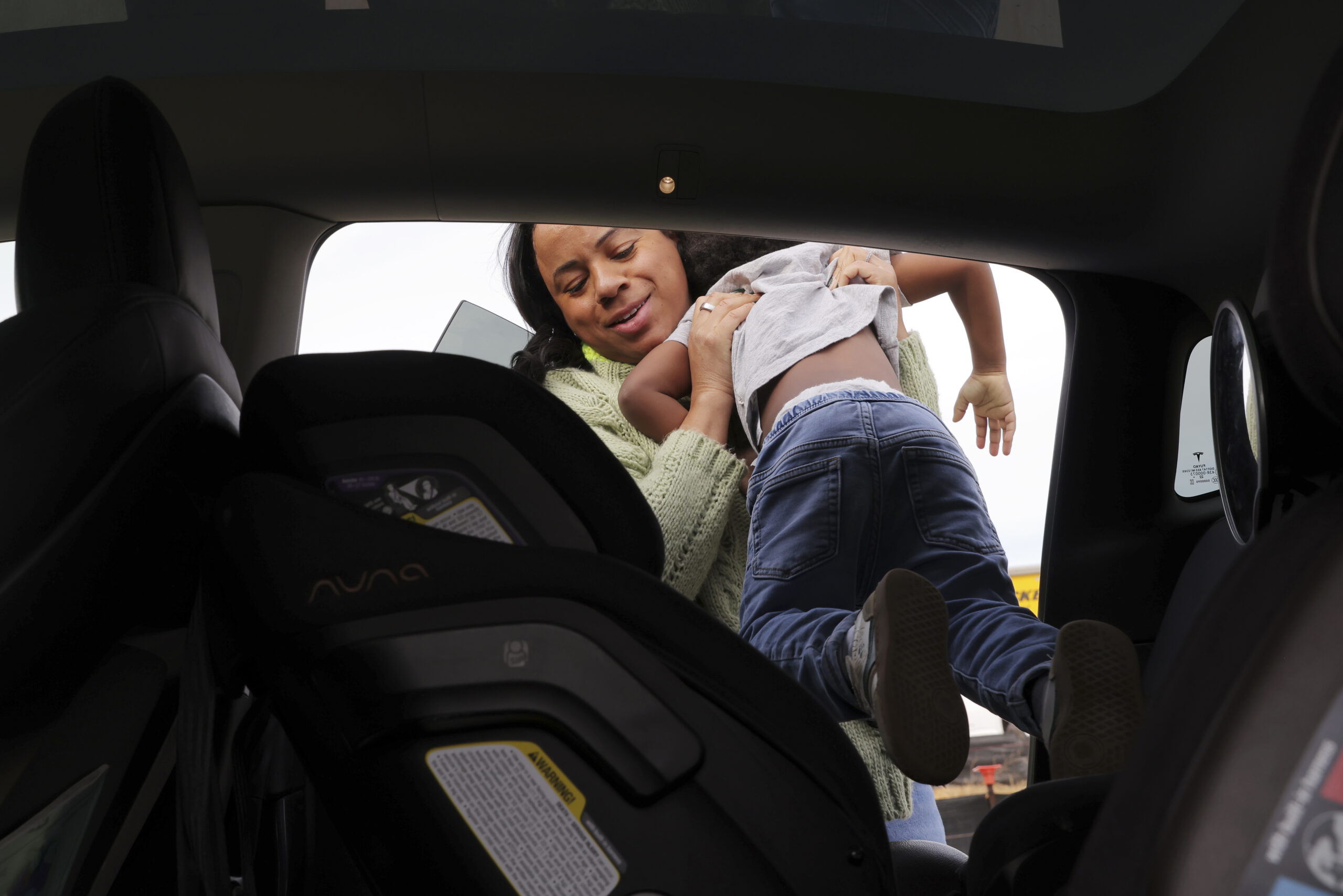
In May, Erin Geter’s toddler son found himself trapped inside her Tesla when the electric doors lost power. A few weeks later, she made the decision to purchase a new family car from a Honda dealership.
“I was very traumatized,” said the 39-year-old resident of Huntersville, North Carolina. Nowadays, she prefers to transport her children in the CR-V, which features standard door handles.
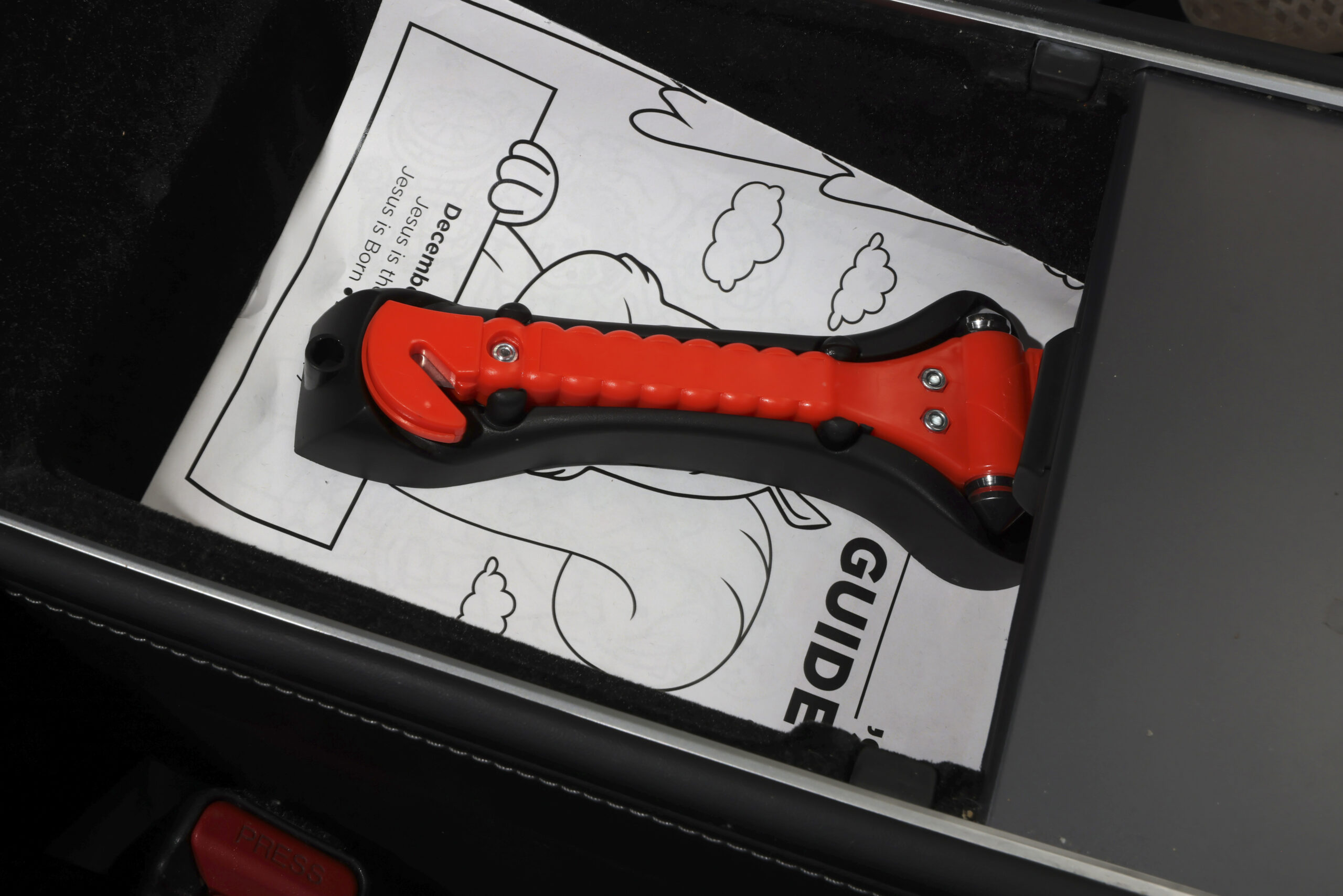
Geter’s experience highlights a growing concern among Tesla owners: the inability to open malfunctioning doors. Many are taking precautions, such as purchasing glass breakers for emergencies. Rideshare drivers are proactively informing passengers about Tesla’s built-in manual door releases, which can vary significantly by model. Meanwhile, sellers on platforms like Amazon and Etsy are offering emergency pull cords and other accessories to simplify the use of these releases. Online communities, including Reddit and YouTube, have emerged to provide step-by-step installation guides. Alarmingly, nearly 35,000 individuals have signed a Consumer Reports petition urging automakers to address the issues with electronic doors.
The urgency of this matter has escalated following several incidents where individuals were severely injured or even died due to their inability to escape vehicles. A Bloomberg News investigation revealed over 140 consumer complaints to U.S. auto safety regulators regarding door handles on various Tesla models that have become stuck, failed to open, or malfunctioned, particularly after accidents, since 2018. The National Highway Traffic Safety Administration (NHTSA) has initiated a safety probe into potential defects in the doors of certain Model Ys, while Tesla’s chief designer has indicated that the company is working on redesigning the mechanism behind its signature flush handles.
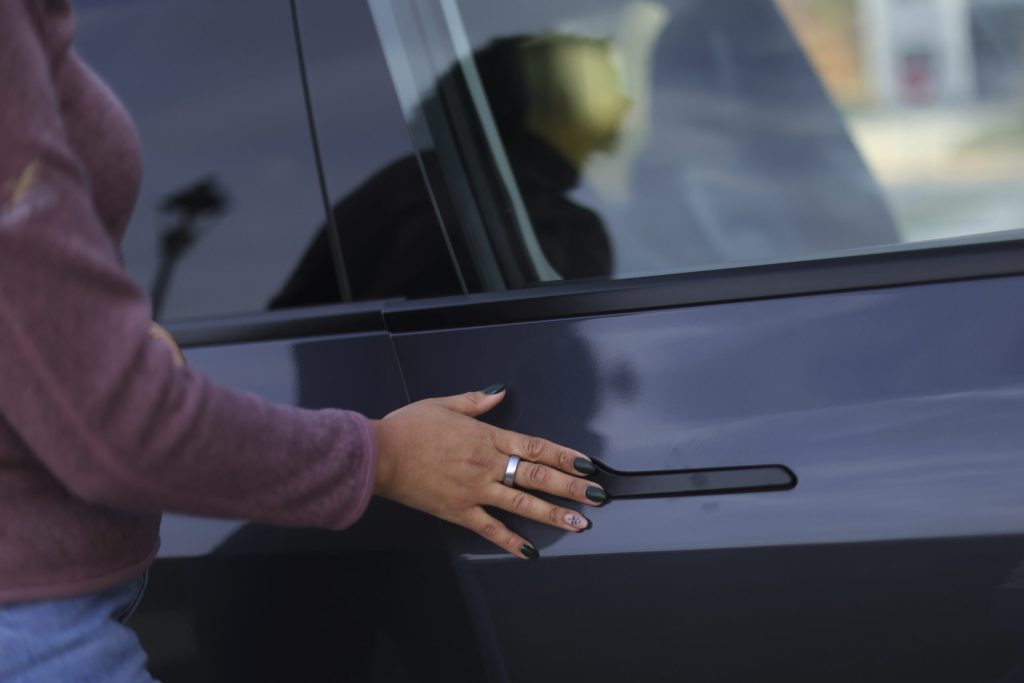
Tesla has been a pioneer in the use of electrically controlled doors and flush handles, a trend that has gained traction in the automotive industry and is often seen as a hallmark of modern car design. However, when power is lost, these doors become inoperable. The manual releases within Tesla vehicles can be difficult to locate, often hidden under mats or in door pockets, and may only be accessible from specific rows.
As awareness of these potential hazards grows, many owners are calling for better guidance. “Tesla does not educate its consumers about how to fully operate the car,” stated David Ward, a San Diego-area resident who purchased his Model 3 in 2021. “I had to learn how to operate everything on YouTube.”
While Tesla did not respond to a request for comment, board Chair Robyn Denholm emphasized in a recent interview that the company takes safety concerns seriously. She noted that while many people are aware of the manual release locations, Tesla is actively working to improve awareness and is examining the design of the backup mechanism.
“We are continuing to look at, is there a better way?” Denholm stated during her October interview with Bloomberg.
This concern extends beyond Tesla owners. Given that Teslas are prevalent in rideshare and rental car fleets, passengers are also expressing worries. Chad Lincoln, an Uber driver from Tennessee, recently rented a 2022 Model 3 and noted that passengers asked him three times how to escape in case of an emergency.
“We went over my flight attendant’s pitch on how to get out, and the strap to pull,” he recounted. Although Lincoln appreciates the advanced technology in the Model 3, he is hesitant to consider a Tesla for his next vehicle due to safety concerns surrounding the manual release.
Michael Brooks, executive director at the Center for Auto Safety, advocates for the NHTSA to establish new standards for door designs, including clear indications of manual release locations. He pointed out that most consumers do not consider door design when shopping for a car.
“They’re not thinking, ‘How am I going to escape this vehicle on the off-chance that I’m in a crash or have a battery fire?’” Brooks remarked. “The way the doors operate and the potential emergency consequences of that is very, very far down the list for most car buyers.”
Teslas are equipped with two batteries: a high-voltage pack for propulsion and a low-voltage pack for operating windows and doors. If the low-voltage battery fails, the doors may not unlock.
While U.S. auto safety regulations mandate that doors prevent passengers from being ejected during a crash, they do not require vehicles to have a manual backup in case battery-operated handles lose power. The NHTSA has indicated that a lack of adequate means for drivers and passengers to enter and exit vehicles could be considered a safety defect warranting a recall.
Some Tesla owners are taking it upon themselves to raise awareness. After learning about college students who were unable to escape a Tesla following a crash, Bri Policarpio created an informational TikTok video to demonstrate how to use the manual release in her 2023 Model Y.
“I looked up what you’re supposed to do and I saw that every model has different manual releases,” said Policarpio, a 27-year-old marketing manager from Los Angeles. Her video, titled “mandatory safety briefing,” has garnered 1.4 million views.
Owners are also enhancing their manual releases with straps, cords, and brightly colored attachments to improve accessibility. “I wish Tesla would have provided something like this,” read a review from a verified purchaser of nylon pull cords on Amazon. “How is anyone supposed to find this release in an emergency?”
Geter, the North Carolina Tesla owner, had already purchased a glass breaker for her 2021 Model Y before her son became trapped in the vehicle. Unfortunately, the tool was locked inside the car as well.
In a frantic series of calls, she reached out to her husband and then her father, who typically unlocks the car using the Tesla app. However, that feature was unavailable due to the low-voltage battery issue. Eventually, she called 911. Fortunately, first responders arrived and managed to break the windows, at which point one of the doors opened on its own.
“I don’t know what we were going to do if that door didn’t pop open,” Geter recalled. “I just felt so helpless at that moment.”
Top photo: Tesla was a pioneer of electrically controlled doors and flush handles. Photographer: Travis Dove/Bloomberg.
In May, Erin Geter’s toddler son found himself trapped inside her Tesla when the electric doors lost power. A few weeks later, she made the decision to purchase a new family car from a Honda dealership.
“I was very traumatized,” said the 39-year-old resident of Huntersville, North Carolina. Nowadays, she prefers to transport her children in the CR-V, which features standard door handles.
Geter’s experience highlights a growing concern among Tesla owners: the inability to open malfunctioning doors. Many are taking precautions, such as purchasing glass breakers for emergencies. Rideshare drivers are proactively informing passengers about Tesla’s built-in manual door releases, which can vary significantly by model. Meanwhile, sellers on platforms like Amazon and Etsy are offering emergency pull cords and other accessories to simplify the use of these releases. Online communities, including Reddit and YouTube, have emerged to provide step-by-step installation guides. Alarmingly, nearly 35,000 individuals have signed a Consumer Reports petition urging automakers to address the issues with electronic doors.
The urgency of this matter has escalated following several incidents where individuals were severely injured or even died due to their inability to escape vehicles. A Bloomberg News investigation revealed over 140 consumer complaints to U.S. auto safety regulators regarding door handles on various Tesla models that have become stuck, failed to open, or malfunctioned, particularly after accidents, since 2018. The National Highway Traffic Safety Administration (NHTSA) has initiated a safety probe into potential defects in the doors of certain Model Ys, while Tesla’s chief designer has indicated that the company is working on redesigning the mechanism behind its signature flush handles.
Tesla has been a pioneer in the use of electrically controlled doors and flush handles, a trend that has gained traction in the automotive industry and is often seen as a hallmark of modern car design. However, when power is lost, these doors become inoperable. The manual releases within Tesla vehicles can be difficult to locate, often hidden under mats or in door pockets, and may only be accessible from specific rows.
As awareness of these potential hazards grows, many owners are calling for better guidance. “Tesla does not educate its consumers about how to fully operate the car,” stated David Ward, a San Diego-area resident who purchased his Model 3 in 2021. “I had to learn how to operate everything on YouTube.”
While Tesla did not respond to a request for comment, board Chair Robyn Denholm emphasized in a recent interview that the company takes safety concerns seriously. She noted that while many people are aware of the manual release locations, Tesla is actively working to improve awareness and is examining the design of the backup mechanism.
“We are continuing to look at, is there a better way?” Denholm stated during her October interview with Bloomberg.
This concern extends beyond Tesla owners. Given that Teslas are prevalent in rideshare and rental car fleets, passengers are also expressing worries. Chad Lincoln, an Uber driver from Tennessee, recently rented a 2022 Model 3 and noted that passengers asked him three times how to escape in case of an emergency.
“We went over my flight attendant’s pitch on how to get out, and the strap to pull,” he recounted. Although Lincoln appreciates the advanced technology in the Model 3, he is hesitant to consider a Tesla for his next vehicle due to safety concerns surrounding the manual release.
Michael Brooks, executive director at the Center for Auto Safety, advocates for the NHTSA to establish new standards for door designs, including clear indications of manual release locations. He pointed out that most consumers do not consider door design when shopping for a car.
“They’re not thinking, ‘How am I going to escape this vehicle on the off-chance that I’m in a crash or have a battery fire?’” Brooks remarked. “The way the doors operate and the potential emergency consequences of that is very, very far down the list for most car buyers.”
Teslas are equipped with two batteries: a high-voltage pack for propulsion and a low-voltage pack for operating windows and doors. If the low-voltage battery fails, the doors may not unlock.
While U.S. auto safety regulations mandate that doors prevent passengers from being ejected during a crash, they do not require vehicles to have a manual backup in case battery-operated handles lose power. The NHTSA has indicated that a lack of adequate means for drivers and passengers to enter and exit vehicles could be considered a safety defect warranting a recall.
Some Tesla owners are taking it upon themselves to raise awareness. After learning about college students who were unable to escape a Tesla following a crash, Bri Policarpio created an informational TikTok video to demonstrate how to use the manual release in her 2023 Model Y.
“I looked up what you’re supposed to do and I saw that every model has different manual releases,” said Policarpio, a 27-year-old marketing manager from Los Angeles. Her video, titled “mandatory safety briefing,” has garnered 1.4 million views.
Owners are also enhancing their manual releases with straps, cords, and brightly colored attachments to improve accessibility. “I wish Tesla would have provided something like this,” read a review from a verified purchaser of nylon pull cords on Amazon. “How is anyone supposed to find this release in an emergency?”
Geter, the North Carolina Tesla owner, had already purchased a glass breaker for her 2021 Model Y before her son became trapped in the vehicle. Unfortunately, the tool was locked inside the car as well.
In a frantic series of calls, she reached out to her husband and then her father, who typically unlocks the car using the Tesla app. However, that feature was unavailable due to the low-voltage battery issue. Eventually, she called 911. Fortunately, first responders arrived and managed to break the windows, at which point one of the doors opened on its own.
“I don’t know what we were going to do if that door didn’t pop open,” Geter recalled. “I just felt so helpless at that moment.”
Top photo: Tesla was a pioneer of electrically controlled doors and flush handles. Photographer: Travis Dove/Bloomberg.