A Newer Approach to Editing Embryos Ignites Debate
When scientists at Columbia University announced their groundbreaking use of advanced technology to precisely edit the genes of human embryos last week, the academic community erupted in fervent debate. Questions arose: Is this a positive development or a cause for concern? How rapidly will this technology evolve? More philosophically, where does medicine end and eugenics begin?
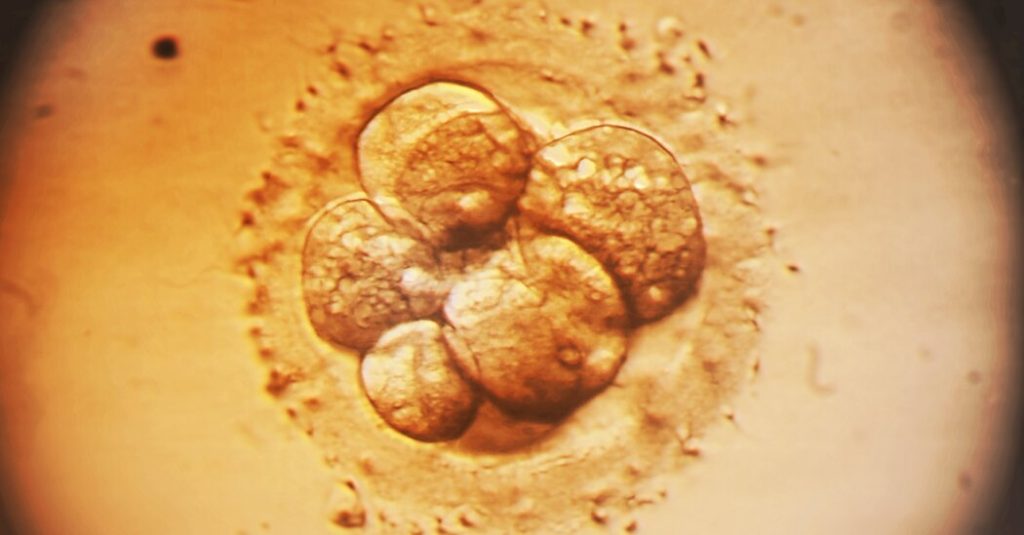
The study, first reported by The New York Times, revealed that a technique called base editing meticulously swapped out individual letters in an embryo’s genome. This alteration targeted genes associated with fetal hemoglobin production, cholesterol levels, and the risk of heart disease.
Although the work remains under peer review and has yet to be published in a scientific journal, experts from various fields are debating whether this tool brings us closer to curing inherited diseases or to the creation of designer babies—or perhaps both.
Optimistic clinicians view the Columbia study as a significant advancement in medicine, fueling hopes that scientists could eventually rectify embryo mutations in clinical settings. Dr. Ellen Goldstein, a reproductive endocrinologist and fertility specialist in Los Angeles, noted that for some patients, this tool could facilitate a successful pregnancy with embryos that would otherwise be discarded.
“There are very specific problems that this technology could address—conditions where we all agree there are devastating consequences,” she explained. Examples include Huntington’s disease, which leads to the breakdown of nerve cells in the brain, and Duchenne muscular dystrophy, which causes the wasting of skeletal and heart muscles. As a physician, “You wish you could just go in and start fixing embryos,” she added.
In contrast, earlier forms of gene editing, like CRISPR, are deemed too risky. This tool operates like molecular scissors, often cutting long segments of DNA, sometimes with unintended consequences. Researchers have reported instances of strange DNA rearrangements and even the destruction of entire chromosomes.
Base editing, however, is far more precise. The Columbia researchers were frequently able to change single letters in the genome safely, akin to using a precision eraser and a red pencil to correct spelling errors. Proponents argue that if we can safely prevent a child from inheriting a severe genetic condition, isn’t it unethical not to do so?
“We must be cautious not to have knee-jerk reactions against this research,” Dr. Goldstein cautioned, “as long as it is conducted with proper understanding, respect for future implications, and oversight from biologists and ethicists.”
Yet many ethicists are raising alarms. Dr. Lainie Friedman Ross, a pediatrician and bioethicist at the University of Rochester, expressed skepticism not only about the future implications but also about the current research.
“Let us be clear,” she stated. “Human embryos become living human persons. The research is being conducted on future persons without their consent.”
Dieter Egli, the lead researcher on the project, told The Times that a public dialogue regarding the pros and cons of gene editing in embryos is essential. However, he emphasized that “as a scientist, you can provide the data for discussion, but then essentially you stop and let others take over.”
Dr. Ross strongly disagreed, asserting, “This is morally irresponsible. There is no such thing as value-neutral science.” She contended that the research team has already made an ethical decision to pursue this line of inquiry.
Geneticists are tempering their enthusiasm as well, pointing out that the technology still has significant limitations. The edits, while precise, only worked in a subset of cells, resulting in mosaic embryos that contained a mix of edited and unedited cells. If one of these mosaic embryos were implanted and led to a pregnancy, the health implications of this mix might not become apparent until years after the child’s birth.
“We are very far away from having safe embryonic gene-editing methods where the benefits outweigh the risks,” cautioned Rasmus Nielsen, a geneticist at the University of California, Berkeley.
Moreover, early embryo editing carries a sobering permanence. Unlike edits to standard body cells, changes made to reproductive cells are inherited by future generations. This means that any edits—or errors—would not end with the child but would be passed down their family line, potentially altering the gene pool forever.
“How would we as a society intervene if the intervention led to serious health or reproductive consequences? We have no strategy,” Dr. Ross warned. “This can have dire consequences for our species.”
Despite these risks, many experts anticipate a substantial commercial push, not only to make this technology available but also to promote it. The chief clinical officer of Nucleus Genomics, who co-authored the new paper, announced that the company is “proud to fund the next phase of research focused on further advancing this technology toward clinical use.”
In a booming moment for reproductive technology, Nucleus Genomics is among the companies at the forefront. Some researchers worry that the initial aim of editing out diseases may quickly morph into a Silicon Valley push to optimize the human genome, enticing wealthy parents with the prospect of editing for elective traits like eye color and height.
Many of the eugenic traits that bioethicists are most concerned about, such as intelligence, involve hundreds or thousands of genes that interact with one another and a child’s environment. Therefore, it’s improbable that one-by-one base editing would be effective. However, this does not preclude companies from capitalizing on parents’ hopes and fears.
“Given the lack of regulation surrounding reproductive technologies,” warned Daphne Oluwaseun Martschenko, a bioethicist at Stanford University, “it feels like only a matter of time.”
When scientists at Columbia University announced their groundbreaking use of advanced technology to precisely edit the genes of human embryos last week, the academic community erupted in fervent debate. Questions arose: Is this a positive development or a cause for concern? How rapidly will this technology evolve? More philosophically, where does medicine end and eugenics begin?
The study, first reported by The New York Times, revealed that a technique called base editing meticulously swapped out individual letters in an embryo’s genome. This alteration targeted genes associated with fetal hemoglobin production, cholesterol levels, and the risk of heart disease.
Although the work remains under peer review and has yet to be published in a scientific journal, experts from various fields are debating whether this tool brings us closer to curing inherited diseases or to the creation of designer babies—or perhaps both.
Optimistic clinicians view the Columbia study as a significant advancement in medicine, fueling hopes that scientists could eventually rectify embryo mutations in clinical settings. Dr. Ellen Goldstein, a reproductive endocrinologist and fertility specialist in Los Angeles, noted that for some patients, this tool could facilitate a successful pregnancy with embryos that would otherwise be discarded.
“There are very specific problems that this technology could address—conditions where we all agree there are devastating consequences,” she explained. Examples include Huntington’s disease, which leads to the breakdown of nerve cells in the brain, and Duchenne muscular dystrophy, which causes the wasting of skeletal and heart muscles. As a physician, “You wish you could just go in and start fixing embryos,” she added.
In contrast, earlier forms of gene editing, like CRISPR, are deemed too risky. This tool operates like molecular scissors, often cutting long segments of DNA, sometimes with unintended consequences. Researchers have reported instances of strange DNA rearrangements and even the destruction of entire chromosomes.
Base editing, however, is far more precise. The Columbia researchers were frequently able to change single letters in the genome safely, akin to using a precision eraser and a red pencil to correct spelling errors. Proponents argue that if we can safely prevent a child from inheriting a severe genetic condition, isn’t it unethical not to do so?
“We must be cautious not to have knee-jerk reactions against this research,” Dr. Goldstein cautioned, “as long as it is conducted with proper understanding, respect for future implications, and oversight from biologists and ethicists.”
Yet many ethicists are raising alarms. Dr. Lainie Friedman Ross, a pediatrician and bioethicist at the University of Rochester, expressed skepticism not only about the future implications but also about the current research.
“Let us be clear,” she stated. “Human embryos become living human persons. The research is being conducted on future persons without their consent.”
Dieter Egli, the lead researcher on the project, told The Times that a public dialogue regarding the pros and cons of gene editing in embryos is essential. However, he emphasized that “as a scientist, you can provide the data for discussion, but then essentially you stop and let others take over.”
Dr. Ross strongly disagreed, asserting, “This is morally irresponsible. There is no such thing as value-neutral science.” She contended that the research team has already made an ethical decision to pursue this line of inquiry.
Geneticists are tempering their enthusiasm as well, pointing out that the technology still has significant limitations. The edits, while precise, only worked in a subset of cells, resulting in mosaic embryos that contained a mix of edited and unedited cells. If one of these mosaic embryos were implanted and led to a pregnancy, the health implications of this mix might not become apparent until years after the child’s birth.
“We are very far away from having safe embryonic gene-editing methods where the benefits outweigh the risks,” cautioned Rasmus Nielsen, a geneticist at the University of California, Berkeley.
Moreover, early embryo editing carries a sobering permanence. Unlike edits to standard body cells, changes made to reproductive cells are inherited by future generations. This means that any edits—or errors—would not end with the child but would be passed down their family line, potentially altering the gene pool forever.
“How would we as a society intervene if the intervention led to serious health or reproductive consequences? We have no strategy,” Dr. Ross warned. “This can have dire consequences for our species.”
Despite these risks, many experts anticipate a substantial commercial push, not only to make this technology available but also to promote it. The chief clinical officer of Nucleus Genomics, who co-authored the new paper, announced that the company is “proud to fund the next phase of research focused on further advancing this technology toward clinical use.”
In a booming moment for reproductive technology, Nucleus Genomics is among the companies at the forefront. Some researchers worry that the initial aim of editing out diseases may quickly morph into a Silicon Valley push to optimize the human genome, enticing wealthy parents with the prospect of editing for elective traits like eye color and height.
Many of the eugenic traits that bioethicists are most concerned about, such as intelligence, involve hundreds or thousands of genes that interact with one another and a child’s environment. Therefore, it’s improbable that one-by-one base editing would be effective. However, this does not preclude companies from capitalizing on parents’ hopes and fears.
“Given the lack of regulation surrounding reproductive technologies,” warned Daphne Oluwaseun Martschenko, a bioethicist at Stanford University, “it feels like only a matter of time.”