Advisers Warn EU Lacks Readiness for Escalating Climate Change Challenges
The European Union is facing a critical challenge as it grapples with the escalating impacts of climate change. Independent advisers have urged the EU to urgently increase its investments to safeguard both people and infrastructure from the rising threats of floods, wildfires, and severe heatwaves.
According to the World Meteorological Organization, climate change has positioned Europe as the fastest-warming continent globally. This alarming trend has resulted in more frequent and intense heatwaves, flooding, coastal destruction, and storms, all of which pose significant risks to the region.
The economic toll from weather-related extremes is staggering, with damages to European infrastructure and buildings now reaching approximately 45 billion euros ($53.34 billion) annually. This figure is five times higher than the costs recorded in the 1980s, highlighting the urgent need for action.
While the EU has set ambitious greenhouse gas reduction targets—recognized as the primary driver of climate change—its adaptation efforts to address the extreme weather already being experienced have not kept pace. The European Scientific Advisory Board on Climate Change has pointed out these shortcomings, emphasizing a need for greater coherence, coordination, and budget allocation.
Ottmar Edenhofer, chair of the advisory board, stated, “It is a lack of coherence, a lack of coordination, and also a lack of budget.” Without enhanced preparations, the EU risks further compromising its competitiveness, straining public finances, and increasing security vulnerabilities.
The advisers recommend that the EU establish a framework to prepare for the risks associated with a temperature increase of 2.8 to 3.3°C by the year 2100. This framework should guide the development of policies aimed at helping both individuals and businesses adapt to changing conditions. For instance, it could involve ensuring that housing is not constructed in flood-prone areas, providing support for farmers affected by drought, or designing urban spaces that help residents cope with extreme heat.
Currently, the average global temperature is 1.4°C higher than pre-industrial levels. Even if countries fulfill their latest national climate pledges, projections indicate that global warming could still reach between 2.3 and 2.5°C this century, according to the UN.
Another crucial area highlighted by EU advisers is the need for investment in public early warning systems and enhanced insurance coverage. Notably, only a quarter of climate-related economic losses in the EU are currently insured, underscoring the necessity for EU-level reinsurance considerations.
In response to these pressing challenges, the European Commission plans to propose a new strategy focused on “climate resilience” later this year. This initiative follows a series of weather disasters, including the devastating floods in Slovenia in 2023, which resulted in reconstruction costs equivalent to 11% of the country’s GDP, and last year’s record-breaking wildfire season across Europe.
($1 = 0.8436 euros)
(Reporting by Kate Abnett; Editing by Susan Fenton)
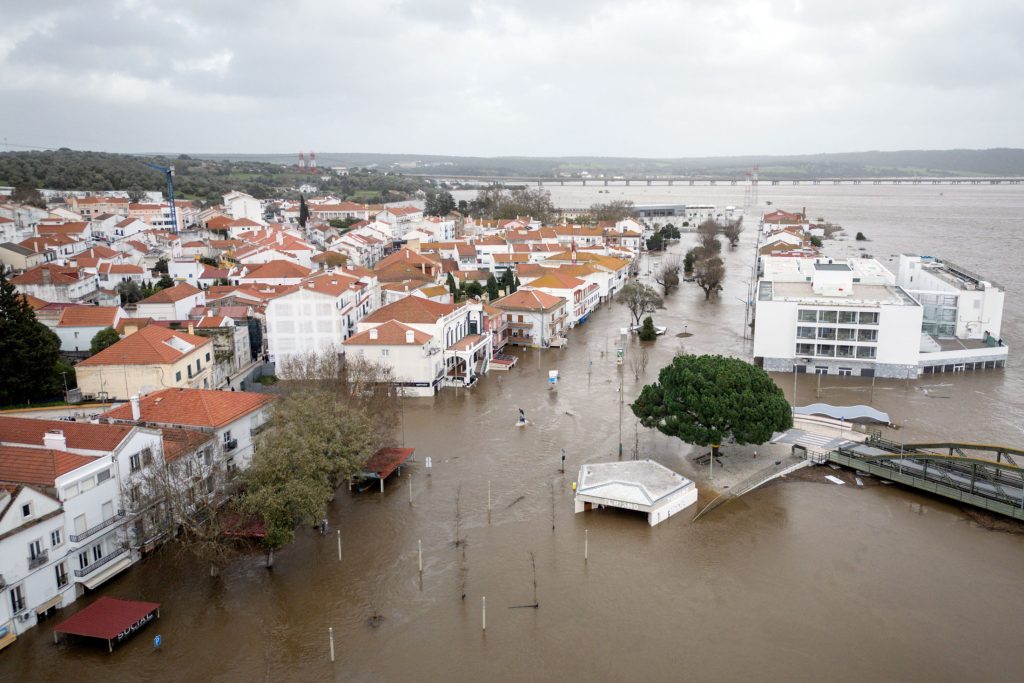
Photograph: Flooding in Alcacer do Sal, Portugal, on Feb. 5, 2025; photo credit: Adri Salido/Getty Images
The European Union is facing a critical challenge as it grapples with the escalating impacts of climate change. Independent advisers have urged the EU to urgently increase its investments to safeguard both people and infrastructure from the rising threats of floods, wildfires, and severe heatwaves.
According to the World Meteorological Organization, climate change has positioned Europe as the fastest-warming continent globally. This alarming trend has resulted in more frequent and intense heatwaves, flooding, coastal destruction, and storms, all of which pose significant risks to the region.
The economic toll from weather-related extremes is staggering, with damages to European infrastructure and buildings now reaching approximately 45 billion euros ($53.34 billion) annually. This figure is five times higher than the costs recorded in the 1980s, highlighting the urgent need for action.
While the EU has set ambitious greenhouse gas reduction targets—recognized as the primary driver of climate change—its adaptation efforts to address the extreme weather already being experienced have not kept pace. The European Scientific Advisory Board on Climate Change has pointed out these shortcomings, emphasizing a need for greater coherence, coordination, and budget allocation.
Ottmar Edenhofer, chair of the advisory board, stated, “It is a lack of coherence, a lack of coordination, and also a lack of budget.” Without enhanced preparations, the EU risks further compromising its competitiveness, straining public finances, and increasing security vulnerabilities.
The advisers recommend that the EU establish a framework to prepare for the risks associated with a temperature increase of 2.8 to 3.3°C by the year 2100. This framework should guide the development of policies aimed at helping both individuals and businesses adapt to changing conditions. For instance, it could involve ensuring that housing is not constructed in flood-prone areas, providing support for farmers affected by drought, or designing urban spaces that help residents cope with extreme heat.
Currently, the average global temperature is 1.4°C higher than pre-industrial levels. Even if countries fulfill their latest national climate pledges, projections indicate that global warming could still reach between 2.3 and 2.5°C this century, according to the UN.
Another crucial area highlighted by EU advisers is the need for investment in public early warning systems and enhanced insurance coverage. Notably, only a quarter of climate-related economic losses in the EU are currently insured, underscoring the necessity for EU-level reinsurance considerations.
In response to these pressing challenges, the European Commission plans to propose a new strategy focused on “climate resilience” later this year. This initiative follows a series of weather disasters, including the devastating floods in Slovenia in 2023, which resulted in reconstruction costs equivalent to 11% of the country’s GDP, and last year’s record-breaking wildfire season across Europe.
($1 = 0.8436 euros)
(Reporting by Kate Abnett; Editing by Susan Fenton)
Photograph: Flooding in Alcacer do Sal, Portugal, on Feb. 5, 2025; photo credit: Adri Salido/Getty Images