Bank of America Reveals Growing Spending Disparity Among Income Groups in the US
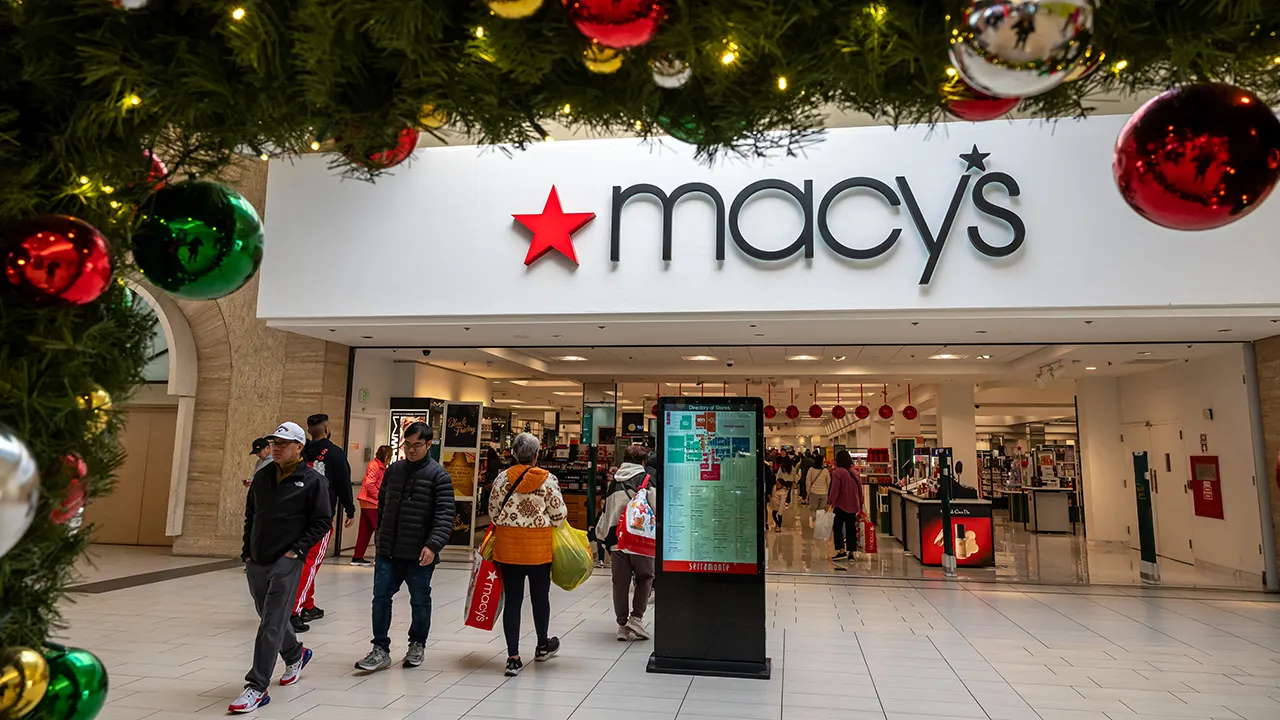
The Big Money Show panelists discuss a report indicating that Gen Z is cutting back on holiday gifts, opting for experiences and personal presence over physical items.
The U.S. economy is exhibiting signs of a “K-shaped” economy, where spending among lower-income consumers is stagnating compared to their higher-income counterparts, according to a recent analysis from the Bank of America Institute.
Internal data from the report revealed that in November, the three-month average of total card spending reflected this K-shaped pattern as the holiday season commenced. “In terms of overall credit and debit card spending, we’ve really seen a divergence open up since around the sort of spring, early summer in our data,” stated David Tinsley, senior economist at the Bank of America Institute, in an interview with FOX Business.
“Currently, higher-income households – that’s the top third of households by income – are experiencing a spending growth of approximately 2.6% year-over-year, while lower-income households are only at 0.6%,” Tinsley noted. “That’s quite a significant gap.”
US ECONOMY EXPECTED TO GROW FASTER IN 2026 DESPITE STAGNANT JOB MARKET: GOLDMAN SACHS
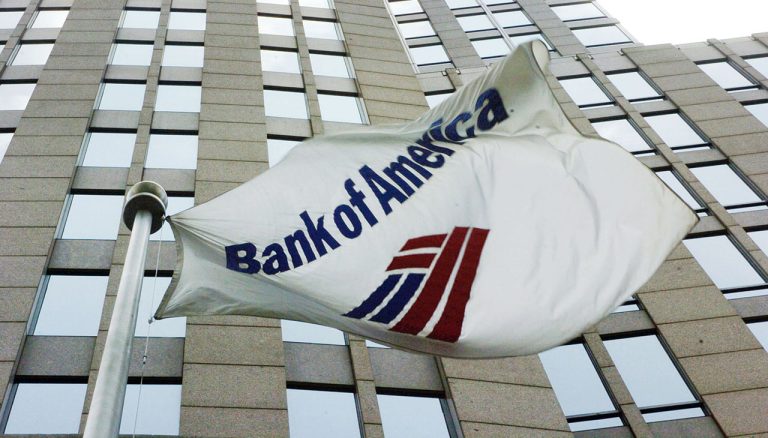
The Bank of America Institute’s report showed signs of a “K-shaped” pattern in consumer spending among lower-income Americans compared to higher-income peers. (David Paul Morris/Bloomberg via Getty Images / Getty Images)
“I think there are kind of two legs to that story. One is the labor market: when you look at wages going into people’s bank accounts in our Bank of America data, we’re seeing higher income wage growth of around 4%, and lower income wage growth of around 1.4%. That’s very close to the largest gap we’ve seen in around 10 years,” he explained. “So on the income side, the K-shape is very apparent too.”
| Ticker | Security | Last | Change | Change % |
|---|---|---|---|---|
| M | MACY’S INC. | 22.05 | -0.09 | -0.41% |
| WMT | WALMART INC. | 114.36 | -0.47 | -0.41% |
| TGT | TARGET CORP. | 98.01 | -1.04 | -1.05% |
| AMZN | AMAZON.COM INC. | 230.82 | -1.71 | -0.74% |
“The other leg in a sense is wealth, equity market gains,” Tinsley noted, emphasizing that these gains have primarily benefited middle- and higher-income households who typically hold equities. “The market’s relative strength over the past two to three years has significantly supported consumer spending among upper-income households,” he added.
NEARLY 1 IN 4 AMERICAN HOUSEHOLDS LIVING PAYCHECK TO PAYCHECK, REPORT REVEALS

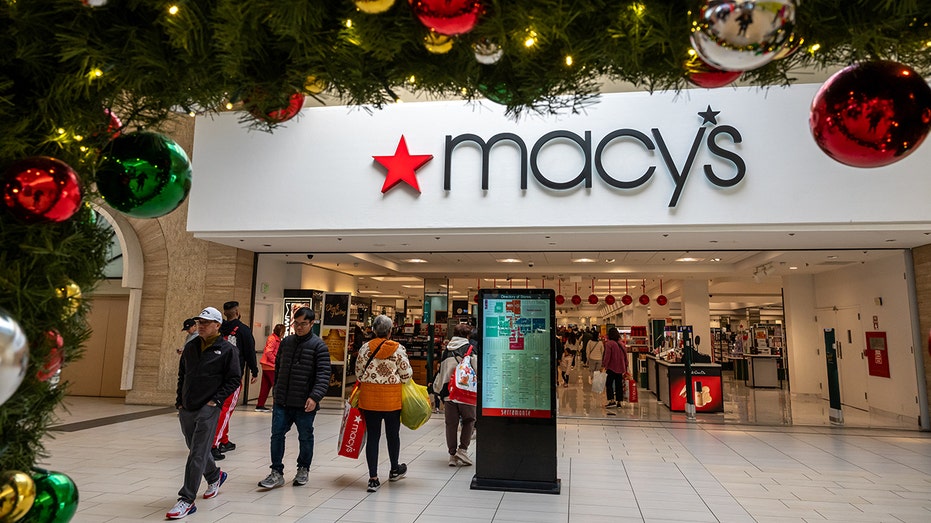
Spending growth among higher-income Americans has been boosted by wealth and market effects, the report noted. (Eduardo Munoz/Reuters / Reuters)
Trends in the labor market are likely driving the K-shaped dynamics observed among consumers. After-tax wage and salary growth among lower-income households continues to lag behind that of higher-income households. The deceleration of lower-income wage growth that was evident in the spring and summer appears to have leveled off in November, according to the Bank of America Institute.
The K-shaped pattern affecting consumers across income groups is also reflected in the firm’s data on holiday spending. US ECONOMY GREW MUCH FASTER THAN EXPECTED IN THE THIRD QUARTER, DELAYED REPORT SHOWS
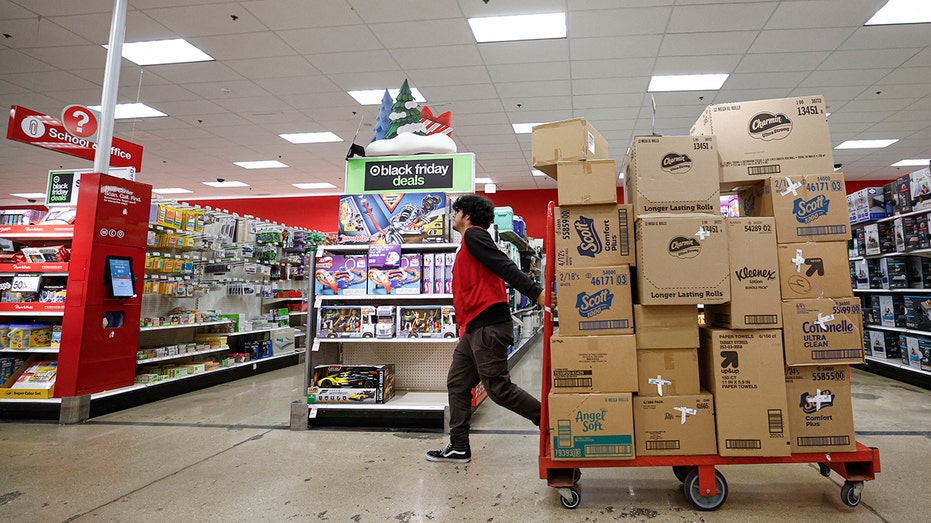
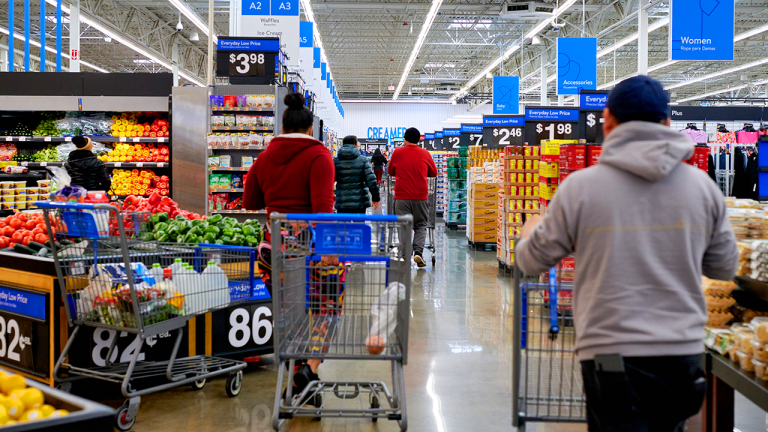
The report also found that Americans have been more price-sensitive this holiday season. (Kamil Krzaczynski/AFP via Getty Images / Getty Images)
The Bank of America Institute found that while lower-income households exhibited relatively healthy spending growth, they still lagged behind middle- and higher-income households. The report noted that the lower-income cohort had the weakest holiday spending growth in the week leading up to Cyber Monday.
Additionally, consumers have shown increased price sensitivity during this holiday season. The growth in spending appears to be driven by a higher number of transactions, with average spending per transaction remaining relatively unchanged. For online holiday purchases, transactions rose by about 10%, while the total amount spent increased by roughly 9%.
“People seem to be effectively avoiding or mitigating price rises from things like tariffs. What we’re seeing is that the volume of goods they’re buying in terms of holiday spending is roughly in line with the dollars they’re spending,” Tinsley explained.
GET FOX BUSINESS ON THE GO BY CLICKING HERE
“They appear to be making good use of online shopping, being quite price-sensitive. They’re maximizing the volume of their purchases relative to their spending,” Tinsley added.
The Big Money Show panelists discuss a report indicating that Gen Z is cutting back on holiday gifts, opting for experiences and personal presence over physical items.
The U.S. economy is exhibiting signs of a “K-shaped” economy, where spending among lower-income consumers is stagnating compared to their higher-income counterparts, according to a recent analysis from the Bank of America Institute.
Internal data from the report revealed that in November, the three-month average of total card spending reflected this K-shaped pattern as the holiday season commenced. “In terms of overall credit and debit card spending, we’ve really seen a divergence open up since around the sort of spring, early summer in our data,” stated David Tinsley, senior economist at the Bank of America Institute, in an interview with FOX Business.
“Currently, higher-income households – that’s the top third of households by income – are experiencing a spending growth of approximately 2.6% year-over-year, while lower-income households are only at 0.6%,” Tinsley noted. “That’s quite a significant gap.”
US ECONOMY EXPECTED TO GROW FASTER IN 2026 DESPITE STAGNANT JOB MARKET: GOLDMAN SACHS
The Bank of America Institute’s report showed signs of a “K-shaped” pattern in consumer spending among lower-income Americans compared to higher-income peers. (David Paul Morris/Bloomberg via Getty Images / Getty Images)
“I think there are kind of two legs to that story. One is the labor market: when you look at wages going into people’s bank accounts in our Bank of America data, we’re seeing higher income wage growth of around 4%, and lower income wage growth of around 1.4%. That’s very close to the largest gap we’ve seen in around 10 years,” he explained. “So on the income side, the K-shape is very apparent too.”
| Ticker | Security | Last | Change | Change % |
|---|---|---|---|---|
| M | MACY’S INC. | 22.05 | -0.09 | -0.41% |
| WMT | WALMART INC. | 114.36 | -0.47 | -0.41% |
| TGT | TARGET CORP. | 98.01 | -1.04 | -1.05% |
| AMZN | AMAZON.COM INC. | 230.82 | -1.71 | -0.74% |
“The other leg in a sense is wealth, equity market gains,” Tinsley noted, emphasizing that these gains have primarily benefited middle- and higher-income households who typically hold equities. “The market’s relative strength over the past two to three years has significantly supported consumer spending among upper-income households,” he added.
NEARLY 1 IN 4 AMERICAN HOUSEHOLDS LIVING PAYCHECK TO PAYCHECK, REPORT REVEALS
Spending growth among higher-income Americans has been boosted by wealth and market effects, the report noted. (Eduardo Munoz/Reuters / Reuters)
Trends in the labor market are likely driving the K-shaped dynamics observed among consumers. After-tax wage and salary growth among lower-income households continues to lag behind that of higher-income households. The deceleration of lower-income wage growth that was evident in the spring and summer appears to have leveled off in November, according to the Bank of America Institute.
The K-shaped pattern affecting consumers across income groups is also reflected in the firm’s data on holiday spending. US ECONOMY GREW MUCH FASTER THAN EXPECTED IN THE THIRD QUARTER, DELAYED REPORT SHOWS
The report also found that Americans have been more price-sensitive this holiday season. (Kamil Krzaczynski/AFP via Getty Images / Getty Images)
The Bank of America Institute found that while lower-income households exhibited relatively healthy spending growth, they still lagged behind middle- and higher-income households. The report noted that the lower-income cohort had the weakest holiday spending growth in the week leading up to Cyber Monday.
Additionally, consumers have shown increased price sensitivity during this holiday season. The growth in spending appears to be driven by a higher number of transactions, with average spending per transaction remaining relatively unchanged. For online holiday purchases, transactions rose by about 10%, while the total amount spent increased by roughly 9%.
“People seem to be effectively avoiding or mitigating price rises from things like tariffs. What we’re seeing is that the volume of goods they’re buying in terms of holiday spending is roughly in line with the dollars they’re spending,” Tinsley explained.
GET FOX BUSINESS ON THE GO BY CLICKING HERE
“They appear to be making good use of online shopping, being quite price-sensitive. They’re maximizing the volume of their purchases relative to their spending,” Tinsley added.