Bank of England’s Bailey Warns: Workers at Risk as AI Displacement Looms

Artificial intelligence is poised to displace British workers even as it enhances productivity, according to Bank of England Governor Andrew Bailey. This statement marks his most significant warning yet regarding the technology’s potential impact on the workforce.
During a recent interview with BBC Radio 4, Bailey emphasized the need for the UK to brace for job displacement, particularly in white-collar sectors. He expressed concerns that AI could hinder the career progression of many workers, limiting their opportunities to ascend to more senior roles.
Bailey referenced historical instances where technological advancements have disrupted employment, from the knitting machine in the Elizabethan era to the industrial revolution. He noted, “We can now look back and say it didn’t cause mass unemployment, but it did displace people from jobs, and this is important. My guess would be that it’s most likely that AI may well have a similar effect.”
While the head of Britain’s central bank remains hopeful that AI could rejuvenate the country’s sluggish productivity growth rates, he cautioned that there may be a bubble in global stocks related to this technology. According to Bailey, the weak growth observed in recent decades can be attributed to the economy being caught between waves of innovation, with AI emerging as a promising catalyst for change.
However, there is mounting evidence that AI is already affecting job demand in the UK, particularly among young graduates and in professional sectors. This trend coincides with a weakening labor market, exacerbated by a subdued economy and rising employment costs following the Labour government’s increase in payroll taxes and minimum wage. Recent figures revealed that unemployment rose to 5.1% in the three months leading up to October, marking the highest rate in nearly five years.
Bailey expressed particular concern about AI’s potential to diminish the pipeline of young talent that typically progresses to senior positions. “We still need people to rise up through that to be senior consultants, senior lawyers, senior accountants,” he stated. “I think we do have to think about what it is doing to the pipeline of people.”
To address these challenges, Bailey emphasized the importance of preparing the workforce for the impending changes. “The really important element there is that we have training, education, skills in place, and that we positively encourage and foster that so that people can move into jobs that use AI,” he said.
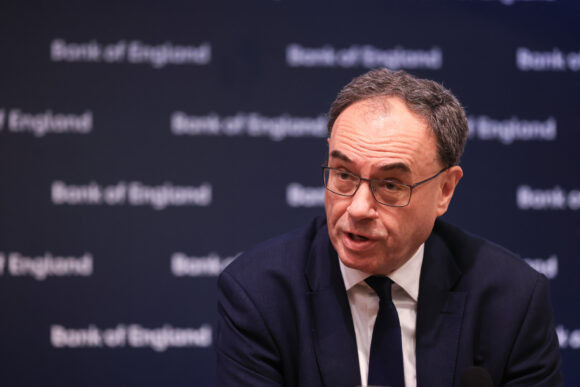
Photograph: Bank of England Governor Andrew Bailey; photo credit: Chris Ratcliffe/Bloomberg
Copyright 2025 Bloomberg.
Interested in AI?
Get automatic alerts for this topic.
Artificial intelligence is poised to displace British workers even as it enhances productivity, according to Bank of England Governor Andrew Bailey. This statement marks his most significant warning yet regarding the technology’s potential impact on the workforce.
During a recent interview with BBC Radio 4, Bailey emphasized the need for the UK to brace for job displacement, particularly in white-collar sectors. He expressed concerns that AI could hinder the career progression of many workers, limiting their opportunities to ascend to more senior roles.
Bailey referenced historical instances where technological advancements have disrupted employment, from the knitting machine in the Elizabethan era to the industrial revolution. He noted, “We can now look back and say it didn’t cause mass unemployment, but it did displace people from jobs, and this is important. My guess would be that it’s most likely that AI may well have a similar effect.”
While the head of Britain’s central bank remains hopeful that AI could rejuvenate the country’s sluggish productivity growth rates, he cautioned that there may be a bubble in global stocks related to this technology. According to Bailey, the weak growth observed in recent decades can be attributed to the economy being caught between waves of innovation, with AI emerging as a promising catalyst for change.
However, there is mounting evidence that AI is already affecting job demand in the UK, particularly among young graduates and in professional sectors. This trend coincides with a weakening labor market, exacerbated by a subdued economy and rising employment costs following the Labour government’s increase in payroll taxes and minimum wage. Recent figures revealed that unemployment rose to 5.1% in the three months leading up to October, marking the highest rate in nearly five years.
Bailey expressed particular concern about AI’s potential to diminish the pipeline of young talent that typically progresses to senior positions. “We still need people to rise up through that to be senior consultants, senior lawyers, senior accountants,” he stated. “I think we do have to think about what it is doing to the pipeline of people.”
To address these challenges, Bailey emphasized the importance of preparing the workforce for the impending changes. “The really important element there is that we have training, education, skills in place, and that we positively encourage and foster that so that people can move into jobs that use AI,” he said.
Photograph: Bank of England Governor Andrew Bailey; photo credit: Chris Ratcliffe/Bloomberg
Copyright 2025 Bloomberg.
Interested in AI?
Get automatic alerts for this topic.