Bitcoin Dips Below $80,000: A Warning Sign of Eroding Confidence
Price, relevance, conviction — Bitcoin is bleeding all three.
The world’s largest cryptocurrency has recently slipped below $76,000 during thin weekend trading, marking a significant drop of about 40% from its 2025 peak. This decline brings Bitcoin back to levels not seen since the aftermath of the “Liberation Day” tariff fallout.
What began as a sharp crash in October has evolved into a more corrosive selloff, characterized not by panic but by a noticeable absence of buyers, momentum, and belief. Unlike the October downturn, this current decline lacks an obvious catalyst, cascading liquidations, or systemic shocks. Instead, it reflects fading demand, thinning liquidity, and a token that appears untethered from broader market movements. Bitcoin has shown little response to geopolitical stress, dollar weakness, or risk rallies. Even during the recent violent swings in gold and silver, cryptocurrencies saw no rotation.
In January, Bitcoin fell nearly 11%, marking its fourth consecutive monthly decline — the longest losing streak since 2018, which followed the crash after the 2017 boom in initial coin offerings.
“I don’t think we’ll see a new all-time high for Bitcoin in 2026,” stated Paul Howard, director at market maker Wincent.
Perhaps even more striking than the price drop itself is the relative lack of optimism surrounding it on social media. In a space typically known for its relentless bravado and “number go up” memes, Bitcoin’s slide has been met with minimal cheerleading or dip-buying enthusiasm.
This downturn occurs despite a wave of regulatory wins from the Trump administration’s pro-crypto pivot and a surge in institutional investment. Many investors believe that this optimism was front-run, leading to early price rallies that have since stalled.
Meanwhile, spot ETFs continue to bleed, indicating weakening conviction among mainstream buyers, many of whom are now underwater after purchasing at higher prices. Large institutional players, such as digital asset treasuries, have also reduced their purchases following the bursting of their own stock price bubbles last year, further diminishing demand from the top end of the market.
According to Kaiko data, Bitcoin’s market depth—a measure of the capital available to absorb large trades—remains over 30% below its October peak. The last time liquidity fell this low was after the FTX collapse in 2022.
Historical patterns offer little comfort. After the 2021 peak, Bitcoin took 28 months to recover, while following the 2017 boom in initial coin offerings, it took nearly three years. By these standards, the current downturn may still be in its early stages.
“Looking at historical crypto exchange volume contractions, from 2017’s peak throughout the 2018–2019 winter, we saw a 60% to 70% volume decline across spot exchanges,” noted Laurens Fraussen, an analyst at Kaiko. In contrast, the 2021–2023 drawdown has seen a more moderate 30% to 40% contraction.
“In terms of where I think we are in the current cycle, probably about 25% of the way through,” he added. “Cyclically speaking, we usually see our worst drawdown at around the 50% mark.” Fraussen estimates it could take another six to nine months before a meaningful recovery takes hold, with volumes likely to remain muted during the latter stages of correction and re-accumulation.
Others point to a more fundamental challenge: competition for capital. Richard Hodges, founder of Ferro BTC Volatility Fund, has warned large Bitcoin holders that patience will be required.
“I speak with a lot of Bitcoin whales and I have told them categorically that they’re not going to see another all-time high for 1,000 days,” Hodges remarked. He highlighted the rise of AI-linked stocks and the resurgence of precious metals, which have attracted both macro traders and momentum chasers.
“Bitcoin was like three-years-ago news, not today,” he concluded. “AI stocks are going to the moon. We saw the beginning of the gold ramp up, then silver went ballistic.”
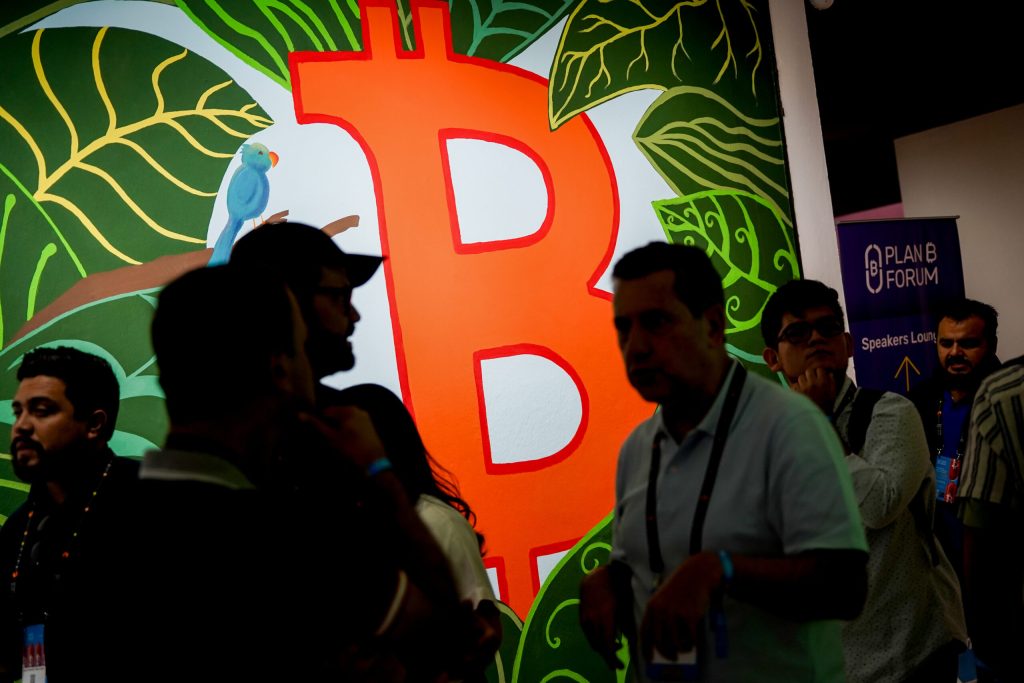
Photo: Bitcoin signage on the exhibition floor during the Plan B Forum Bitcoin conference in San Salvador, El Salvador, on Friday, Jan. 30, 2026. Photographer: Camilo Freedman/Bloomberg
Copyright 2026 Bloomberg.
The most important insurance news, in your inbox every business day.
Get the insurance industry’s trusted newsletter
Price, relevance, conviction — Bitcoin is bleeding all three.
The world’s largest cryptocurrency has recently slipped below $76,000 during thin weekend trading, marking a significant drop of about 40% from its 2025 peak. This decline brings Bitcoin back to levels not seen since the aftermath of the “Liberation Day” tariff fallout.
What began as a sharp crash in October has evolved into a more corrosive selloff, characterized not by panic but by a noticeable absence of buyers, momentum, and belief. Unlike the October downturn, this current decline lacks an obvious catalyst, cascading liquidations, or systemic shocks. Instead, it reflects fading demand, thinning liquidity, and a token that appears untethered from broader market movements. Bitcoin has shown little response to geopolitical stress, dollar weakness, or risk rallies. Even during the recent violent swings in gold and silver, cryptocurrencies saw no rotation.
In January, Bitcoin fell nearly 11%, marking its fourth consecutive monthly decline — the longest losing streak since 2018, which followed the crash after the 2017 boom in initial coin offerings.
“I don’t think we’ll see a new all-time high for Bitcoin in 2026,” stated Paul Howard, director at market maker Wincent.
Perhaps even more striking than the price drop itself is the relative lack of optimism surrounding it on social media. In a space typically known for its relentless bravado and “number go up” memes, Bitcoin’s slide has been met with minimal cheerleading or dip-buying enthusiasm.
This downturn occurs despite a wave of regulatory wins from the Trump administration’s pro-crypto pivot and a surge in institutional investment. Many investors believe that this optimism was front-run, leading to early price rallies that have since stalled.
Meanwhile, spot ETFs continue to bleed, indicating weakening conviction among mainstream buyers, many of whom are now underwater after purchasing at higher prices. Large institutional players, such as digital asset treasuries, have also reduced their purchases following the bursting of their own stock price bubbles last year, further diminishing demand from the top end of the market.
According to Kaiko data, Bitcoin’s market depth—a measure of the capital available to absorb large trades—remains over 30% below its October peak. The last time liquidity fell this low was after the FTX collapse in 2022.
Historical patterns offer little comfort. After the 2021 peak, Bitcoin took 28 months to recover, while following the 2017 boom in initial coin offerings, it took nearly three years. By these standards, the current downturn may still be in its early stages.
“Looking at historical crypto exchange volume contractions, from 2017’s peak throughout the 2018–2019 winter, we saw a 60% to 70% volume decline across spot exchanges,” noted Laurens Fraussen, an analyst at Kaiko. In contrast, the 2021–2023 drawdown has seen a more moderate 30% to 40% contraction.
“In terms of where I think we are in the current cycle, probably about 25% of the way through,” he added. “Cyclically speaking, we usually see our worst drawdown at around the 50% mark.” Fraussen estimates it could take another six to nine months before a meaningful recovery takes hold, with volumes likely to remain muted during the latter stages of correction and re-accumulation.
Others point to a more fundamental challenge: competition for capital. Richard Hodges, founder of Ferro BTC Volatility Fund, has warned large Bitcoin holders that patience will be required.
“I speak with a lot of Bitcoin whales and I have told them categorically that they’re not going to see another all-time high for 1,000 days,” Hodges remarked. He highlighted the rise of AI-linked stocks and the resurgence of precious metals, which have attracted both macro traders and momentum chasers.
“Bitcoin was like three-years-ago news, not today,” he concluded. “AI stocks are going to the moon. We saw the beginning of the gold ramp up, then silver went ballistic.”
Photo: Bitcoin signage on the exhibition floor during the Plan B Forum Bitcoin conference in San Salvador, El Salvador, on Friday, Jan. 30, 2026. Photographer: Camilo Freedman/Bloomberg
Copyright 2026 Bloomberg.
The most important insurance news, in your inbox every business day.
Get the insurance industry’s trusted newsletter