Brown University Students Face Increased Security Measures Following Campus Shooting
Brown University students returned to classes on Wednesday after a tragic shooting last month that disrupted the usual sense of safety on the scenic campus and prompted a thorough review of the Ivy League institution’s security protocols.
On December 13, a shooter targeted an exam-prep session at Brown, resulting in the deaths of two students and injuries to nine others. In response, the university promptly canceled final exams and sent students home early for winter break while law enforcement searched for the assailant. After a nearly week-long manhunt, the shooter, Claudio Manuel Neves Valente, a former Brown student, was found deceased in a storage facility in New Hampshire.
By January 5, all injured students had been discharged from the hospital, according to a spokesperson from Brown University Health. The university plans to hold a memorial service for the two deceased students, Ella Cook and Mukhammad Aziz Umurzokov, on February 7. Following the Brown shooting, Valente also killed Massachusetts Institute of Technology professor Nuno Loureiro in Massachusetts.
Brown’s campus is situated in an affluent area of Providence, Rhode Island, a city known for its low rates of gun violence. The campus is largely integrated with surrounding residential neighborhoods and local streets, contributing to its charm for both students and locals. However, the university now faces the challenge of maintaining this sense of community while implementing measures to ensure the safety of its students and faculty.
In response to the shooting, Brown President Christina Paxson commissioned an external review of the university’s safety protocols. At the time of the incident, more than 1,200 cameras were installed on campus, but criticism arose regarding the lack of clear footage that could aid in identifying the shooter. In light of this, additional cameras have been installed, along with new “panic buttons.”
Access to most academic buildings now requires a university swipe card, and the number of public safety officers on campus has doubled. Paxson placed the school’s police chief on administrative leave and appointed Hugh Clements, the former police chief of Providence, as the interim public-safety leader.
“I’m not scared to go back,” said Joseph McGonagle, a freshman studying applied mathematics. “However, I think there are going to be certain parts of campus that are really hard to go to.”
McGonagle had brunch with Umurzokov and another friend on the morning of the shooting and barricaded himself in the science library for at least five hours until law enforcement allowed them to leave. He texted Umurzokov and his other friend to check on them, only to learn that his friend had been shot but survived. Tragically, he later discovered that Umurzokov had died.
In a transcript of video recordings released by federal officials, Valente indicated he had planned his attack for “six semesters” and showed no remorse for his actions. He provided no clear motive for targeting Brown or Loureiro, who led MIT’s Plasma Science and Fusion Center. Valente had studied physics at Brown in the early 2000s and attended the same university in Lisbon as Loureiro.
At the Barus & Holley engineering building, where the shooting occurred, two lecture halls and eight classrooms remain closed indefinitely. However, students can now retrieve personal items left behind during the investigation. Psychologists and trained personnel will be available on campus to provide counseling.
“The road to recovery for some will be long, with steps forward and steps back along the way,” Paxson wrote in an open letter on Tuesday. “We are a community that feels loss while reclaiming all that it is to be Brown.”
To assist faculty in welcoming students back, Brown administrators shared resources from Michigan State University and the University of Virginia, both of which have experienced mass shootings. Recommendations included reducing in-class activities and allowing students the option to re-take or re-write their assignments.
Despite the challenges, many in Brown’s community are eager to return, albeit with a sense of apprehension about passing by Barus & Holley or returning to the classrooms where they sheltered during the lockdown. Some students are channeling their energy into efforts aimed at reducing gun violence.
Tommy Medlin, a junior and gun reform caucus director for Brown’s College Democrats, noted a surge of interest from students wanting to attend the group’s next meeting. “I never had a personal connection to gun violence until now,” Medlin remarked.
Compounding the urgency of revamping security measures is an investigation by the Trump administration into the university’s compliance with the Clery Act, a 1990 law mandating certain safety standards for colleges. Brown previously agreed to pay $50 million to support workforce development in Rhode Island as part of a settlement related to an investigation into its handling of antisemitism on campus.
Brown officials have stated they will “assess and adjust” security measures as necessary in the coming weeks, while also committing to “sustaining and restoring the sense of belonging, joy, and possibility that defines who we are.”
“Historically, it’s been an open campus that takes its ties to the broader community quite seriously,” said Bradford Gibbs, a finance professor and Brown alumnus living nearby. “What trade-offs does one have to make? How far do we take it?”
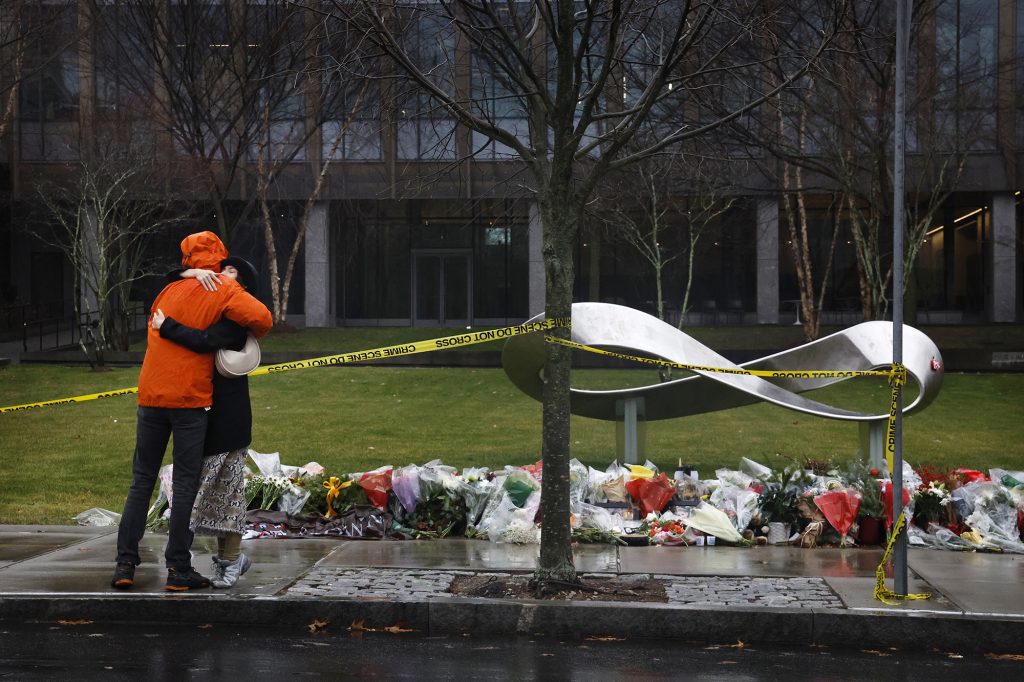
Top Photo: A memorial outside the Barus and Holley building at Brown University in Providence, Rhode Island on Dec. 19. Photographer: Craig F. Walker/The Boston Globe/Getty Images
Copyright 2026 Bloomberg.
The most important insurance news, in your inbox every business day.
Get the insurance industry’s trusted newsletter
Brown University students returned to classes on Wednesday after a tragic shooting last month that disrupted the usual sense of safety on the scenic campus and prompted a thorough review of the Ivy League institution’s security protocols.
On December 13, a shooter targeted an exam-prep session at Brown, resulting in the deaths of two students and injuries to nine others. In response, the university promptly canceled final exams and sent students home early for winter break while law enforcement searched for the assailant. After a nearly week-long manhunt, the shooter, Claudio Manuel Neves Valente, a former Brown student, was found deceased in a storage facility in New Hampshire.
By January 5, all injured students had been discharged from the hospital, according to a spokesperson from Brown University Health. The university plans to hold a memorial service for the two deceased students, Ella Cook and Mukhammad Aziz Umurzokov, on February 7. Following the Brown shooting, Valente also killed Massachusetts Institute of Technology professor Nuno Loureiro in Massachusetts.
Brown’s campus is situated in an affluent area of Providence, Rhode Island, a city known for its low rates of gun violence. The campus is largely integrated with surrounding residential neighborhoods and local streets, contributing to its charm for both students and locals. However, the university now faces the challenge of maintaining this sense of community while implementing measures to ensure the safety of its students and faculty.
In response to the shooting, Brown President Christina Paxson commissioned an external review of the university’s safety protocols. At the time of the incident, more than 1,200 cameras were installed on campus, but criticism arose regarding the lack of clear footage that could aid in identifying the shooter. In light of this, additional cameras have been installed, along with new “panic buttons.”
Access to most academic buildings now requires a university swipe card, and the number of public safety officers on campus has doubled. Paxson placed the school’s police chief on administrative leave and appointed Hugh Clements, the former police chief of Providence, as the interim public-safety leader.
“I’m not scared to go back,” said Joseph McGonagle, a freshman studying applied mathematics. “However, I think there are going to be certain parts of campus that are really hard to go to.”
McGonagle had brunch with Umurzokov and another friend on the morning of the shooting and barricaded himself in the science library for at least five hours until law enforcement allowed them to leave. He texted Umurzokov and his other friend to check on them, only to learn that his friend had been shot but survived. Tragically, he later discovered that Umurzokov had died.
In a transcript of video recordings released by federal officials, Valente indicated he had planned his attack for “six semesters” and showed no remorse for his actions. He provided no clear motive for targeting Brown or Loureiro, who led MIT’s Plasma Science and Fusion Center. Valente had studied physics at Brown in the early 2000s and attended the same university in Lisbon as Loureiro.
At the Barus & Holley engineering building, where the shooting occurred, two lecture halls and eight classrooms remain closed indefinitely. However, students can now retrieve personal items left behind during the investigation. Psychologists and trained personnel will be available on campus to provide counseling.
“The road to recovery for some will be long, with steps forward and steps back along the way,” Paxson wrote in an open letter on Tuesday. “We are a community that feels loss while reclaiming all that it is to be Brown.”
To assist faculty in welcoming students back, Brown administrators shared resources from Michigan State University and the University of Virginia, both of which have experienced mass shootings. Recommendations included reducing in-class activities and allowing students the option to re-take or re-write their assignments.
Despite the challenges, many in Brown’s community are eager to return, albeit with a sense of apprehension about passing by Barus & Holley or returning to the classrooms where they sheltered during the lockdown. Some students are channeling their energy into efforts aimed at reducing gun violence.
Tommy Medlin, a junior and gun reform caucus director for Brown’s College Democrats, noted a surge of interest from students wanting to attend the group’s next meeting. “I never had a personal connection to gun violence until now,” Medlin remarked.
Compounding the urgency of revamping security measures is an investigation by the Trump administration into the university’s compliance with the Clery Act, a 1990 law mandating certain safety standards for colleges. Brown previously agreed to pay $50 million to support workforce development in Rhode Island as part of a settlement related to an investigation into its handling of antisemitism on campus.
Brown officials have stated they will “assess and adjust” security measures as necessary in the coming weeks, while also committing to “sustaining and restoring the sense of belonging, joy, and possibility that defines who we are.”
“Historically, it’s been an open campus that takes its ties to the broader community quite seriously,” said Bradford Gibbs, a finance professor and Brown alumnus living nearby. “What trade-offs does one have to make? How far do we take it?”
Top Photo: A memorial outside the Barus and Holley building at Brown University in Providence, Rhode Island on Dec. 19. Photographer: Craig F. Walker/The Boston Globe/Getty Images
Copyright 2026 Bloomberg.
The most important insurance news, in your inbox every business day.
Get the insurance industry’s trusted newsletter