Businesses Under Pressure to Address ICE Demands While Facing Increased Targeting
From family-run cafes to retail giants, businesses are increasingly caught in the crosshairs of President Donald Trump’s mass deportation campaign. This pressure manifests in various ways, from public demands for companies to speak out against aggressive immigration enforcement to becoming the sites of arrests themselves.
In Minneapolis, the Department of Homeland Security is reportedly conducting its largest operation ever, prompting hotels, restaurants, and other businesses to temporarily close or halt reservations amid widespread protests. The situation escalated on Sunday when U.S. Border Patrol shot and killed Alex Pretti, leading over 60 CEOs from Minnesota-based companies, including Target, Best Buy, and UnitedHealth, to sign an open letter urging for “an immediate de-escalation of tensions” and collaboration among state, local, and federal officials to find real solutions.
However, the letter did not directly address immigration enforcement or recent arrests at businesses. Earlier this month, videos circulated showing federal agents detaining two Target employees in Minnesota. U.S. Immigration and Customs Enforcement (ICE) has also rounded up day laborers in Home Depot parking lots and delivery workers on the streets nationwide. Last year, federal agents detained 475 individuals during a raid at a Hyundai plant in Georgia.
Here’s what we know about immigration enforcement in businesses.
What ICE is Allowed to Do
ICE can enter public areas of a business without a warrant, which includes restaurant dining sections, open parking lots, office lobbies, and shopping aisles. “The general public can go into a store for purposes of shopping, right? And so can law enforcement agents — without a warrant,” explains Jessie Hahn, senior counsel for labor and employment policy at the National Immigration Law Center. This means immigration officials may question individuals, seize information, and even make arrests in public-facing areas.
However, to access areas with a reasonable expectation of privacy, such as back offices or closed kitchens, ICE must have a judicial warrant signed by a judge. This warrant can be limited to specific days or parts of the business. It’s crucial to differentiate judicial warrants from administrative warrants, which are signed by immigration officers.
In an internal memo obtained by The Associated Press, ICE leadership indicated that administrative warrants could suffice for federal officers to forcibly enter homes if there’s a final order of removal. Hahn and other immigration rights lawyers argue this undermines years of precedent regarding federal agents’ authority in private spaces and violates fundamental principles of the U.S. Constitution.
The easiest way for ICE to enter private spaces in businesses without a warrant is through employer consent, which could be as simple as allowing an agent into certain areas. They may also cite “exigent circumstances,” such as being in “hot pursuit” of an individual.
Other Actions ICE Can Take Against Employers
In addition to workplace raids, enforcement against employers can include I-9 audits, which verify employees’ authorization to work in the U.S. Since the start of Trump’s second term, there has been an uptick in ICE physically showing up to initiate I-9 audits, marking a shift from previous enforcement methods that often began with mailed notices.
David Jones, a regional managing partner at labor and employment law firm Fisher Phillips, noted that immigration agents approach these audits similarly to recent raids. “ICE is still showing up in their full tactical gear without identifying themselves, just to serve a notice of inspection,” he said. Employers have three days to respond to an I-9 audit, but aggressive behavior from agents may pressure businesses to act more quickly.
The Rights of Businesses
If ICE arrives without a warrant, businesses can ask agents to leave or refuse service based on their company policy, citing safety concerns or disruptions caused by the agents’ presence. However, there’s no guarantee that immigration officials will comply, especially in public spaces. “That’s not what we’re seeing here in Minnesota. They still conduct the activity,” said John Medeiros, who leads corporate immigration practice at Nilan Johnson Lewis.
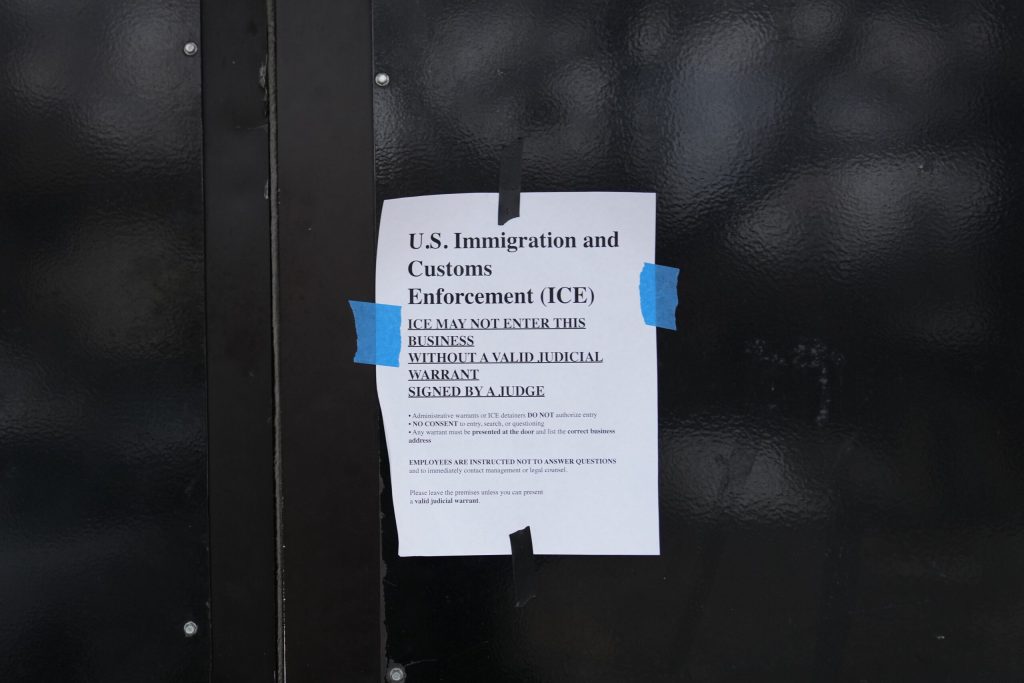
Consequently, the focus for many businesses shifts from getting ICE to leave to addressing potential violations of consent and legal requirements. In Minneapolis and other cities experiencing surges in immigration enforcement, some businesses have put up signs to designate private spaces and established protocols for handling ICE visits.
Vanessa Matsis-McCready, associate general counsel and vice president of HR at Engage PEO, has observed a nationwide increase in interest for I-9 self-audits and emergency preparedness across various sectors.
How the Public is Responding
ICE’s heightened presence and aggressive arrests at businesses have sparked public outcry, with some directed at the companies for not taking a stronger stance. Smaller business owners are vocal about ICE’s impact on their workers and customers, while larger corporations have remained largely silent on the issue.
Minneapolis-based Target has not commented on the recent detainment of its employees, although its incoming chief executive, Michael Fiddelke, addressed the company’s workforce, calling recent violence “incredibly painful” without directly mentioning immigration enforcement. He emphasized that Target is doing “everything we can to manage what’s in our control” and signed the Minnesota Chamber of Commerce’s letter advocating for broader de-escalation.
Target is among the companies that organizers with “ICE Out of Minnesota” have urged to take a stronger public stance against ICE’s presence in the state. Others include Home Depot, known for its parking lot raids, and Hilton, which protestors claim has housed federal agents.
While Hilton and Home Depot did not respond to requests for comments, Home Depot previously denied involvement in immigration operations. Worker groups have been more outspoken, with Ted Pappageorge of the Culinary Union in Las Vegas expressing shock at the “widening pattern of unlawful ICE behavior” and recognizing that anti-immigrant policies harm tourism, business, and families. The United Auto Workers also voiced solidarity with Minneapolis residents resisting federal government abuses against the working class.
Hahn from the National Immigration Law Center noted that some businesses are communicating through industry associations to mitigate direct exposure to potential retaliation. However, she emphasized the importance of publicly addressing the impacts of immigration enforcement. “We know that the raids contribute to labor shortages and reduced foot traffic,” she said, warning that failing to push back against “this abuse of power” could lead to significant economic changes.
Photo: A sign is taped to the outside of the 24 Somali Mall in Minneapolis, Jan. 15, 2026. (AP Photo/Abbie Parr, File)
Copyright 2026 Associated Press. All rights reserved. This material may not be published, broadcast, rewritten, or redistributed.
From family-run cafes to retail giants, businesses are increasingly caught in the crosshairs of President Donald Trump’s mass deportation campaign. This pressure manifests in various ways, from public demands for companies to speak out against aggressive immigration enforcement to becoming the sites of arrests themselves.
In Minneapolis, the Department of Homeland Security is reportedly conducting its largest operation ever, prompting hotels, restaurants, and other businesses to temporarily close or halt reservations amid widespread protests. The situation escalated on Sunday when U.S. Border Patrol shot and killed Alex Pretti, leading over 60 CEOs from Minnesota-based companies, including Target, Best Buy, and UnitedHealth, to sign an open letter urging for “an immediate de-escalation of tensions” and collaboration among state, local, and federal officials to find real solutions.
However, the letter did not directly address immigration enforcement or recent arrests at businesses. Earlier this month, videos circulated showing federal agents detaining two Target employees in Minnesota. U.S. Immigration and Customs Enforcement (ICE) has also rounded up day laborers in Home Depot parking lots and delivery workers on the streets nationwide. Last year, federal agents detained 475 individuals during a raid at a Hyundai plant in Georgia.
Here’s what we know about immigration enforcement in businesses.
What ICE is Allowed to Do
ICE can enter public areas of a business without a warrant, which includes restaurant dining sections, open parking lots, office lobbies, and shopping aisles. “The general public can go into a store for purposes of shopping, right? And so can law enforcement agents — without a warrant,” explains Jessie Hahn, senior counsel for labor and employment policy at the National Immigration Law Center. This means immigration officials may question individuals, seize information, and even make arrests in public-facing areas.
However, to access areas with a reasonable expectation of privacy, such as back offices or closed kitchens, ICE must have a judicial warrant signed by a judge. This warrant can be limited to specific days or parts of the business. It’s crucial to differentiate judicial warrants from administrative warrants, which are signed by immigration officers.
In an internal memo obtained by The Associated Press, ICE leadership indicated that administrative warrants could suffice for federal officers to forcibly enter homes if there’s a final order of removal. Hahn and other immigration rights lawyers argue this undermines years of precedent regarding federal agents’ authority in private spaces and violates fundamental principles of the U.S. Constitution.
The easiest way for ICE to enter private spaces in businesses without a warrant is through employer consent, which could be as simple as allowing an agent into certain areas. They may also cite “exigent circumstances,” such as being in “hot pursuit” of an individual.
Other Actions ICE Can Take Against Employers
In addition to workplace raids, enforcement against employers can include I-9 audits, which verify employees’ authorization to work in the U.S. Since the start of Trump’s second term, there has been an uptick in ICE physically showing up to initiate I-9 audits, marking a shift from previous enforcement methods that often began with mailed notices.
David Jones, a regional managing partner at labor and employment law firm Fisher Phillips, noted that immigration agents approach these audits similarly to recent raids. “ICE is still showing up in their full tactical gear without identifying themselves, just to serve a notice of inspection,” he said. Employers have three days to respond to an I-9 audit, but aggressive behavior from agents may pressure businesses to act more quickly.
The Rights of Businesses
If ICE arrives without a warrant, businesses can ask agents to leave or refuse service based on their company policy, citing safety concerns or disruptions caused by the agents’ presence. However, there’s no guarantee that immigration officials will comply, especially in public spaces. “That’s not what we’re seeing here in Minnesota. They still conduct the activity,” said John Medeiros, who leads corporate immigration practice at Nilan Johnson Lewis.
Consequently, the focus for many businesses shifts from getting ICE to leave to addressing potential violations of consent and legal requirements. In Minneapolis and other cities experiencing surges in immigration enforcement, some businesses have put up signs to designate private spaces and established protocols for handling ICE visits.
Vanessa Matsis-McCready, associate general counsel and vice president of HR at Engage PEO, has observed a nationwide increase in interest for I-9 self-audits and emergency preparedness across various sectors.
How the Public is Responding
ICE’s heightened presence and aggressive arrests at businesses have sparked public outcry, with some directed at the companies for not taking a stronger stance. Smaller business owners are vocal about ICE’s impact on their workers and customers, while larger corporations have remained largely silent on the issue.
Minneapolis-based Target has not commented on the recent detainment of its employees, although its incoming chief executive, Michael Fiddelke, addressed the company’s workforce, calling recent violence “incredibly painful” without directly mentioning immigration enforcement. He emphasized that Target is doing “everything we can to manage what’s in our control” and signed the Minnesota Chamber of Commerce’s letter advocating for broader de-escalation.
Target is among the companies that organizers with “ICE Out of Minnesota” have urged to take a stronger public stance against ICE’s presence in the state. Others include Home Depot, known for its parking lot raids, and Hilton, which protestors claim has housed federal agents.
While Hilton and Home Depot did not respond to requests for comments, Home Depot previously denied involvement in immigration operations. Worker groups have been more outspoken, with Ted Pappageorge of the Culinary Union in Las Vegas expressing shock at the “widening pattern of unlawful ICE behavior” and recognizing that anti-immigrant policies harm tourism, business, and families. The United Auto Workers also voiced solidarity with Minneapolis residents resisting federal government abuses against the working class.
Hahn from the National Immigration Law Center noted that some businesses are communicating through industry associations to mitigate direct exposure to potential retaliation. However, she emphasized the importance of publicly addressing the impacts of immigration enforcement. “We know that the raids contribute to labor shortages and reduced foot traffic,” she said, warning that failing to push back against “this abuse of power” could lead to significant economic changes.
Photo: A sign is taped to the outside of the 24 Somali Mall in Minneapolis, Jan. 15, 2026. (AP Photo/Abbie Parr, File)
Copyright 2026 Associated Press. All rights reserved. This material may not be published, broadcast, rewritten, or redistributed.