Byrna Technologies Shifts Manufacturing to the US in Response to Tariff Issues
Byrna Technologies CEO Bryan Ganz discusses the company’s efforts to ramp up its U.S. manufacturing operations.
Byrna Technologies, a company specializing in self-defense products, has dedicated the past few years to relocating much of its manufacturing to the United States. This strategic shift has proven beneficial, extending beyond merely affixing a “Made in America” label to their products.
In 2021, Byrna moved its primary manufacturing facility from South Africa to Indiana. This transition allowed the company to identify qualified U.S. component suppliers, thereby mitigating supply chain disruptions similar to those experienced during the pandemic.
“There are over 100 components that go into our launchers; we wanted redundancy on all of them,” said Byrna Technologies CEO Bryan Ganz in an interview with FOX Business. “Generally, offshore manufacturers were a bit less expensive, so they handled most of the production.”
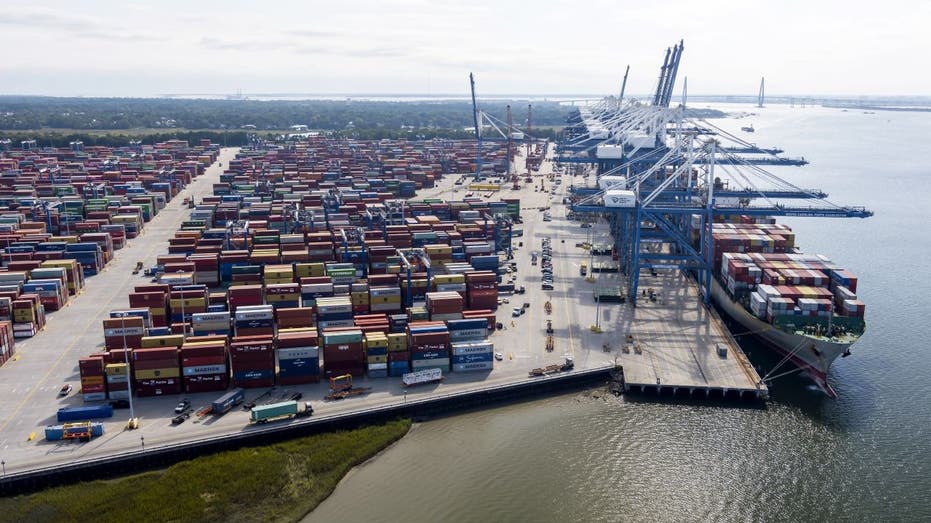
Byrna Technologies moved its main manufacturing facility from South Africa to Indiana in 2021. (Sam Wolfe/Bloomberg via Getty Images)
Ganz noted that the decision to move was influenced by the political climate. “When it became clear that Donald Trump was likely to be elected president, we thought, ‘He’s been very vocal about tariffs; this might be a good time to start moving the supply chain back onshore,’” he explained.
BYRNA TECHNOLOGIES CEO ‘PLEASED’ WITH TRUMP TARIFFS HITTING CHINESE RIVALS
Byrna began this transition even before tariffs were announced, and once they were implemented, the company felt validated in its decision to onshore production. “Interestingly, not only did tariffs make U.S. production cheaper, but we also discovered various soft cost benefits,” Ganz added.
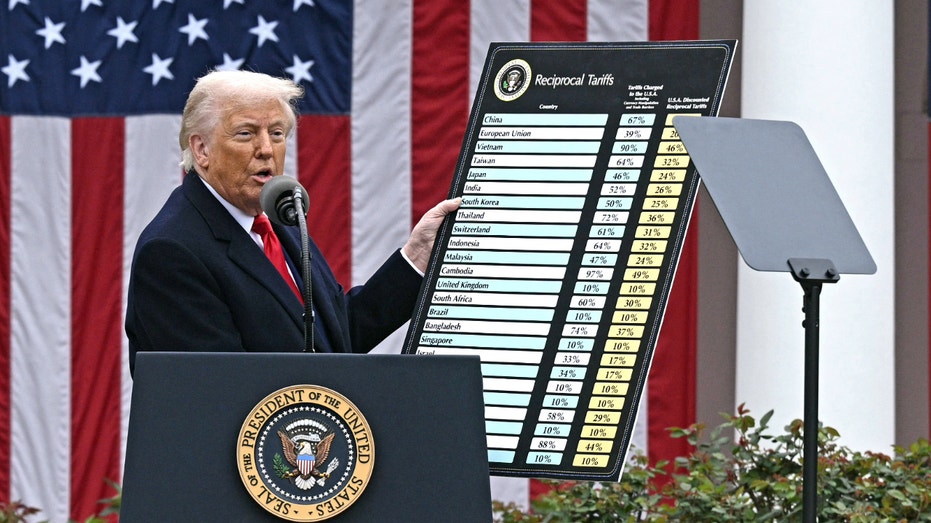
Byrna Technologies moved its manufacturing back to the U.S. before President Donald Trump implemented tariffs. (Brendan Smialowski/AFP via Getty Images)
Byrna’s shift to local manufacturing has also improved responsiveness to consumer demand. “When you source components from offshore, you incur air freight costs and lengthy ocean voyages. However, sourcing from just a hundred miles away allows for much quicker adjustments,” Ganz explained. “If I need to address a quality issue, I can visit the factory directly.”
HOW SHOULD BUSINESSES APPROACH TARIFF REFUNDS?
While Byrna still sources some accessories from overseas, the company has prioritized onshoring critical components, such as the launcher and its ammunition. “We’re producing self-defense products, and the quality and reliability of our products are paramount to our consumers. Thus, the ‘Made in America’ label holds significant value for us,” Ganz emphasized.
Byrna has closed its ammunition manufacturing facility in South Africa and relocated it to a newly constructed facility in Fort Wayne, just five miles from where its launchers are produced.
FORMER INTEL CEO WARNS US CHIP COMEBACK STILL HAS A LONG WAY TO GO
The latest Byrna launcher, the Byrna CL, previously comprised 34% U.S. components, but that figure has now risen to 92% following the reshoring initiative. “While this transition has incurred some costs—about a couple of percentage points increase—we’ve managed to keep our margins stable, with last year at 62% and this year around 60.5-61%,” Ganz noted. “So, the impact on cost has been minimal.”
He further explained that tariffs played a crucial role in reshoring decisions due to the increased costs associated with import levies. “Shipping costs can quickly negate any savings from offshore production, especially with a 30% tariff. I’m very patriotic and prefer manufacturing in America, but as a public company, we must prioritize our shareholders’ interests,” he stated. “With the tariffs, it became clear that producing in the U.S. was more cost-effective than offshore.”
Byrna continues to maintain some component manufacturing abroad to ensure redundancy in its supply chain, protecting against potential vulnerabilities if a domestic facility were to go offline unexpectedly. However, the overall push for onshoring has elevated the company’s domestic sourcing to an impressive 80%-90% range.
Byrna Technologies CEO Bryan Ganz discusses the company’s efforts to ramp up its U.S. manufacturing operations.
Byrna Technologies, a company specializing in self-defense products, has dedicated the past few years to relocating much of its manufacturing to the United States. This strategic shift has proven beneficial, extending beyond merely affixing a “Made in America” label to their products.
In 2021, Byrna moved its primary manufacturing facility from South Africa to Indiana. This transition allowed the company to identify qualified U.S. component suppliers, thereby mitigating supply chain disruptions similar to those experienced during the pandemic.
“There are over 100 components that go into our launchers; we wanted redundancy on all of them,” said Byrna Technologies CEO Bryan Ganz in an interview with FOX Business. “Generally, offshore manufacturers were a bit less expensive, so they handled most of the production.”
Byrna Technologies moved its main manufacturing facility from South Africa to Indiana in 2021. (Sam Wolfe/Bloomberg via Getty Images)
Ganz noted that the decision to move was influenced by the political climate. “When it became clear that Donald Trump was likely to be elected president, we thought, ‘He’s been very vocal about tariffs; this might be a good time to start moving the supply chain back onshore,’” he explained.
BYRNA TECHNOLOGIES CEO ‘PLEASED’ WITH TRUMP TARIFFS HITTING CHINESE RIVALS
Byrna began this transition even before tariffs were announced, and once they were implemented, the company felt validated in its decision to onshore production. “Interestingly, not only did tariffs make U.S. production cheaper, but we also discovered various soft cost benefits,” Ganz added.
Byrna Technologies moved its manufacturing back to the U.S. before President Donald Trump implemented tariffs. (Brendan Smialowski/AFP via Getty Images)
Byrna’s shift to local manufacturing has also improved responsiveness to consumer demand. “When you source components from offshore, you incur air freight costs and lengthy ocean voyages. However, sourcing from just a hundred miles away allows for much quicker adjustments,” Ganz explained. “If I need to address a quality issue, I can visit the factory directly.”
HOW SHOULD BUSINESSES APPROACH TARIFF REFUNDS?
While Byrna still sources some accessories from overseas, the company has prioritized onshoring critical components, such as the launcher and its ammunition. “We’re producing self-defense products, and the quality and reliability of our products are paramount to our consumers. Thus, the ‘Made in America’ label holds significant value for us,” Ganz emphasized.
Byrna has closed its ammunition manufacturing facility in South Africa and relocated it to a newly constructed facility in Fort Wayne, just five miles from where its launchers are produced.
FORMER INTEL CEO WARNS US CHIP COMEBACK STILL HAS A LONG WAY TO GO
The latest Byrna launcher, the Byrna CL, previously comprised 34% U.S. components, but that figure has now risen to 92% following the reshoring initiative. “While this transition has incurred some costs—about a couple of percentage points increase—we’ve managed to keep our margins stable, with last year at 62% and this year around 60.5-61%,” Ganz noted. “So, the impact on cost has been minimal.”
He further explained that tariffs played a crucial role in reshoring decisions due to the increased costs associated with import levies. “Shipping costs can quickly negate any savings from offshore production, especially with a 30% tariff. I’m very patriotic and prefer manufacturing in America, but as a public company, we must prioritize our shareholders’ interests,” he stated. “With the tariffs, it became clear that producing in the U.S. was more cost-effective than offshore.”
Byrna continues to maintain some component manufacturing abroad to ensure redundancy in its supply chain, protecting against potential vulnerabilities if a domestic facility were to go offline unexpectedly. However, the overall push for onshoring has elevated the company’s domestic sourcing to an impressive 80%-90% range.