California Gas Prices Jump 40 Cents to $4.58 Due to Refinery Shutdowns
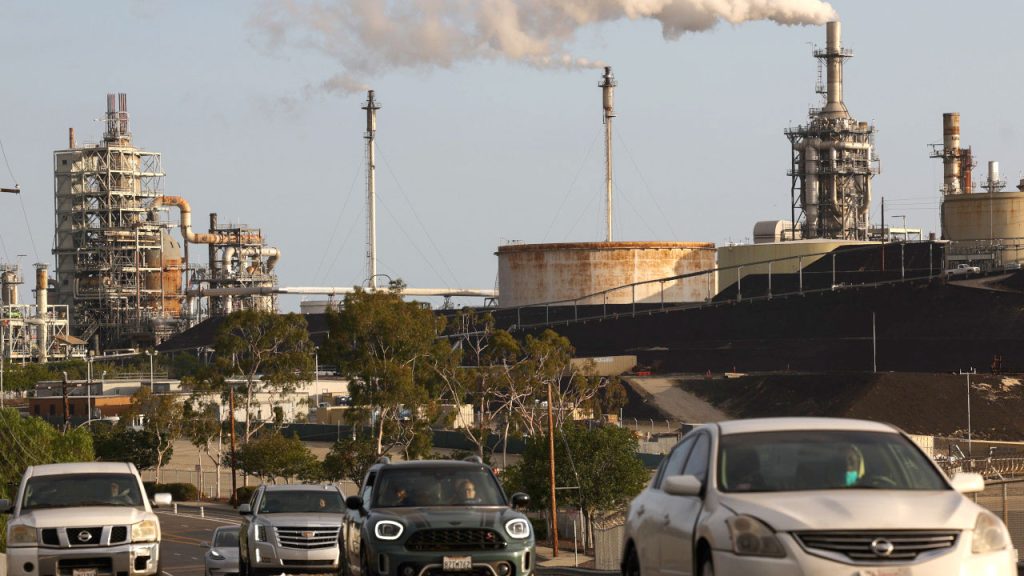
FOX Business Jeff Flock has the details from New Jersey on Mornings with Maria.
Gas prices have seen a significant spike in California recently, driven by a constrained supply due to reductions in refining capacity. Over the past two weeks, the average price of gas in the state surged by 40 cents, reaching $4.58 a gallon. This marks an increase from $4.46 the previous week and $4.18 just two weeks prior, according to data from AAA.
These figures are strikingly higher than the national average of $2.92 a gallon. California now holds the record for the highest gas prices in the nation, surpassing Hawaii’s $4.37, Washington’s $4.15, and Oregon’s $3.68.
The rise in gas prices is attributed to a reduction in oil refining capacity, particularly following the closure of Valero’s refinery in Benicia and the earlier shutdown of the Phillips 66 refinery in Los Angeles.
GAS PRICES FALL IN JANUARY, GIVING AMERICANS A BREAK AT THE PUMP
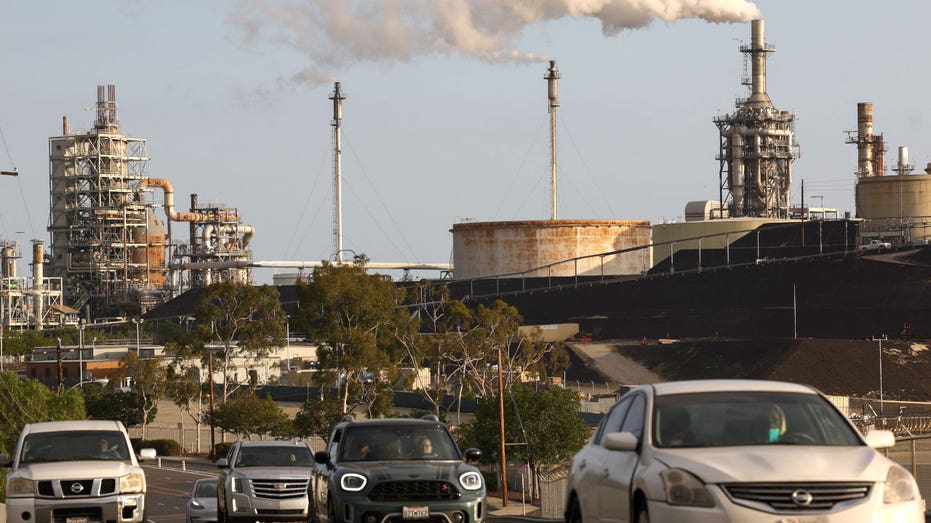
The Phillips 66 Wilmington refinery near Los Angeles previously closed. (Mario Tama/Getty Images)
The closure of the Benicia refinery, located in Northern California, has left only six operating refineries in the state, which is the largest fuel consumer in the U.S. after Texas. Among these, two are situated in the Bay Area: Chevron’s Richmond refinery and PBF Energy’s Martinez refinery. The remaining four are in Southern California, including Marathon’s Los Angeles refinery, Chevron’s El Segundo refinery, PBF Energy’s Torrance refinery, and Valero’s Wilmington refinery.
The tightening supply has prompted the California state senate’s Republican caucus to urge Democratic Governor Gavin Newsom to convene a special session to tackle the escalating “cost and supply crisis” resulting from state policies aimed at the oil and gas industry.
CALIFORNIA ‘TRULY AT A BREAKING POINT,’ STATE SENATOR SAYS AS REFINERIES CLOSE AND GAS PRICES SURGE
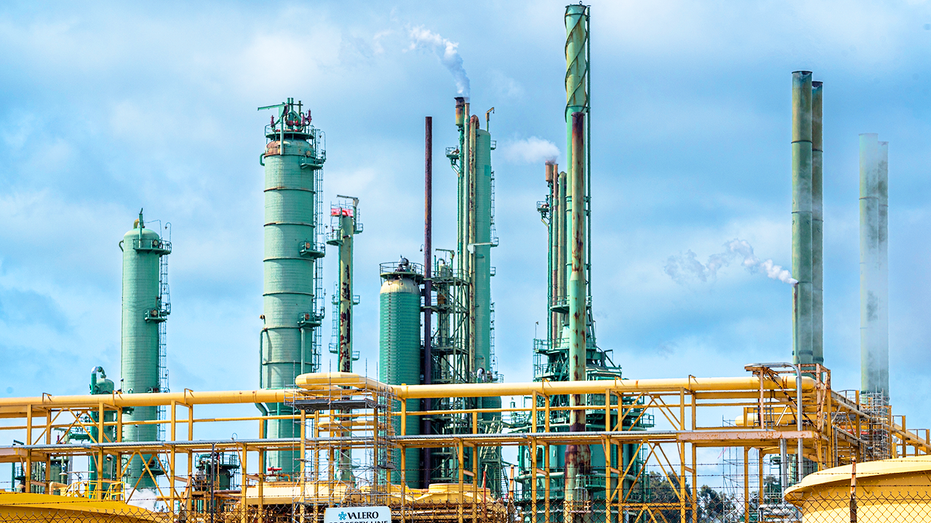
Valero’s Benicia refinery is scheduled to close, reducing the refining capacity in the state of California. (Paul Morris/Bloomberg)
“California is truly at a breaking point. Refineries are closing, supply is diminishing, and my constituents are paying more at the pump every single day,” stated Republican state Senator Suzette Martinez Valladares in a report by FOX Business’ Jeff Flock that aired on “Mornings with Maria.”
“It isn’t theoretical; this is happening right now. The longer we wait to address this issue, the more instability and volatility we’ll see here in California,” she added.
TRUMP CONSIDERS CAPPING STATE GAS TAX, SIGNALS POSSIBLE RELIEF FOR CALIFORNIANS
The Big Money Show panelists discuss California’s energy policies and their impact on gas prices as well as the oil industry.
On a national scale, gas prices have generally trended downward over the past year, as indicated by the latest consumer price index (CPI) data from the Bureau of Labor Statistics.
The BLS’ January CPI inflation report revealed that gas prices have decreased by 7.5% over the last year, with a 3.2% decline from the previous month.
Despite these declines, rising prices for electricity and utility gas service have somewhat offset the relief, with increases of 6.3% and 9.8% respectively over the past year.
FOX Business’ Arabella Bennett contributed to this report.
FOX Business Jeff Flock has the details from New Jersey on Mornings with Maria.
Gas prices have seen a significant spike in California recently, driven by a constrained supply due to reductions in refining capacity. Over the past two weeks, the average price of gas in the state surged by 40 cents, reaching $4.58 a gallon. This marks an increase from $4.46 the previous week and $4.18 just two weeks prior, according to data from AAA.
These figures are strikingly higher than the national average of $2.92 a gallon. California now holds the record for the highest gas prices in the nation, surpassing Hawaii’s $4.37, Washington’s $4.15, and Oregon’s $3.68.
The rise in gas prices is attributed to a reduction in oil refining capacity, particularly following the closure of Valero’s refinery in Benicia and the earlier shutdown of the Phillips 66 refinery in Los Angeles.
GAS PRICES FALL IN JANUARY, GIVING AMERICANS A BREAK AT THE PUMP
The Phillips 66 Wilmington refinery near Los Angeles previously closed. (Mario Tama/Getty Images)
The closure of the Benicia refinery, located in Northern California, has left only six operating refineries in the state, which is the largest fuel consumer in the U.S. after Texas. Among these, two are situated in the Bay Area: Chevron’s Richmond refinery and PBF Energy’s Martinez refinery. The remaining four are in Southern California, including Marathon’s Los Angeles refinery, Chevron’s El Segundo refinery, PBF Energy’s Torrance refinery, and Valero’s Wilmington refinery.
The tightening supply has prompted the California state senate’s Republican caucus to urge Democratic Governor Gavin Newsom to convene a special session to tackle the escalating “cost and supply crisis” resulting from state policies aimed at the oil and gas industry.
CALIFORNIA ‘TRULY AT A BREAKING POINT,’ STATE SENATOR SAYS AS REFINERIES CLOSE AND GAS PRICES SURGE
Valero’s Benicia refinery is scheduled to close, reducing the refining capacity in the state of California. (Paul Morris/Bloomberg)
“California is truly at a breaking point. Refineries are closing, supply is diminishing, and my constituents are paying more at the pump every single day,” stated Republican state Senator Suzette Martinez Valladares in a report by FOX Business’ Jeff Flock that aired on “Mornings with Maria.”
“It isn’t theoretical; this is happening right now. The longer we wait to address this issue, the more instability and volatility we’ll see here in California,” she added.
TRUMP CONSIDERS CAPPING STATE GAS TAX, SIGNALS POSSIBLE RELIEF FOR CALIFORNIANS
The Big Money Show panelists discuss California’s energy policies and their impact on gas prices as well as the oil industry.
On a national scale, gas prices have generally trended downward over the past year, as indicated by the latest consumer price index (CPI) data from the Bureau of Labor Statistics.
The BLS’ January CPI inflation report revealed that gas prices have decreased by 7.5% over the last year, with a 3.2% decline from the previous month.
Despite these declines, rising prices for electricity and utility gas service have somewhat offset the relief, with increases of 6.3% and 9.8% respectively over the past year.
FOX Business’ Arabella Bennett contributed to this report.