California Privacy Advocates Urge Removal of Covert License Plate Readers
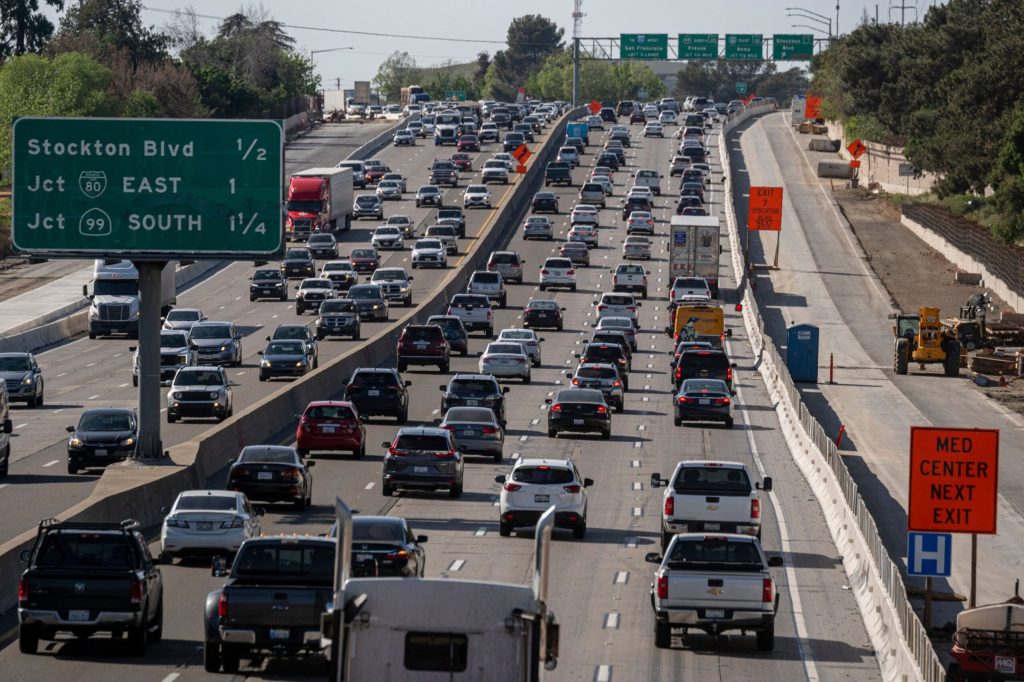
Over two dozen privacy and advocacy organizations are urging California Governor Gavin Newsom to dismantle a covert network of license plate readers operating in Southern California. These groups are concerned that the data collected by these devices feeds into a controversial U.S. Border Patrol predictive intelligence program, which monitors roadways for suspicious travel patterns.
In a letter sent this week, the Electronic Frontier Foundation, Imperial Valley Equity and Justice, and other nonprofits requested that the governor’s administration investigate the situation. They called for the release of relevant permits, the revocation of these devices, and their subsequent removal.
An investigation by the Associated Press (AP) revealed that the U.S. Border Patrol, part of U.S. Customs and Border Protection, has been concealing license plate readers within ordinary traffic safety equipment. The data collected is integrated into a predictive intelligence program that monitors millions of American drivers to identify and detain individuals whose travel patterns are deemed suspicious.
Documents obtained by the AP indicated that the Border Patrol had gone to great lengths to hide its surveillance equipment in Arizona, camouflaging it within orange and yellow construction barrels placed along highways. The letter from advocacy groups noted that they have identified a similar network in California, with approximately 40 license plate readers located in San Diego and Imperial counties, both of which border Mexico. Alarmingly, many of these devices were also concealed in construction barrels.
While the groups could not ascertain the ownership of every device, they did obtain permits from the California Department of Transportation. These permits revealed that both the Border Patrol and the Drug Enforcement Administration (DEA) had sought permission to install readers along state highways. Notably, the DEA shares its license plate reader data with the Border Patrol, as documented.
The letter referenced the AP’s findings, which indicated that the Border Patrol utilizes a network of cameras to scan and record vehicle license plate information. An algorithm flags vehicles considered suspicious based on their origin, destination, and route taken. Agents often focus on vehicles making short trips to the border region, interpreting such travel as indicative of potential drug or human smuggling.
In some instances, federal agents refer drivers they suspect to local law enforcement, who then conduct traffic stops under the pretext of minor violations like speeding or lane changes. Many drivers remain unaware that they have been ensnared in a predictive intelligence program operated by a federal agency.
The AP uncovered at least two cases where California residents were caught in the Border Patrol’s surveillance of domestic travel patterns. In one incident from 2024, a Border Patrol agent pulled over a driver based on travel data indicating an unusually long journey of six hours for a 50-mile trip from the U.S.-Mexican border to Oceanside, California. The agent noted in court documents that such delays are often associated with illicit smuggling activities.
In another instance from 2023, Border Patrol agents detained a woman at an internal checkpoint due to her circuitous route between Los Angeles and Phoenix. In both cases, law enforcement accused the drivers of unlawful immigrant smuggling and sought to seize their property or charge them with crimes.
This intelligence program, which has persisted through multiple administrations, has faced increasing scrutiny from lawmakers since the AP’s revelations last year. A spokesperson for the California Department of Transportation emphasized that state law prioritizes public safety and privacy.
The office of Governor Newsom, a Democrat, has not yet responded to requests for comment. While courts generally uphold the collection of license plate data on public roads, they have limited warrantless government access to other types of persistent tracking data that could reveal sensitive information about individuals’ movements, such as GPS or cellphone location data. Some scholars and civil libertarians argue that large-scale collection systems like license plate readers may violate the Fourth Amendment.
“Increasingly, courts have recognized that the use of surveillance technologies can violate the Fourth Amendment’s protections against unreasonable searches and seizures,” the organizations stated. They expressed concerns that the use of license plate readers and predictive algorithms to monitor individuals’ movements represents a form of sweeping surveillance that warrants constitutional scrutiny.
While the Customs and Border Protection (CBP) did not immediately respond to requests for comment, they have previously stated that the agency employs plate readers to identify threats and disrupt criminal networks, asserting that their use is governed by a stringent policy framework and federal law to ensure responsible application for security purposes. The DEA, on the other hand, declined to discuss its investigative tools and techniques publicly.
Burke reported from San Francisco. Tau reported from Washington.
Topics
California
The most important insurance news, in your inbox every business day.
Get the insurance industry’s trusted newsletter
Over two dozen privacy and advocacy organizations are urging California Governor Gavin Newsom to dismantle a covert network of license plate readers operating in Southern California. These groups are concerned that the data collected by these devices feeds into a controversial U.S. Border Patrol predictive intelligence program, which monitors roadways for suspicious travel patterns.
In a letter sent this week, the Electronic Frontier Foundation, Imperial Valley Equity and Justice, and other nonprofits requested that the governor’s administration investigate the situation. They called for the release of relevant permits, the revocation of these devices, and their subsequent removal.
An investigation by the Associated Press (AP) revealed that the U.S. Border Patrol, part of U.S. Customs and Border Protection, has been concealing license plate readers within ordinary traffic safety equipment. The data collected is integrated into a predictive intelligence program that monitors millions of American drivers to identify and detain individuals whose travel patterns are deemed suspicious.
Documents obtained by the AP indicated that the Border Patrol had gone to great lengths to hide its surveillance equipment in Arizona, camouflaging it within orange and yellow construction barrels placed along highways. The letter from advocacy groups noted that they have identified a similar network in California, with approximately 40 license plate readers located in San Diego and Imperial counties, both of which border Mexico. Alarmingly, many of these devices were also concealed in construction barrels.
While the groups could not ascertain the ownership of every device, they did obtain permits from the California Department of Transportation. These permits revealed that both the Border Patrol and the Drug Enforcement Administration (DEA) had sought permission to install readers along state highways. Notably, the DEA shares its license plate reader data with the Border Patrol, as documented.
The letter referenced the AP’s findings, which indicated that the Border Patrol utilizes a network of cameras to scan and record vehicle license plate information. An algorithm flags vehicles considered suspicious based on their origin, destination, and route taken. Agents often focus on vehicles making short trips to the border region, interpreting such travel as indicative of potential drug or human smuggling.
In some instances, federal agents refer drivers they suspect to local law enforcement, who then conduct traffic stops under the pretext of minor violations like speeding or lane changes. Many drivers remain unaware that they have been ensnared in a predictive intelligence program operated by a federal agency.
The AP uncovered at least two cases where California residents were caught in the Border Patrol’s surveillance of domestic travel patterns. In one incident from 2024, a Border Patrol agent pulled over a driver based on travel data indicating an unusually long journey of six hours for a 50-mile trip from the U.S.-Mexican border to Oceanside, California. The agent noted in court documents that such delays are often associated with illicit smuggling activities.
In another instance from 2023, Border Patrol agents detained a woman at an internal checkpoint due to her circuitous route between Los Angeles and Phoenix. In both cases, law enforcement accused the drivers of unlawful immigrant smuggling and sought to seize their property or charge them with crimes.
This intelligence program, which has persisted through multiple administrations, has faced increasing scrutiny from lawmakers since the AP’s revelations last year. A spokesperson for the California Department of Transportation emphasized that state law prioritizes public safety and privacy.
The office of Governor Newsom, a Democrat, has not yet responded to requests for comment. While courts generally uphold the collection of license plate data on public roads, they have limited warrantless government access to other types of persistent tracking data that could reveal sensitive information about individuals’ movements, such as GPS or cellphone location data. Some scholars and civil libertarians argue that large-scale collection systems like license plate readers may violate the Fourth Amendment.
“Increasingly, courts have recognized that the use of surveillance technologies can violate the Fourth Amendment’s protections against unreasonable searches and seizures,” the organizations stated. They expressed concerns that the use of license plate readers and predictive algorithms to monitor individuals’ movements represents a form of sweeping surveillance that warrants constitutional scrutiny.
While the Customs and Border Protection (CBP) did not immediately respond to requests for comment, they have previously stated that the agency employs plate readers to identify threats and disrupt criminal networks, asserting that their use is governed by a stringent policy framework and federal law to ensure responsible application for security purposes. The DEA, on the other hand, declined to discuss its investigative tools and techniques publicly.
Burke reported from San Francisco. Tau reported from Washington.
Topics
California
The most important insurance news, in your inbox every business day.
Get the insurance industry’s trusted newsletter