California Resolves Dispute with Federal Government Over High-Speed Rail Funding
California has officially withdrawn its lawsuit against the Trump administration, which aimed to recover approximately $4 billion in federal funds that were pulled from the state’s long-delayed high-speed rail project. This decision comes after state officials determined that they could no longer depend on the federal government to assist in delivering the ambitious rail system.
The lawsuit was initiated following the Federal Railroad Administration’s cancellation of federal grants for the project, totaling around $4 billion. The administration argued that the California High-Speed Rail Authority had failed to meet its commitments, leading to years of delays and significant cost overruns.
In response, state officials challenged the federal actions in court, asserting that the administration was violating binding grant agreements. However, California has now chosen to drop the case and move forward without federal support under President Donald Trump.
“This action reflects the State’s assessment that the federal government is not a reliable, constructive, or trustworthy partner in advancing high-speed rail in California,” stated a spokesperson for the California High-Speed Rail Authority in an email.
The spokesperson also noted that the Federal Railroad Administration had warned that all work performed by the authority was “at risk” of nonpayment, prompting the state to conclude that the administration was unlikely to fulfill its commitments.
Related: California’s Bullet Train to Run in Central Valley by 2032
The California High-Speed Rail Authority has framed this move as an opportunity to streamline construction efforts. “Federal requirements have, at times, hindered project delivery by adding cost and delays without adding value,” the spokesperson explained.
As of now, the Federal Railroad Administration has not responded to requests for comment regarding this development.
In a bid to expedite the project, the California High-Speed Rail Authority has initiated efforts to attract private investors. On December 19, they issued a request for qualifications to select a co-development partner aimed at accelerating the project’s delivery.
Initially approved by voters in 2008 with a projected cost of $33 billion, the high-speed rail project is now estimated to cost as much as $128 billion. A report from the inspector general earlier this year indicated that the system is unlikely to commence passenger service on its first segment by 2033, and it faces a multibillion-dollar funding gap even before the loss of federal aid.
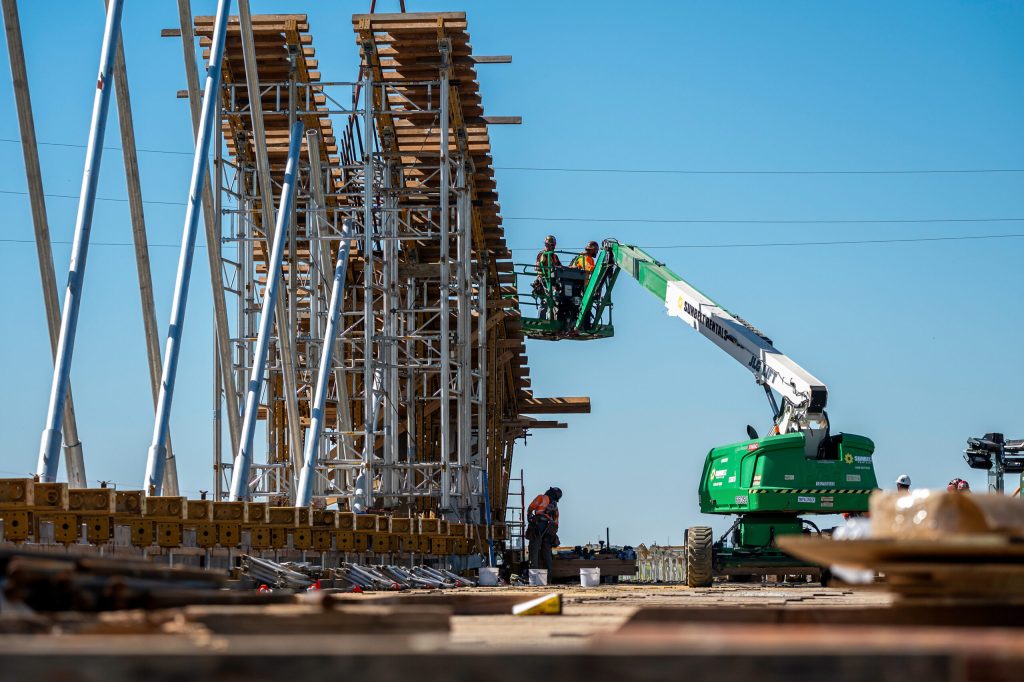
Photo: Contractors on a cherry picker during the construction of a high-speed rail project in Kings County, California, US, on Monday, March 24, 2025. The Trump administration has launched a review of California’s high-speed rail project, adding to long-standing doubts about whether the venture, plagued by cost overruns and delays, will ever be completed. (David Paul Morris/Bloomberg)
Copyright 2025 Bloomberg.
Topics
California
The most important insurance news, in your inbox every business day.
Get the insurance industry’s trusted newsletter
California has officially withdrawn its lawsuit against the Trump administration, which aimed to recover approximately $4 billion in federal funds that were pulled from the state’s long-delayed high-speed rail project. This decision comes after state officials determined that they could no longer depend on the federal government to assist in delivering the ambitious rail system.
The lawsuit was initiated following the Federal Railroad Administration’s cancellation of federal grants for the project, totaling around $4 billion. The administration argued that the California High-Speed Rail Authority had failed to meet its commitments, leading to years of delays and significant cost overruns.
In response, state officials challenged the federal actions in court, asserting that the administration was violating binding grant agreements. However, California has now chosen to drop the case and move forward without federal support under President Donald Trump.
“This action reflects the State’s assessment that the federal government is not a reliable, constructive, or trustworthy partner in advancing high-speed rail in California,” stated a spokesperson for the California High-Speed Rail Authority in an email.
The spokesperson also noted that the Federal Railroad Administration had warned that all work performed by the authority was “at risk” of nonpayment, prompting the state to conclude that the administration was unlikely to fulfill its commitments.
Related: California’s Bullet Train to Run in Central Valley by 2032
The California High-Speed Rail Authority has framed this move as an opportunity to streamline construction efforts. “Federal requirements have, at times, hindered project delivery by adding cost and delays without adding value,” the spokesperson explained.
As of now, the Federal Railroad Administration has not responded to requests for comment regarding this development.
In a bid to expedite the project, the California High-Speed Rail Authority has initiated efforts to attract private investors. On December 19, they issued a request for qualifications to select a co-development partner aimed at accelerating the project’s delivery.
Initially approved by voters in 2008 with a projected cost of $33 billion, the high-speed rail project is now estimated to cost as much as $128 billion. A report from the inspector general earlier this year indicated that the system is unlikely to commence passenger service on its first segment by 2033, and it faces a multibillion-dollar funding gap even before the loss of federal aid.
Photo: Contractors on a cherry picker during the construction of a high-speed rail project in Kings County, California, US, on Monday, March 24, 2025. The Trump administration has launched a review of California’s high-speed rail project, adding to long-standing doubts about whether the venture, plagued by cost overruns and delays, will ever be completed. (David Paul Morris/Bloomberg)
Copyright 2025 Bloomberg.
Topics
California
The most important insurance news, in your inbox every business day.
Get the insurance industry’s trusted newsletter