California Surplus Lines Undergoes Significant Structural Shift
The wildfires that ignited in Los Angeles at the start of 2025 have not only accelerated a statewide pullback in the homeowners insurance market but have also significantly influenced the ongoing transformation of California’s surplus lines market. A recent report highlights this evolving landscape.
According to an analysis by The Surplus Line Association of California (SLACAL), the state’s surplus lines insurance market is undergoing a “structural shift.” This report, part of the annual report, delves into how factors such as legal risks, catastrophe exposure, capital constraints, and regulatory challenges are reshaping risk placement and coverage accessibility within California’s surplus lines marketplace.
Related: Bill Introduced to ‘Transform’ the California FAIR Plan
The analysis reveals a significant reallocation of risk from the standard insurance market to surplus lines. Over the past few years, new policy counts in California’s surplus lines have surged by more than 500%. This trend has been ongoing for over a decade, largely driven by the increasing frequency of wildfires. Notably, fourteen of the twenty most destructive wildfires in California’s history have occurred within the last decade, as reported by CalFire statistics.
Benjamin J. McKay, CEO and executive director of SLACAL, views the L.A. fires as a culmination of a prolonged process affecting the state’s insurance market, which has made it increasingly difficult for admitted carriers to offer homeowners insurance. Proposition 103, which mandates rate reviews and an intervenor process, has been criticized for hindering carriers from accurately pricing risks and obtaining appropriate rates in California.
“Prop 103 really made it challenging for admitted carriers to get rate, and for years it didn’t matter because they could compensate with investment income,” McKay explained. However, about 15 years ago, this changed, and carriers were forced to focus on underwriting profits, which became unfeasible in California due to regulatory constraints.
The shift towards surplus lines also includes homeowners migrating to the California Fair Plan, the insurer of last resort, which offers limited coverage. This transition has prompted state regulators to advocate for reforms to the Fair Plan, aimed at enhancing claims handling, expanding coverage options, and improving transparency for wildfire survivors.
According to the SLACAL report, the pullback from the standard market is no longer confined to high-risk or rural areas; it is increasingly impacting urban and suburban regions. This trend has led to a surge in personal lines activity within the surplus lines market.
Related: The Return Period for An LA Wildfire-Scale Event May Be Shorter Than You Think
“The year 2025 marked a decisive turning point for California’s property insurance landscape,” the report states. “What began as a gradual pullback by admitted carriers intensified into a sustained contraction in admitted availability, as evidenced by the spillover into surplus lines.”
This shift coincides with worsening wildfire exposures and broader market pressures that continue to strain coverage accessibility across large portions of the state. Insurers have paid over $22.4 billion in claims related to the L.A. wildfires, according to the California Department of Insurance. A one-year report from Morningstar DBS Research labeled the fires as “a significant stress event” for California’s property/casualty insurance sector.
The L.A. wildfires have prompted several regulatory changes, including expedited rate reviews to encourage insurers to resume writing homeowners insurance in high-risk areas. Two major California home insurers are set to raise rates by an average of 6.9% this year, with CSAA beginning increases for nearly 481,800 homeowners in March and Mercury Insurance expected to follow in July for over 650,000 homeowners.
As these developments unfold, California’s surplus lines market has experienced rapid growth. Following a modest increase to around 50,000 policies in 2023, new business surged to 320,000 policies in 2025, according to the report.
SLACAL research indicates a significant shift in the types of homes entering the surplus lines market. Historically, these policies were primarily for high-value homes with elevated wildfire exposure. However, in 2025, the profile shifted towards more typical admitted-market homes, with the average assessed value dropping to $800,000 (from $900,000 in 2024), while average premiums decreased by 14.5%.
The influx of homeowners into surplus lines follows a growth in commercial lines that has been observed since around 2014. The surplus lines sector has expanded from writing 6% of the commercial market to 20%, according to McKay.
“As the market grew from 6% to almost 20%, we initially thought it would shift back,” he noted. “However, about five years ago, we concluded that this is a permanent reality, indicating fundamental structural changes in the marketplace.”
About five years ago, a similar shift began with personal lines. “When I joined the SLA 13 years ago, personal lines accounted for 1.5% of the policies, and now it’s 10%—a significant increase,” McKay stated.
Is this movement into the surplus market merely a temporary solution for homeowners seeking coverage, or is it indicative of a lasting change? Unless regulations are altered and market conditions improve, McKay believes that the current trends in the surplus market represent a new reality for personal lines.
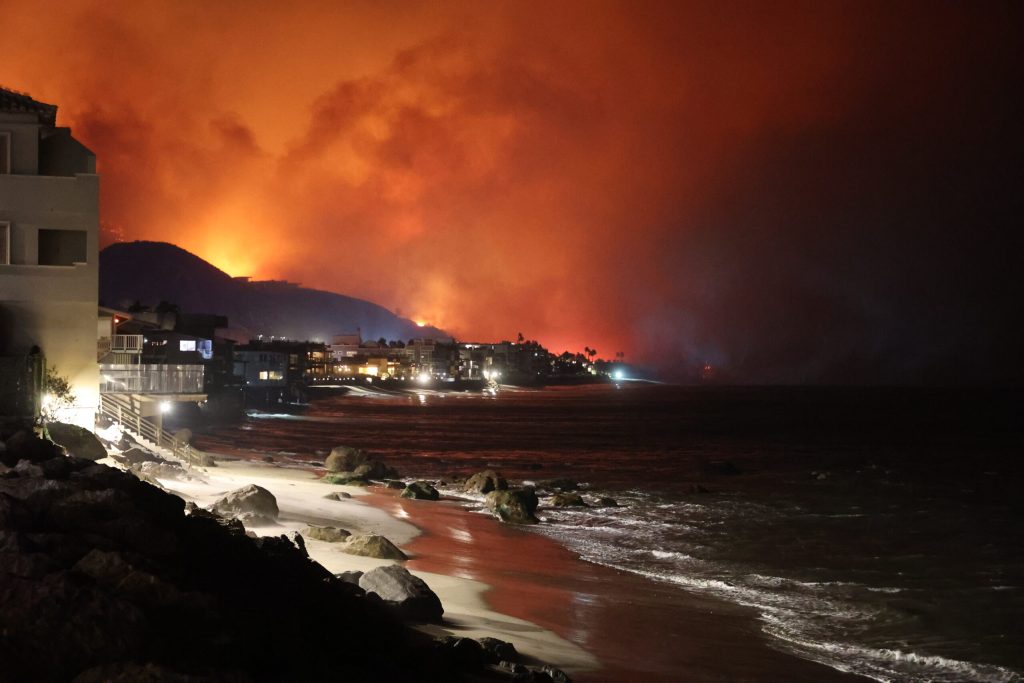
Top photo: 2025 Pacific Palisades Fire. Source: CalFire.
Topics
California
Excess Surplus
The wildfires that ignited in Los Angeles at the start of 2025 have not only accelerated a statewide pullback in the homeowners insurance market but have also significantly influenced the ongoing transformation of California’s surplus lines market. A recent report highlights this evolving landscape.
According to an analysis by The Surplus Line Association of California (SLACAL), the state’s surplus lines insurance market is undergoing a “structural shift.” This report, part of the annual report, delves into how factors such as legal risks, catastrophe exposure, capital constraints, and regulatory challenges are reshaping risk placement and coverage accessibility within California’s surplus lines marketplace.
Related: Bill Introduced to ‘Transform’ the California FAIR Plan
The analysis reveals a significant reallocation of risk from the standard insurance market to surplus lines. Over the past few years, new policy counts in California’s surplus lines have surged by more than 500%. This trend has been ongoing for over a decade, largely driven by the increasing frequency of wildfires. Notably, fourteen of the twenty most destructive wildfires in California’s history have occurred within the last decade, as reported by CalFire statistics.
Benjamin J. McKay, CEO and executive director of SLACAL, views the L.A. fires as a culmination of a prolonged process affecting the state’s insurance market, which has made it increasingly difficult for admitted carriers to offer homeowners insurance. Proposition 103, which mandates rate reviews and an intervenor process, has been criticized for hindering carriers from accurately pricing risks and obtaining appropriate rates in California.
“Prop 103 really made it challenging for admitted carriers to get rate, and for years it didn’t matter because they could compensate with investment income,” McKay explained. However, about 15 years ago, this changed, and carriers were forced to focus on underwriting profits, which became unfeasible in California due to regulatory constraints.
The shift towards surplus lines also includes homeowners migrating to the California Fair Plan, the insurer of last resort, which offers limited coverage. This transition has prompted state regulators to advocate for reforms to the Fair Plan, aimed at enhancing claims handling, expanding coverage options, and improving transparency for wildfire survivors.
According to the SLACAL report, the pullback from the standard market is no longer confined to high-risk or rural areas; it is increasingly impacting urban and suburban regions. This trend has led to a surge in personal lines activity within the surplus lines market.
Related: The Return Period for An LA Wildfire-Scale Event May Be Shorter Than You Think
“The year 2025 marked a decisive turning point for California’s property insurance landscape,” the report states. “What began as a gradual pullback by admitted carriers intensified into a sustained contraction in admitted availability, as evidenced by the spillover into surplus lines.”
This shift coincides with worsening wildfire exposures and broader market pressures that continue to strain coverage accessibility across large portions of the state. Insurers have paid over $22.4 billion in claims related to the L.A. wildfires, according to the California Department of Insurance. A one-year report from Morningstar DBS Research labeled the fires as “a significant stress event” for California’s property/casualty insurance sector.
The L.A. wildfires have prompted several regulatory changes, including expedited rate reviews to encourage insurers to resume writing homeowners insurance in high-risk areas. Two major California home insurers are set to raise rates by an average of 6.9% this year, with CSAA beginning increases for nearly 481,800 homeowners in March and Mercury Insurance expected to follow in July for over 650,000 homeowners.
As these developments unfold, California’s surplus lines market has experienced rapid growth. Following a modest increase to around 50,000 policies in 2023, new business surged to 320,000 policies in 2025, according to the report.
SLACAL research indicates a significant shift in the types of homes entering the surplus lines market. Historically, these policies were primarily for high-value homes with elevated wildfire exposure. However, in 2025, the profile shifted towards more typical admitted-market homes, with the average assessed value dropping to $800,000 (from $900,000 in 2024), while average premiums decreased by 14.5%.
The influx of homeowners into surplus lines follows a growth in commercial lines that has been observed since around 2014. The surplus lines sector has expanded from writing 6% of the commercial market to 20%, according to McKay.
“As the market grew from 6% to almost 20%, we initially thought it would shift back,” he noted. “However, about five years ago, we concluded that this is a permanent reality, indicating fundamental structural changes in the marketplace.”
About five years ago, a similar shift began with personal lines. “When I joined the SLA 13 years ago, personal lines accounted for 1.5% of the policies, and now it’s 10%—a significant increase,” McKay stated.
Is this movement into the surplus market merely a temporary solution for homeowners seeking coverage, or is it indicative of a lasting change? Unless regulations are altered and market conditions improve, McKay believes that the current trends in the surplus market represent a new reality for personal lines.
Top photo: 2025 Pacific Palisades Fire. Source: CalFire.
Topics
California
Excess Surplus