California Wildfires: The Defining News Story of 2025
California’s wildfire and homeowners insurance crisis dominated the headlines in Insurance Journal’s Western region this year. The situation escalated as several major insurers withdrew from writing homeowners policies in the state, prompting the insurance regulator to amend California’s foundational property/casualty insurance law. In a bid to stabilize the market, the state offered to expedite rate hikes, allowing insurers to write policies in riskier areas and consider returning to the beleaguered market.
It’s no surprise that stories about wildfires and insurance affordability captured readers’ attention, especially given the historic wildfires that ravaged Los Angeles at the beginning of the year, costing insurers billions. According to Swiss Re, the L.A. wildfires were the costliest wildfire event globally, with insured losses reaching $40 billion.
Among the most popular stories in the region for 2025, many focused on the California wildfires:
Concerns arose regarding California’s insurer of last resort, the FAIR Plan, and its ability to cover wildfire claims. With inadequate surplus and a reinsurance deductible exceeding available cash, an industry assessment seemed inevitable, as noted by Fitch analyst Gerald Glombicki in an interview with Insurance Journal’s L.S. Howard.
A month later, the insurance commissioner approved a $1 billion assessment on admitted market insurers to cover claims from the Los Angeles wildfires. The FAIR Plan reported over $914 million paid to policyholders, including advance payments for claims related to the Palisades and Eaton fires.
As the L.A. wildfires raged in January, readers flocked to reports of escalating losses. Early estimates indicated that over 1,000 properties had burned, leading J.P. Morgan to project insured losses nearing $10 billion, while AccuWeather estimated total losses exceeding $50 billion.
As the months progressed, fire-related lawsuits emerged, with many calling for essential policy changes. Some wildfire victims even urged California Governor Gavin Newsom to demand the resignation of the state’s insurance commissioner over reforms aimed at alleviating the homeowners insurance crisis.
By early February, USAA announced it had paid over $1 billion for the L.A. wildfires, becoming the third insurer to report such significant payouts. The company, a leading homeowners insurer in the state, indicated that 86% of wildfire claims had received initial payments, projecting total losses to reach $1.8 billion.
As the situation unfolded, other major insurers also reported losses exceeding $1 billion, with estimates suggesting that L.A. wildfire losses could soar to as high as $164 billion.
In response to the fires, the state’s insurance commissioner quickly approved a 22% interim homeowners insurance rate hike for State Farm, California’s largest homeowners insurer. State Farm emphasized the need for certainty in the insurance market, stating that the provisional approval was a step toward stability.
However, the insurer continued to seek further rate increases, with reports indicating that State Farm’s hikes could cost the average California homeowner over $1,000.
In June, homeowners who lost their properties in the L.A. wildfires filed lawsuits against USAA and two AAA-affiliated insurers, claiming that their payouts were insufficient to cover their losses. The lawsuits alleged fraud and negligence, seeking unspecified damages.
As lawsuits against insurers proliferated, a communications contractor was implicated in a November lawsuit for its alleged role in the deaths during the Eaton Wildfire, accused of failing to evacuate residents effectively.
Beyond California, other significant legislative developments occurred. In March, the Washington state Senate passed bills that would empower the insurance commissioner to order restitution for harmed policyholders and study the effects of insurance rating factors like credit scores.
Fraud also captured the interest of readers. In April, five individuals were charged in a large-scale insurance fraud scheme involving misrepresented life insurance policies, resulting in over $1.4 million in fraudulent commissions.
Tesla experienced a decline in its market share in California, where it once dominated the electric vehicle landscape. The company’s share fell to 43.9% in the first quarter, down from 55.5% the previous year, as sales of other EVs surged.
In December, an Oregon manufacturer faced fines for safety violations that endangered employees. The company was cited for maintaining a faulty storage system that exposed workers to serious hazards.
A delivery driver won a $50 million lawsuit after suffering severe burns from a spilled Starbucks drink. The jury found the company negligent for not securing the hot beverage properly.
From wildfire-related lawsuits to electric vehicle market shifts, the stories that resonated with readers this year reflect the complex interplay of insurance, natural disasters, and consumer rights in California.
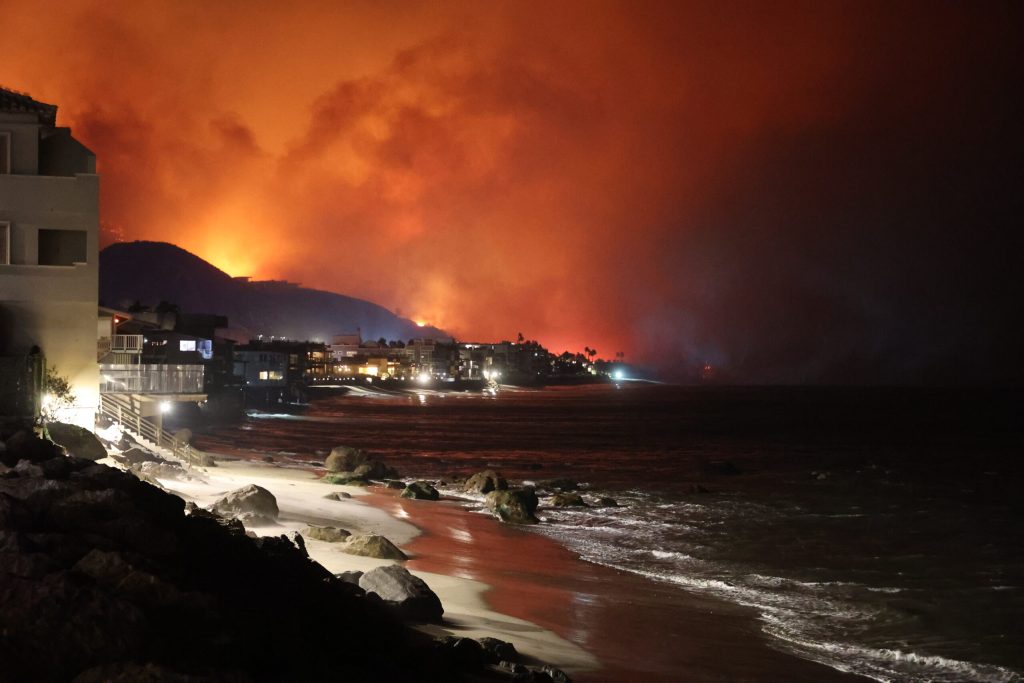
Top photo: The Pacific Palisades Fire. Source: CalFire.
California’s wildfire and homeowners insurance crisis dominated the headlines in Insurance Journal’s Western region this year. The situation escalated as several major insurers withdrew from writing homeowners policies in the state, prompting the insurance regulator to amend California’s foundational property/casualty insurance law. In a bid to stabilize the market, the state offered to expedite rate hikes, allowing insurers to write policies in riskier areas and consider returning to the beleaguered market.
It’s no surprise that stories about wildfires and insurance affordability captured readers’ attention, especially given the historic wildfires that ravaged Los Angeles at the beginning of the year, costing insurers billions. According to Swiss Re, the L.A. wildfires were the costliest wildfire event globally, with insured losses reaching $40 billion.
Among the most popular stories in the region for 2025, many focused on the California wildfires:
Concerns arose regarding California’s insurer of last resort, the FAIR Plan, and its ability to cover wildfire claims. With inadequate surplus and a reinsurance deductible exceeding available cash, an industry assessment seemed inevitable, as noted by Fitch analyst Gerald Glombicki in an interview with Insurance Journal’s L.S. Howard.
A month later, the insurance commissioner approved a $1 billion assessment on admitted market insurers to cover claims from the Los Angeles wildfires. The FAIR Plan reported over $914 million paid to policyholders, including advance payments for claims related to the Palisades and Eaton fires.
As the L.A. wildfires raged in January, readers flocked to reports of escalating losses. Early estimates indicated that over 1,000 properties had burned, leading J.P. Morgan to project insured losses nearing $10 billion, while AccuWeather estimated total losses exceeding $50 billion.
As the months progressed, fire-related lawsuits emerged, with many calling for essential policy changes. Some wildfire victims even urged California Governor Gavin Newsom to demand the resignation of the state’s insurance commissioner over reforms aimed at alleviating the homeowners insurance crisis.
By early February, USAA announced it had paid over $1 billion for the L.A. wildfires, becoming the third insurer to report such significant payouts. The company, a leading homeowners insurer in the state, indicated that 86% of wildfire claims had received initial payments, projecting total losses to reach $1.8 billion.
As the situation unfolded, other major insurers also reported losses exceeding $1 billion, with estimates suggesting that L.A. wildfire losses could soar to as high as $164 billion.
In response to the fires, the state’s insurance commissioner quickly approved a 22% interim homeowners insurance rate hike for State Farm, California’s largest homeowners insurer. State Farm emphasized the need for certainty in the insurance market, stating that the provisional approval was a step toward stability.
However, the insurer continued to seek further rate increases, with reports indicating that State Farm’s hikes could cost the average California homeowner over $1,000.
In June, homeowners who lost their properties in the L.A. wildfires filed lawsuits against USAA and two AAA-affiliated insurers, claiming that their payouts were insufficient to cover their losses. The lawsuits alleged fraud and negligence, seeking unspecified damages.
As lawsuits against insurers proliferated, a communications contractor was implicated in a November lawsuit for its alleged role in the deaths during the Eaton Wildfire, accused of failing to evacuate residents effectively.
Beyond California, other significant legislative developments occurred. In March, the Washington state Senate passed bills that would empower the insurance commissioner to order restitution for harmed policyholders and study the effects of insurance rating factors like credit scores.
Fraud also captured the interest of readers. In April, five individuals were charged in a large-scale insurance fraud scheme involving misrepresented life insurance policies, resulting in over $1.4 million in fraudulent commissions.
Tesla experienced a decline in its market share in California, where it once dominated the electric vehicle landscape. The company’s share fell to 43.9% in the first quarter, down from 55.5% the previous year, as sales of other EVs surged.
In December, an Oregon manufacturer faced fines for safety violations that endangered employees. The company was cited for maintaining a faulty storage system that exposed workers to serious hazards.
A delivery driver won a $50 million lawsuit after suffering severe burns from a spilled Starbucks drink. The jury found the company negligent for not securing the hot beverage properly.
From wildfire-related lawsuits to electric vehicle market shifts, the stories that resonated with readers this year reflect the complex interplay of insurance, natural disasters, and consumer rights in California.
Top photo: The Pacific Palisades Fire. Source: CalFire.