Chevron Acquires West Texas Ranch in Unique ‘Zombie’ Oil Well Settlement
Chevron Corp. has made headlines with its recent acquisition of a ranch in West Texas, previously owned by Ashley Watt. This transaction comes in the wake of a legal battle where Watt accused the energy giant of negligently spilling toxic water and crude oil on her expansive 22,000-acre property.
The sale of the Antina Ranch was officially recorded on February 3 by the Crane County Clerk. Public records indicate that the buyer, listed as Crane Property Holdings, shares the same address as Chevron’s office in San Ramon, California. Notably, the sale price remains undisclosed, which is customary under Texas law.
In December, just a month prior to the scheduled trial, Chevron and Watt reached a confidential settlement. Both parties have chosen not to disclose the terms of the agreement, with a Chevron spokesperson affirming the company’s commitment to comply with Texas law and work with regulators to remediate any affected wells.
The legal dispute traces back to 2021, when Watt, along with her attorney Sarah Stogner, discovered oil leaking from an old well that had allegedly been sealed decades earlier. Upon investigation, they traced the well’s ownership back to Gulf Oil, a predecessor of Chevron, and uncovered multiple leaking wells on the ranch. This pollution forced Watt to remove her cattle and jeopardized the water supply on the property.
Similar issues began to arise in other properties surrounding the Permian Basin, the largest oil field in the U.S. Some wells were reported to send geysers of toxic water shooting 100 feet into the air for extended periods. Stogner coined the term “zombie wells” to describe these phenomena, which quickly gained traction on social media. Experts attributed the problem to oil companies over-injecting fracking wastewater underground, leading to bursts through old well casings.
Chevron took steps to re-plug several wells on Antina Ranch and attempted remediation of others. However, Watt and Stogner accused the company of cutting corners and not addressing the root issue of rising underground water pressure. Chevron refuted these claims, asserting that there was no evidence of a field-wide blowout and accused Watt of limiting access to the property for their workers.
It is now widely recognized that oil companies in the Permian Basin are injecting excessive amounts of water underground in certain areas. The industry is actively exploring alternative disposal methods. A Bloomberg News investigation revealed that state regulators had permitted operators to shift their disposal practices from deep geological areas—where water injection was linked to earthquakes—to shallower ones, despite awareness of the risks posed to old wells.
According to public records, the sale of Watt’s ranch to Chevron encompasses all water on the property, including “any other water from any and all depths and reservoirs formations depths and horizons beneath the surface of the land.”
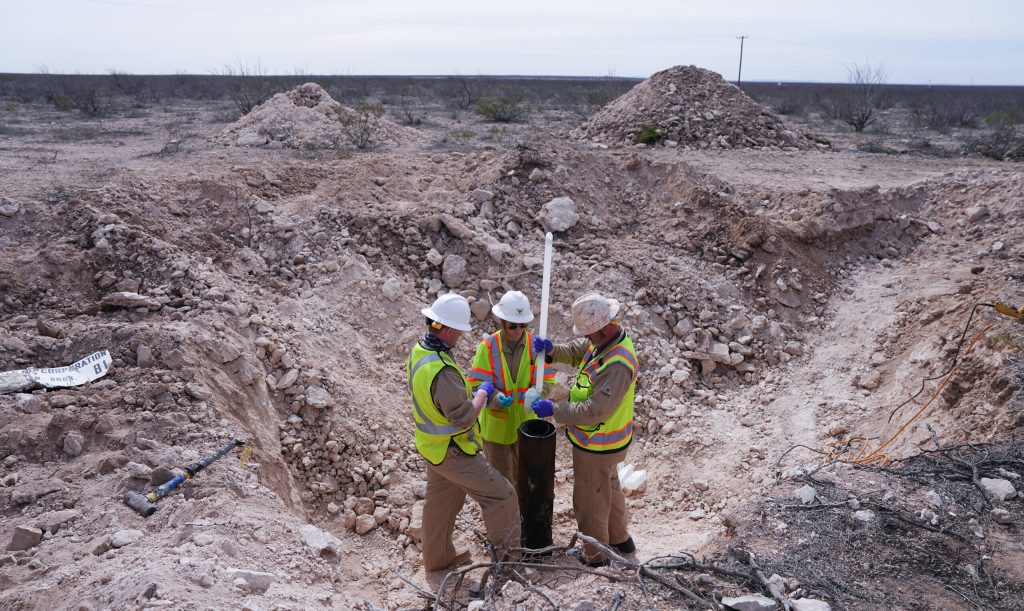
Photo: Scientists take samples of produced water from a crumbling former oil well on Antina Ranch in 2024. Photographer: Elizabeth Conley/Houston Chronicle/Getty Images
Copyright 2026 Bloomberg.
Topics
Mergers & Acquisitions
Texas
Energy
Oil Gas
Interested in Energy?
Get automatic alerts for this topic.
Chevron Corp. has made headlines with its recent acquisition of a ranch in West Texas, previously owned by Ashley Watt. This transaction comes in the wake of a legal battle where Watt accused the energy giant of negligently spilling toxic water and crude oil on her expansive 22,000-acre property.
The sale of the Antina Ranch was officially recorded on February 3 by the Crane County Clerk. Public records indicate that the buyer, listed as Crane Property Holdings, shares the same address as Chevron’s office in San Ramon, California. Notably, the sale price remains undisclosed, which is customary under Texas law.
In December, just a month prior to the scheduled trial, Chevron and Watt reached a confidential settlement. Both parties have chosen not to disclose the terms of the agreement, with a Chevron spokesperson affirming the company’s commitment to comply with Texas law and work with regulators to remediate any affected wells.
The legal dispute traces back to 2021, when Watt, along with her attorney Sarah Stogner, discovered oil leaking from an old well that had allegedly been sealed decades earlier. Upon investigation, they traced the well’s ownership back to Gulf Oil, a predecessor of Chevron, and uncovered multiple leaking wells on the ranch. This pollution forced Watt to remove her cattle and jeopardized the water supply on the property.
Similar issues began to arise in other properties surrounding the Permian Basin, the largest oil field in the U.S. Some wells were reported to send geysers of toxic water shooting 100 feet into the air for extended periods. Stogner coined the term “zombie wells” to describe these phenomena, which quickly gained traction on social media. Experts attributed the problem to oil companies over-injecting fracking wastewater underground, leading to bursts through old well casings.
Chevron took steps to re-plug several wells on Antina Ranch and attempted remediation of others. However, Watt and Stogner accused the company of cutting corners and not addressing the root issue of rising underground water pressure. Chevron refuted these claims, asserting that there was no evidence of a field-wide blowout and accused Watt of limiting access to the property for their workers.
It is now widely recognized that oil companies in the Permian Basin are injecting excessive amounts of water underground in certain areas. The industry is actively exploring alternative disposal methods. A Bloomberg News investigation revealed that state regulators had permitted operators to shift their disposal practices from deep geological areas—where water injection was linked to earthquakes—to shallower ones, despite awareness of the risks posed to old wells.
According to public records, the sale of Watt’s ranch to Chevron encompasses all water on the property, including “any other water from any and all depths and reservoirs formations depths and horizons beneath the surface of the land.”
Photo: Scientists take samples of produced water from a crumbling former oil well on Antina Ranch in 2024. Photographer: Elizabeth Conley/Houston Chronicle/Getty Images
Copyright 2026 Bloomberg.
Topics
Mergers & Acquisitions
Texas
Energy
Oil Gas
Interested in Energy?
Get automatic alerts for this topic.