Chicago: The Epicenter of Declining Downtown Office Values
Indiana Gov. Mike Braun discusses the potential relocation of the Chicago Bears to Indiana, highlighting Indiana’s business-friendly environment and contrasting it with Illinois’ high taxes and regulations on ‘The Bottom Line.’
Office towers that once commanded prices in the hundreds of millions are now changing hands at staggering discounts of 70%, 80%, and even 90% across major U.S. cities. This dramatic shift is largely attributed to rising interest rates and the growing trend of remote work, which has significantly altered the demand for downtown office space.
Few cities exemplify this transformation as clearly as Chicago. Recent data from Nightingale Associates reveals that markdowns affect properties from various eras of development. For instance, a century-old office building located in the historic Printing House Row district, 401 S. State St., recently sold for a mere $4.2 million, a staggering 94% drop from its 2016 sale price of $68.1 million.
Similarly, the Loop tower at 311 S. Wacker Drive was sold at an 85% discount, fetching $45 million compared to its previous value of $302 million in 2014.
CONSERVATIVE STATES SEE LOWER INFLATION THAN LIBERAL ONES NATIONWIDE, WHITE HOUSE DATA SHOWS
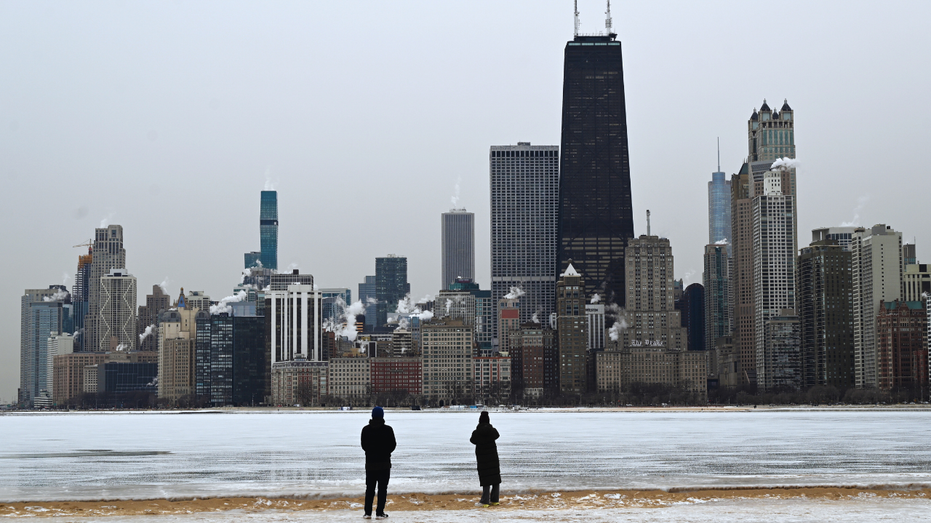
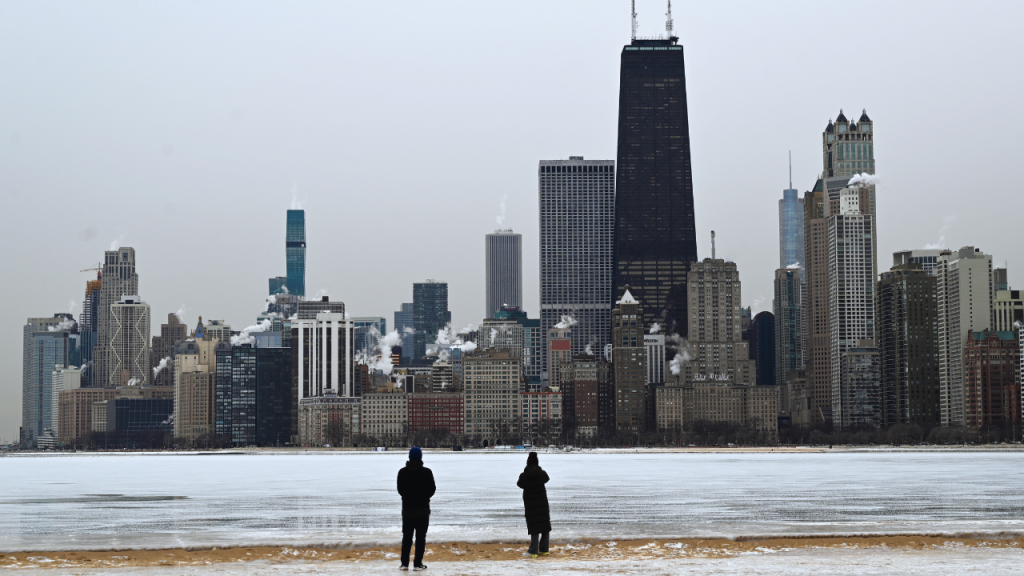
People look out toward the skyline from a frozen North Avenue Beach on January 24, 2026, in Chicago, Illinois. (Jacek Boczarski/Anadolu/Getty Images / Getty Images)
Even newer, high-profile properties are not immune to this trend. Boeing’s long-term lease interest in 100 N. Riverside Plaza sold for $22 million, down from $165 million in 2005, marking an 87% decline. At 300 W. Adams St., a leasehold interest changed hands for just $4 million, compared to $51 million in 2012 — a staggering 92% discount.
These transactions collectively illustrate the sharp shift in the economics of downtown office real estate, driven by rising interest rates and the remote work phenomenon.
CHICAGO ‘LOST ITS MIND’ FINANCIALLY UNDER MAYOR BRANDON JOHNSON, WASHINGTON POST WARNS

Retail space for lease in downtown Chicago, Illinois, US, on Tuesday May 27, 2025. (Christopher Dilts/Bloomberg/Getty Images / Getty Images)
The repercussions of these trends extend beyond landlords and investors. In many major cities, office towers are integral to the tax base, funding essential services like schools, public safety, and transit. Consequently, declining property values can have a cascading effect on local budgets.
Chicago is not alone in facing these challenges. Nationwide, downtown office buildings are trading at steep discounts. For example, an 18-story Dallas office tower sold for $26.1 million, a 64% discount from its $73 million sale price in 2016. In St. Louis, a 44-story tower sold in 2022 for $4.5 million, a fraction of its nearly $205 million value in 2006. More recently, an office building in downtown San Jose, California, sold for $23.7 million, significantly below its $80.1 million sale price in 2017. In Newton, Massachusetts, a three-building office complex changed hands last year for $117.5 million, roughly half of its $235 million price back in 2020.
CLICK HERE TO GET FOX BUSINESS ON THE GO
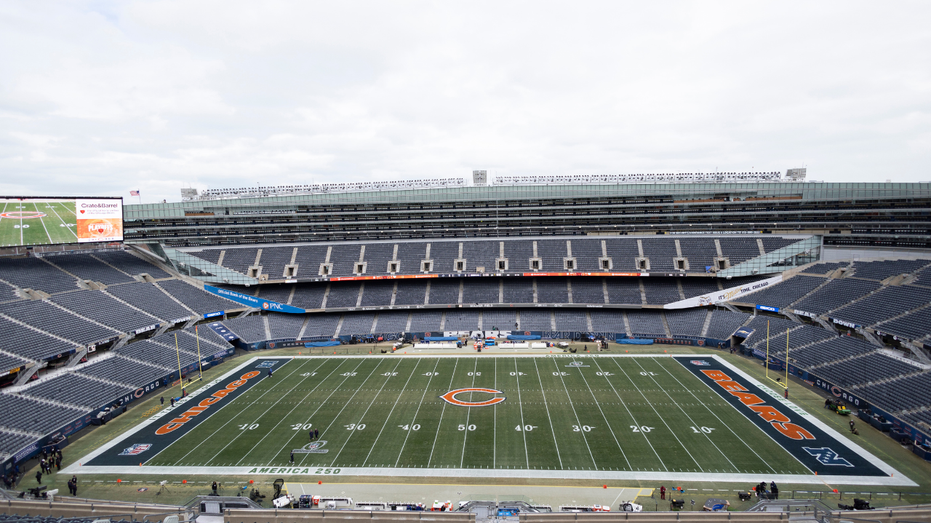
CHICAGO, ILLINOIS – JANUARY 18: A general interior view of Soldier Field prior to the NFL divisional playoff football game between the Los Angeles Rams and Chicago Bears at Soldier Field on January 18, 2026 in Chicago, Illinois. (Kara Durrette/Getty Images / Getty Images)
In the midst of this uncertainty surrounding downtown areas, city leaders are striving to retain major economic anchors, including the Chicago Bears. The team is currently exploring a possible relocation to Indiana, where plans for a new stadium could be realized near Wolf Lake in Hammond, just across the state line.
As property values continue to decline, city leaders face challenging decisions: whether to cut services, raise taxes elsewhere, or absorb widening budget gaps.
Indiana Gov. Mike Braun discusses the potential relocation of the Chicago Bears to Indiana, highlighting Indiana’s business-friendly environment and contrasting it with Illinois’ high taxes and regulations on ‘The Bottom Line.’
Office towers that once commanded prices in the hundreds of millions are now changing hands at staggering discounts of 70%, 80%, and even 90% across major U.S. cities. This dramatic shift is largely attributed to rising interest rates and the growing trend of remote work, which has significantly altered the demand for downtown office space.
Few cities exemplify this transformation as clearly as Chicago. Recent data from Nightingale Associates reveals that markdowns affect properties from various eras of development. For instance, a century-old office building located in the historic Printing House Row district, 401 S. State St., recently sold for a mere $4.2 million, a staggering 94% drop from its 2016 sale price of $68.1 million.
Similarly, the Loop tower at 311 S. Wacker Drive was sold at an 85% discount, fetching $45 million compared to its previous value of $302 million in 2014.
CONSERVATIVE STATES SEE LOWER INFLATION THAN LIBERAL ONES NATIONWIDE, WHITE HOUSE DATA SHOWS
People look out toward the skyline from a frozen North Avenue Beach on January 24, 2026, in Chicago, Illinois. (Jacek Boczarski/Anadolu/Getty Images / Getty Images)
Even newer, high-profile properties are not immune to this trend. Boeing’s long-term lease interest in 100 N. Riverside Plaza sold for $22 million, down from $165 million in 2005, marking an 87% decline. At 300 W. Adams St., a leasehold interest changed hands for just $4 million, compared to $51 million in 2012 — a staggering 92% discount.
These transactions collectively illustrate the sharp shift in the economics of downtown office real estate, driven by rising interest rates and the remote work phenomenon.
CHICAGO ‘LOST ITS MIND’ FINANCIALLY UNDER MAYOR BRANDON JOHNSON, WASHINGTON POST WARNS
Retail space for lease in downtown Chicago, Illinois, US, on Tuesday May 27, 2025. (Christopher Dilts/Bloomberg/Getty Images / Getty Images)
The repercussions of these trends extend beyond landlords and investors. In many major cities, office towers are integral to the tax base, funding essential services like schools, public safety, and transit. Consequently, declining property values can have a cascading effect on local budgets.
Chicago is not alone in facing these challenges. Nationwide, downtown office buildings are trading at steep discounts. For example, an 18-story Dallas office tower sold for $26.1 million, a 64% discount from its $73 million sale price in 2016. In St. Louis, a 44-story tower sold in 2022 for $4.5 million, a fraction of its nearly $205 million value in 2006. More recently, an office building in downtown San Jose, California, sold for $23.7 million, significantly below its $80.1 million sale price in 2017. In Newton, Massachusetts, a three-building office complex changed hands last year for $117.5 million, roughly half of its $235 million price back in 2020.
CLICK HERE TO GET FOX BUSINESS ON THE GO
CHICAGO, ILLINOIS – JANUARY 18: A general interior view of Soldier Field prior to the NFL divisional playoff football game between the Los Angeles Rams and Chicago Bears at Soldier Field on January 18, 2026 in Chicago, Illinois. (Kara Durrette/Getty Images / Getty Images)
In the midst of this uncertainty surrounding downtown areas, city leaders are striving to retain major economic anchors, including the Chicago Bears. The team is currently exploring a possible relocation to Indiana, where plans for a new stadium could be realized near Wolf Lake in Hammond, just across the state line.
As property values continue to decline, city leaders face challenging decisions: whether to cut services, raise taxes elsewhere, or absorb widening budget gaps.