China Launches Rockets at Taiwan in Military Drills Simulating Blockade
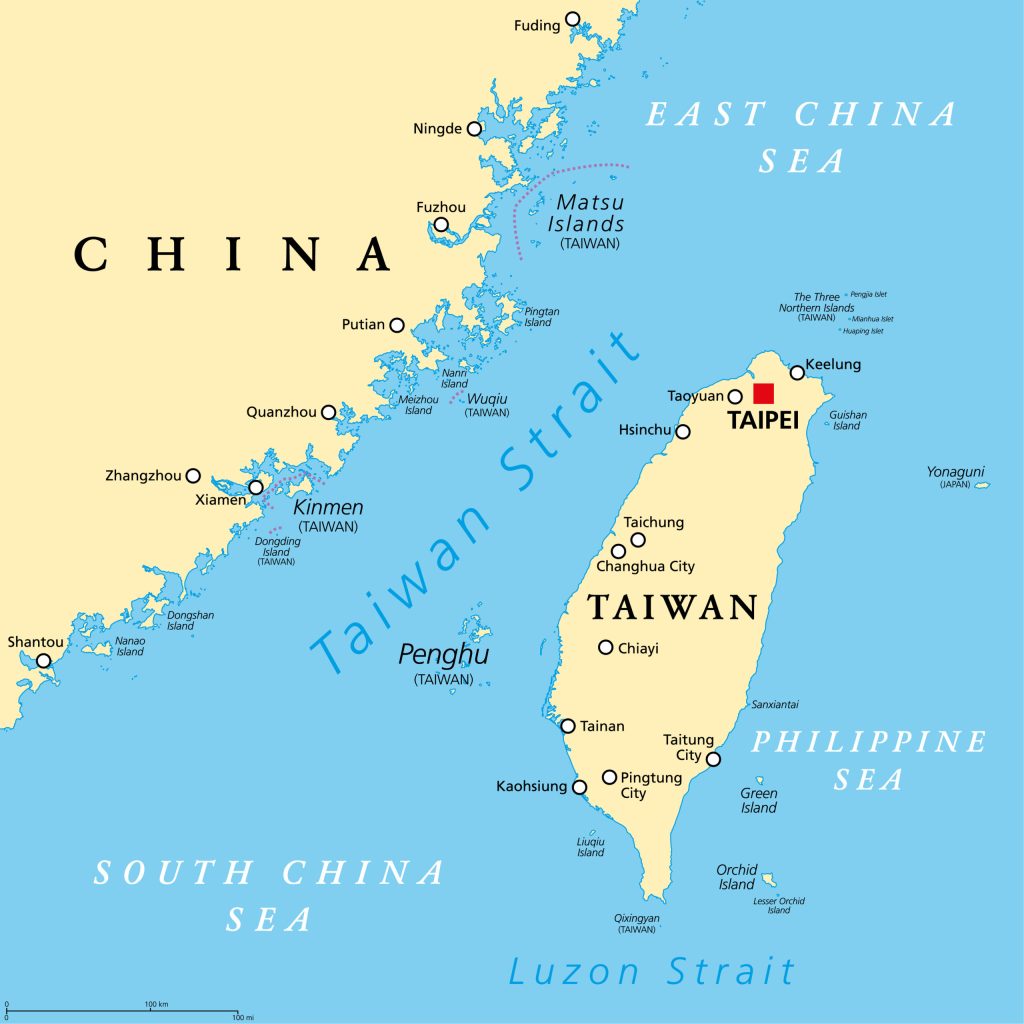
On Tuesday, China escalated military tensions by firing rockets into waters off both northern and southern Taiwan. This action was part of extensive war games, marking the second day of exercises that simulate a potential blockade of the island. The Eastern Theatre Command announced that live-firing exercises would continue until 6 p.m. (1000 GMT), impacting the sea and airspace in five designated areas surrounding Taiwan.
In a show of force, the Chinese military released a video featuring what appeared to be a mobile PCH-191 rocket launcher firing into the sea from an undisclosed location in China. Alongside this, naval and air force units conducted simulated strikes on maritime and aerial targets near Taiwan, as well as anti-submarine operations to the north and south of the island.
These drills, dubbed “Justice Mission 2025,” commenced just 11 days after the U.S. announced a record arms package worth $11.1 billion for Taiwan. This marks Beijing’s largest military exercise to date, both in terms of area and proximity to the island.
A senior security official from Taiwan indicated to Reuters that Taipei is closely monitoring this sixth major round of military exercises since 2022, particularly noting whether China would launch missiles over Taiwan as it did during previous drills following then-U.S. House Speaker Nancy Pelosi’s visit.
According to sources, Beijing appears to be using these exercises to practice targeting land-based systems like the U.S.-made HIMARS rocket system, which boasts a range of approximately 300 km (186 miles) and could potentially strike coastal targets in southern China.
The PCH-191, an advanced modular long-range rocket launcher, has a strike range comparable to the HIMARS system. Featured prominently in Beijing’s military parade commemorating the end of World War Two, this system is capable of hitting any location on Taiwan, as reported by Chinese state media.
Taiwan’s President Lai Ching-te reassured citizens via Facebook that frontline troops are prepared to defend the island, emphasizing that Taipei does not seek to escalate tensions. The island’s defense ministry confirmed that live-firing drills occurred to Taiwan’s north on Tuesday morning, with debris entering its contiguous zone, which extends 24 nautical miles offshore. However, it remains unverified whether China launched rockets in the other designated zones.
China’s Eastern Theatre Command confirmed that rockets were fired into waters both north and south of Taiwan. Lyle Goldstein, the Asia program director at the U.S.-based think tank Defense Priorities, noted that Beijing seems to have gained confidence from its tariff negotiations with the U.S. and may be looking to exploit divisions within Taiwan’s parliament.
“I see an increasing level of realism in the exercises and a growing boldness,” he stated. “While acquiring more weapons may seem like a solution, it’s far from a guaranteed victory. This is an arms race Taiwan cannot possibly win.”
Siege Tactics
Analysts warn that a Chinese blockade would be devastatingly disruptive in the event of an attack. Taiwan is strategically located along crucial commercial shipping and aviation routes, with approximately $2.45 trillion in trade passing through the Taiwan Strait annually. The airspace above the island serves as a vital conduit between China and the rapidly growing markets of East and Southeast Asia.
Despite the drills affecting 11 of Taipei’s 14 flight routes, Taiwan’s Civil Aviation Authority reported that no international flights were canceled. However, routes to the offshore islands of Kinmen and Matsu near China’s coast were blocked, impacting around 6,000 passengers. International carriers have been utilizing two air corridors left open by China, leading northeast toward Japan, according to aviation analyst Li Hanming.
On Tuesday, 14 Chinese coastguard vessels continued to navigate around Taiwan’s contiguous zone, with some engaged in standoffs with Taiwanese vessels, as reported by a Taiwan coast guard official.
“We adopted a one-to-one parallel navigation approach, closely shadowing each other’s routes,” the official stated, adding that Taiwan employed “wave-making and maneuvering techniques” to compel the Chinese vessels to retreat.
The defense ministry reported that 130 Chinese military aircraft and 22 navy and coastguard vessels were active around the island within the 24 hours leading up to 6:00 a.m.
Chinese media also highlighted the inaugural deployment of the Type 075 amphibious assault ship, which can simultaneously launch attack helicopters, landing craft, amphibious tanks, and armored vehicles, according to Zhang Chi, an academic at China’s National Defence University.
China Said to Eye 2027 Readiness Target
The Chinese military announced the deployment of destroyers, bombers, and other units to conduct drills focused on sea-based assaults, air defense, and anti-submarine operations. The exercises aim to “test the ability of sea and air forces to coordinate for integrated containment and control.”
Reports indicate that a draft Pentagon document suggests China anticipates being capable of fighting and winning a war over Taiwan by the end of 2027, coinciding with the centenary of the founding of the People’s Liberation Army—a significant milestone in President Xi Jinping’s modernization agenda.
However, Xi’s extensive anti-corruption campaign within the military has raised concerns regarding its readiness. The Chinese leader expelled eight generals from the PLA for corruption in October, and reports indicate that revenue at China’s defense firms fell by 10% last year, despite three decades of increasing military budgets.
Nonetheless, the Pentagon report suggests that Beijing is contemplating the possibility of conducting strikes 1,500-2,000 nautical miles from China to seize Taiwan by “brute force” if necessary.
On Tuesday, China escalated military tensions by firing rockets into waters off both northern and southern Taiwan. This action was part of extensive war games, marking the second day of exercises that simulate a potential blockade of the island. The Eastern Theatre Command announced that live-firing exercises would continue until 6 p.m. (1000 GMT), impacting the sea and airspace in five designated areas surrounding Taiwan.
In a show of force, the Chinese military released a video featuring what appeared to be a mobile PCH-191 rocket launcher firing into the sea from an undisclosed location in China. Alongside this, naval and air force units conducted simulated strikes on maritime and aerial targets near Taiwan, as well as anti-submarine operations to the north and south of the island.
These drills, dubbed “Justice Mission 2025,” commenced just 11 days after the U.S. announced a record arms package worth $11.1 billion for Taiwan. This marks Beijing’s largest military exercise to date, both in terms of area and proximity to the island.
A senior security official from Taiwan indicated to Reuters that Taipei is closely monitoring this sixth major round of military exercises since 2022, particularly noting whether China would launch missiles over Taiwan as it did during previous drills following then-U.S. House Speaker Nancy Pelosi’s visit.
According to sources, Beijing appears to be using these exercises to practice targeting land-based systems like the U.S.-made HIMARS rocket system, which boasts a range of approximately 300 km (186 miles) and could potentially strike coastal targets in southern China.
The PCH-191, an advanced modular long-range rocket launcher, has a strike range comparable to the HIMARS system. Featured prominently in Beijing’s military parade commemorating the end of World War Two, this system is capable of hitting any location on Taiwan, as reported by Chinese state media.
Taiwan’s President Lai Ching-te reassured citizens via Facebook that frontline troops are prepared to defend the island, emphasizing that Taipei does not seek to escalate tensions. The island’s defense ministry confirmed that live-firing drills occurred to Taiwan’s north on Tuesday morning, with debris entering its contiguous zone, which extends 24 nautical miles offshore. However, it remains unverified whether China launched rockets in the other designated zones.
China’s Eastern Theatre Command confirmed that rockets were fired into waters both north and south of Taiwan. Lyle Goldstein, the Asia program director at the U.S.-based think tank Defense Priorities, noted that Beijing seems to have gained confidence from its tariff negotiations with the U.S. and may be looking to exploit divisions within Taiwan’s parliament.
“I see an increasing level of realism in the exercises and a growing boldness,” he stated. “While acquiring more weapons may seem like a solution, it’s far from a guaranteed victory. This is an arms race Taiwan cannot possibly win.”
Siege Tactics
Analysts warn that a Chinese blockade would be devastatingly disruptive in the event of an attack. Taiwan is strategically located along crucial commercial shipping and aviation routes, with approximately $2.45 trillion in trade passing through the Taiwan Strait annually. The airspace above the island serves as a vital conduit between China and the rapidly growing markets of East and Southeast Asia.
Despite the drills affecting 11 of Taipei’s 14 flight routes, Taiwan’s Civil Aviation Authority reported that no international flights were canceled. However, routes to the offshore islands of Kinmen and Matsu near China’s coast were blocked, impacting around 6,000 passengers. International carriers have been utilizing two air corridors left open by China, leading northeast toward Japan, according to aviation analyst Li Hanming.
On Tuesday, 14 Chinese coastguard vessels continued to navigate around Taiwan’s contiguous zone, with some engaged in standoffs with Taiwanese vessels, as reported by a Taiwan coast guard official.
“We adopted a one-to-one parallel navigation approach, closely shadowing each other’s routes,” the official stated, adding that Taiwan employed “wave-making and maneuvering techniques” to compel the Chinese vessels to retreat.
The defense ministry reported that 130 Chinese military aircraft and 22 navy and coastguard vessels were active around the island within the 24 hours leading up to 6:00 a.m.
Chinese media also highlighted the inaugural deployment of the Type 075 amphibious assault ship, which can simultaneously launch attack helicopters, landing craft, amphibious tanks, and armored vehicles, according to Zhang Chi, an academic at China’s National Defence University.
China Said to Eye 2027 Readiness Target
The Chinese military announced the deployment of destroyers, bombers, and other units to conduct drills focused on sea-based assaults, air defense, and anti-submarine operations. The exercises aim to “test the ability of sea and air forces to coordinate for integrated containment and control.”
Reports indicate that a draft Pentagon document suggests China anticipates being capable of fighting and winning a war over Taiwan by the end of 2027, coinciding with the centenary of the founding of the People’s Liberation Army—a significant milestone in President Xi Jinping’s modernization agenda.
However, Xi’s extensive anti-corruption campaign within the military has raised concerns regarding its readiness. The Chinese leader expelled eight generals from the PLA for corruption in October, and reports indicate that revenue at China’s defense firms fell by 10% last year, despite three decades of increasing military budgets.
Nonetheless, the Pentagon report suggests that Beijing is contemplating the possibility of conducting strikes 1,500-2,000 nautical miles from China to seize Taiwan by “brute force” if necessary.