District of Columbia Requests Federal Assistance for Potomac River Sewage Incident
District of Columbia Mayor Muriel Bowser has formally requested federal assistance as the region grapples with the aftermath of a significant sewage incident. On January 19, a pipe break resulted in sewage flowing into the Potomac River, located northwest of Washington, D.C.
In her appeal, Bowser has sought a Presidential Emergency Disaster Declaration, aiming for 100% reimbursement for expenses incurred by both the District and the District of Columbia Water and Sewer Authority (DC Water).
The damaged pipe, known as the Potomac Interceptor, is a crucial component of the DC Water utility, which operates under federal regulation by the Environmental Protection Agency (EPA).
While the EPA is the primary regulatory body overseeing this incident, the District’s Department of Energy and Environment (DOEE) has been actively collaborating with the EPA and the Maryland Department of the Environment. So far, DOEE has reported that E. coli levels in the District remain below EPA thresholds for full contact with the water. However, they advise the public to exercise caution and avoid contact with the Potomac River until these findings can be validated through extended sampling.
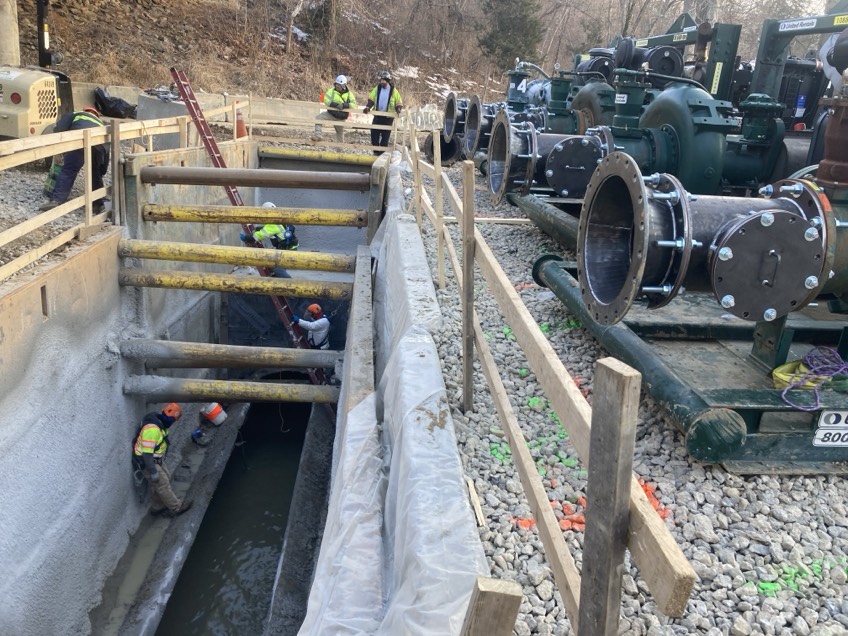
To mitigate the situation, DC Water has implemented a bypass system that reroutes wastewater around the collapsed section of the pipe, effectively limiting overflows. Since Super Bowl Sunday, there have been no overflow events entering the Potomac River that could affect surface waters, according to the utility.
The installation of the bypass system, along with the construction of a bulkhead gate, is expected to stabilize the area and isolate the damaged pipe section. Repair efforts could take up to six weeks, followed by a longer-term rehabilitation process, as stated by DC Water.
In addition to monitoring E. coli levels in the river, both DOEE and Maryland’s environment department are conducting tests. Importantly, DC Water has confirmed that drinking water remains unaffected.
“Crews and contractors have been working around the clock to respond to this complex and challenging situation for nearly a month, under extremely challenging weather conditions,” the utility noted in a recent update.
In her communication with the Trump Administration, Bowser has requested that the Federal Emergency Management Agency (FEMA) initiate regular interagency coordination calls among federal agencies and affected states. She has also called for additional federal technical and testing assistance to enhance water quality monitoring, environmental modeling, and engineering support as necessary.
Furthermore, Bowser has urged the U.S. Army Corps of Engineers to evaluate water quality protection, treatment capacity, backup power, and operational resilience.
In her longer-term vision, Bowser is advocating for the Army Corps to expedite capital improvements to the Washington Aqueduct. She has also emphasized the need for the federal government to fully fund flood protection enhancements at the Blue Plains Advanced Wastewater Treatment Plant, which serves both local and federal populations. A $20.3 million resilience project is currently stalled due to FEMA’s cancellation of its funding, a situation Bowser describes as “placing critical infrastructure improvements at risk.”
Photo: Potomac River sewage spill worksite. DC Water photo.
The most important insurance news, in your inbox every business day.
Get the insurance industry’s trusted newsletter
District of Columbia Mayor Muriel Bowser has formally requested federal assistance as the region grapples with the aftermath of a significant sewage incident. On January 19, a pipe break resulted in sewage flowing into the Potomac River, located northwest of Washington, D.C.
In her appeal, Bowser has sought a Presidential Emergency Disaster Declaration, aiming for 100% reimbursement for expenses incurred by both the District and the District of Columbia Water and Sewer Authority (DC Water).
The damaged pipe, known as the Potomac Interceptor, is a crucial component of the DC Water utility, which operates under federal regulation by the Environmental Protection Agency (EPA).
While the EPA is the primary regulatory body overseeing this incident, the District’s Department of Energy and Environment (DOEE) has been actively collaborating with the EPA and the Maryland Department of the Environment. So far, DOEE has reported that E. coli levels in the District remain below EPA thresholds for full contact with the water. However, they advise the public to exercise caution and avoid contact with the Potomac River until these findings can be validated through extended sampling.
To mitigate the situation, DC Water has implemented a bypass system that reroutes wastewater around the collapsed section of the pipe, effectively limiting overflows. Since Super Bowl Sunday, there have been no overflow events entering the Potomac River that could affect surface waters, according to the utility.
The installation of the bypass system, along with the construction of a bulkhead gate, is expected to stabilize the area and isolate the damaged pipe section. Repair efforts could take up to six weeks, followed by a longer-term rehabilitation process, as stated by DC Water.
In addition to monitoring E. coli levels in the river, both DOEE and Maryland’s environment department are conducting tests. Importantly, DC Water has confirmed that drinking water remains unaffected.
“Crews and contractors have been working around the clock to respond to this complex and challenging situation for nearly a month, under extremely challenging weather conditions,” the utility noted in a recent update.
In her communication with the Trump Administration, Bowser has requested that the Federal Emergency Management Agency (FEMA) initiate regular interagency coordination calls among federal agencies and affected states. She has also called for additional federal technical and testing assistance to enhance water quality monitoring, environmental modeling, and engineering support as necessary.
Furthermore, Bowser has urged the U.S. Army Corps of Engineers to evaluate water quality protection, treatment capacity, backup power, and operational resilience.
In her longer-term vision, Bowser is advocating for the Army Corps to expedite capital improvements to the Washington Aqueduct. She has also emphasized the need for the federal government to fully fund flood protection enhancements at the Blue Plains Advanced Wastewater Treatment Plant, which serves both local and federal populations. A $20.3 million resilience project is currently stalled due to FEMA’s cancellation of its funding, a situation Bowser describes as “placing critical infrastructure improvements at risk.”
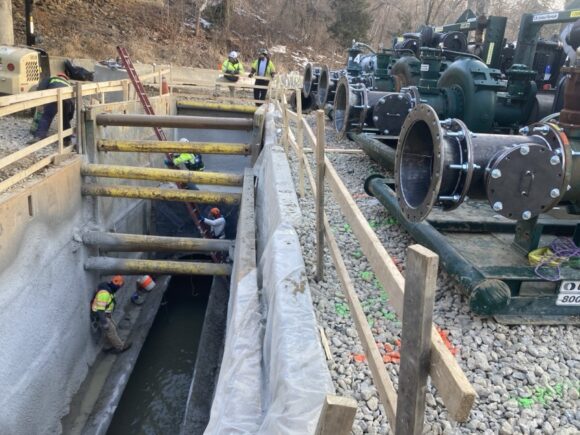
Photo: Potomac River sewage spill worksite. DC Water photo.
The most important insurance news, in your inbox every business day.
Get the insurance industry’s trusted newsletter