Doordash and Uber Struggle to Comply with NYC’s New 10% Tipping Law
DoorDash Inc. and Uber Technologies Inc. faced a setback in their legal battle against a New York City law mandating a tipping option at checkout. A federal judge ruled on Friday, denying the companies’ request to halt the law from taking effect on January 26 while their lawsuit against the city is ongoing.
The new regulation requires that suggested tips be set at 10% or higher, a move that DoorDash fears could lead to “sticker shock” for customers. The company has projected that it may incur millions in losses over the next year as New Yorkers may reduce their order frequency.
In response to the ruling, both DoorDash and Uber quickly filed an appeal. A DoorDash spokesperson expressed concerns, stating, “Allowing this law to take effect means we will likely see an immediate drop off in orders for New York’s small businesses, a worse experience for customers, and fewer overall deliveries for New York City dashers.” Uber chose not to comment on the matter.
This court decision may strengthen Mayor Zohran Mamdani’s firm approach to regulating app-based work. Earlier this month, the city filed a lawsuit against Motoclick, a delivery tech provider, and its CEO for allegedly withholding pay from workers.
Both companies argue that the tipping requirements infringe upon their constitutional rights by limiting how they communicate with consumers regarding tips. However, US District Judge George Daniels indicated that the companies’ lawsuit is unlikely to succeed, stating that the city’s new requirements are not overly burdensome and serve the purpose of enhancing cost transparency for consumers while protecting delivery workers.
“Today’s court ruling in Doordash Inc. and Uber Technologies, Inc. vs. The City of New York affirms that multi-billion-dollar companies need to comply with laws that protect workers and consumers,” remarked Samuel Levine, commissioner of the city’s Department of Consumer and Worker Protection.
The new tipping requirements were introduced as a countermeasure to the companies’ previous actions in response to a 2023 law that raised the minimum wage for delivery workers to at least $21.44 per hour. Following that law, DoorDash and Uber increased service fees and moved the in-app tipping function to after checkout, making upfront delivery costs appear lower.
According to a Bloomberg analysis of 2024 data submitted by Uber and DoorDash, customers tipped 64% less and paid approximately 45% more in fees per delivery order in the year following these changes. Workers, who previously earned half of their hourly wages from tips, saw that percentage plummet to just 13% in the second quarter of 2025, although their overall pay increased due to the new minimum wage.
In total, the companies’ actions deprived delivery workers of over $550 million in tips, as reported by the Department of Consumer and Worker Protection earlier this month.
Read More: DoorDash, Uber Cost Drivers $550 Million in Tips, NYC Says
Similar disputes between delivery services and local governments regarding worker pay are emerging across the United States. The companies maintain that such regulations will adversely affect their business by forcing them to pass on additional costs to consumers, ultimately reducing demand and impacting workers’ earnings.
“Forcing platforms to solicit a tip before checkout at a time when New Yorkers are sick of tipping culture and facing a growing affordability crisis is bad policy—plain and simple,” stated DoorDash in its response. “We’re disappointed in this ruling, but are confident in our position and will continue working to prevent further losses for local businesses and higher costs for consumers.”
In December, Instacart also sued the city over a set of laws establishing minimum wage, tipping, and other pay standards for grocery delivery services. On Thursday, the grocery delivery app was denied a court order to block that law.
The case is DoorDash, Inc. and Uber Technologies Inc. v. City Of New York, 1:25-cv-10268, US District Court, Southern District of New York.
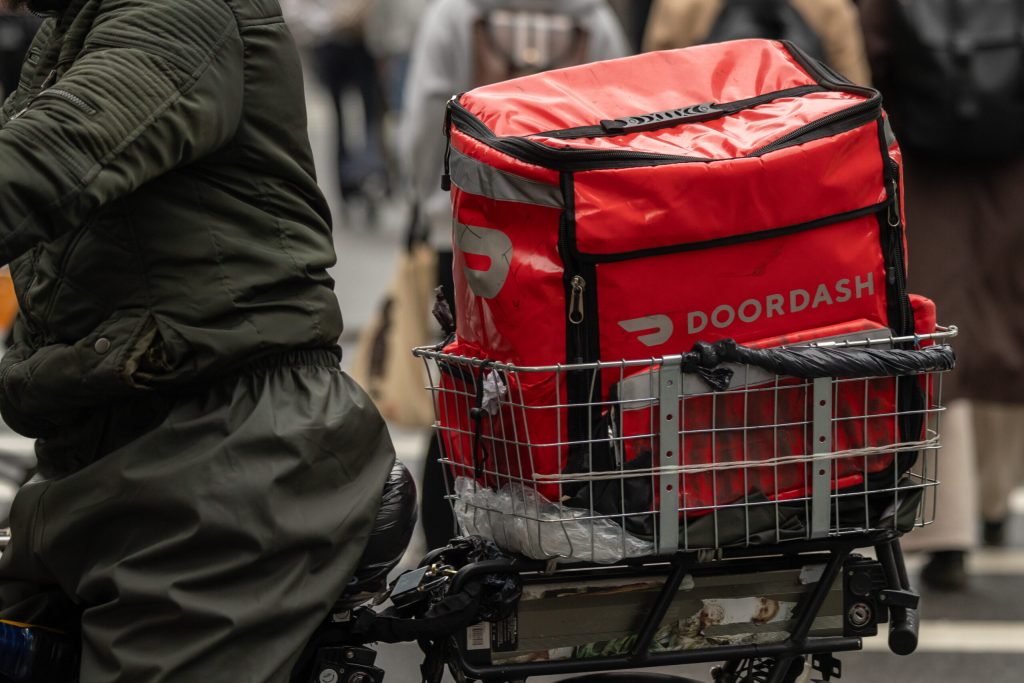
Photo: A delivery worker carries a DoorDash bag in New York.
Copyright 2026 Bloomberg.
Topics
Sharing Economy
Ridesharing
Interested in Ridesharing?
Get automatic alerts for this topic.
DoorDash Inc. and Uber Technologies Inc. faced a setback in their legal battle against a New York City law mandating a tipping option at checkout. A federal judge ruled on Friday, denying the companies’ request to halt the law from taking effect on January 26 while their lawsuit against the city is ongoing.
The new regulation requires that suggested tips be set at 10% or higher, a move that DoorDash fears could lead to “sticker shock” for customers. The company has projected that it may incur millions in losses over the next year as New Yorkers may reduce their order frequency.
In response to the ruling, both DoorDash and Uber quickly filed an appeal. A DoorDash spokesperson expressed concerns, stating, “Allowing this law to take effect means we will likely see an immediate drop off in orders for New York’s small businesses, a worse experience for customers, and fewer overall deliveries for New York City dashers.” Uber chose not to comment on the matter.
This court decision may strengthen Mayor Zohran Mamdani’s firm approach to regulating app-based work. Earlier this month, the city filed a lawsuit against Motoclick, a delivery tech provider, and its CEO for allegedly withholding pay from workers.
Both companies argue that the tipping requirements infringe upon their constitutional rights by limiting how they communicate with consumers regarding tips. However, US District Judge George Daniels indicated that the companies’ lawsuit is unlikely to succeed, stating that the city’s new requirements are not overly burdensome and serve the purpose of enhancing cost transparency for consumers while protecting delivery workers.
“Today’s court ruling in Doordash Inc. and Uber Technologies, Inc. vs. The City of New York affirms that multi-billion-dollar companies need to comply with laws that protect workers and consumers,” remarked Samuel Levine, commissioner of the city’s Department of Consumer and Worker Protection.
The new tipping requirements were introduced as a countermeasure to the companies’ previous actions in response to a 2023 law that raised the minimum wage for delivery workers to at least $21.44 per hour. Following that law, DoorDash and Uber increased service fees and moved the in-app tipping function to after checkout, making upfront delivery costs appear lower.
According to a Bloomberg analysis of 2024 data submitted by Uber and DoorDash, customers tipped 64% less and paid approximately 45% more in fees per delivery order in the year following these changes. Workers, who previously earned half of their hourly wages from tips, saw that percentage plummet to just 13% in the second quarter of 2025, although their overall pay increased due to the new minimum wage.
In total, the companies’ actions deprived delivery workers of over $550 million in tips, as reported by the Department of Consumer and Worker Protection earlier this month.
Read More: DoorDash, Uber Cost Drivers $550 Million in Tips, NYC Says
Similar disputes between delivery services and local governments regarding worker pay are emerging across the United States. The companies maintain that such regulations will adversely affect their business by forcing them to pass on additional costs to consumers, ultimately reducing demand and impacting workers’ earnings.
“Forcing platforms to solicit a tip before checkout at a time when New Yorkers are sick of tipping culture and facing a growing affordability crisis is bad policy—plain and simple,” stated DoorDash in its response. “We’re disappointed in this ruling, but are confident in our position and will continue working to prevent further losses for local businesses and higher costs for consumers.”
In December, Instacart also sued the city over a set of laws establishing minimum wage, tipping, and other pay standards for grocery delivery services. On Thursday, the grocery delivery app was denied a court order to block that law.
The case is DoorDash, Inc. and Uber Technologies Inc. v. City Of New York, 1:25-cv-10268, US District Court, Southern District of New York.
Photo: A delivery worker carries a DoorDash bag in New York.
Copyright 2026 Bloomberg.
Topics
Sharing Economy
Ridesharing
Interested in Ridesharing?
Get automatic alerts for this topic.