East London at Risk of Severe Flooding: Building Resilience for a Safer Future
In London, a concerning 13% of properties are classified as having a high or medium risk of flooding. This situation poses a significant threat, particularly for residents in east London, where low-lying areas adjacent to the River Thames are increasingly vulnerable to danger-to-life warnings.
Boroughs such as Tower Hamlets, Newham, and Hackney were originally marshlands that naturally absorbed water. However, urban development has led to the loss of over 85% of London’s marshland during the 20th century. This loss has eliminated the natural buffers that once facilitated water drainage. With rising sea levels and more frequent storm surges, the risk of flooding continues to escalate.
As one of the most urbanized cities globally, London has 78% of its land covered by urban development. The prevalence of impermeable surfaces—like concrete, asphalt, and rooftops—prevents water from draining into the ground. This leads to rapid surface water runoff, which can overwhelm drainage systems. Consequently, surface water runoff flooding has emerged as one of the most significant threats to east London.
While large-scale infrastructure, such as the Thames Barrier and tidal flood defenses, protects against major river flooding, they are ineffective against local storm-induced surface water flooding. As these structures age, maintenance costs increase, making reliance on them a precarious strategy, especially as climate change intensifies storm surges.
Specialist organizations like the Environment Agency monitor river water quality to mitigate infection risks from contamination. However, many areas in east London still rely on outdated Victorian-era sewer systems, which are ill-equipped to handle modern rainfall levels. This situation increases the likelihood of sewage contamination, with an estimated 39 million tonnes of untreated sewage being discharged into the Thames annually.
East London also faces significant socioeconomic challenges. Many residents lack the resources to prepare for floods and potential water contamination, exacerbated by high child poverty rates in boroughs like Tower Hamlets (47%), Newham (45%), and Hackney (45%).
To address flood risks, integrating natural solutions with urban infrastructure can be effective. Research indicates that combining nature with urban planning enhances the flood resilience of urban rivers like the Thames. Initial findings from ongoing social research suggest that innovative communication strategies can help communities understand and support natural flood solutions.
Natural Barriers
Planting appropriate wetland species along rivers and rooftops can delay surface water runoff by up to 90%. These plants absorb water and release it gradually, unlike impermeable surfaces that release water immediately. This process slows the flow into drainage systems, reducing the risk of sewer overload and pollution spills.
In the Netherlands, green roofs on bus stops have shown that each square meter of green roof can absorb 20 liters of water, significantly reducing the volume entering drains. Such natural solutions not only mitigate flooding but also enhance air quality, attract pollinators, and provide shade, helping to cool urban areas.
Green roofs on bus stops are becoming increasingly common in UK cities like Brighton and Cardiff. Implementing similar initiatives in east London could be a valuable first step.
One notable project, East London Waterworks Park, aims to rewild a former depot. By transforming concrete-covered land into swimming ponds with reedbeds for filtration, this initiative not only provides additional floodwater storage but also creates a community space for social interaction and connection with nature.
At the Queen Elizabeth Olympic Park, an area previously used for construction debris has been converted into a sustainable urban drainage system. This project features open spaces with natural elements like reedbeds, wetlands, and swales that help slow down water runoff, particularly during heavy rainfall. Studies indicate that improved water management at the park has protected 4,000 homes from flood risk since its opening in 2014.
As London’s population continues to grow, the strain on resources intensifies, exacerbating the effects of urbanization and socioeconomic disparities. Flood risk is not merely an environmental concern; it poses a national security threat.
Incorporating nature into urban resilience strategies can significantly reduce risks and empower communities. However, policymakers require robust evidence to identify the most effective solutions before taking action.
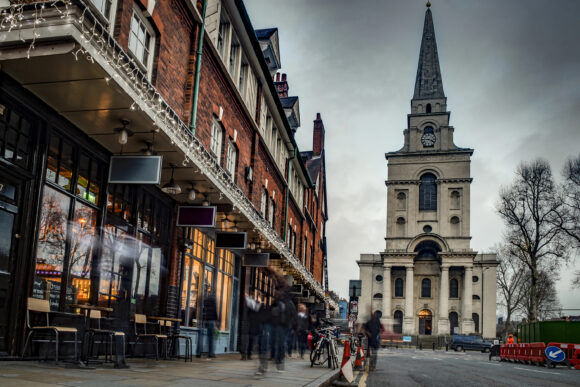
Photograph: Christ Church in Spitalfields in the London Borough of Tower Hamlets, UK; photo credit: Depositphotos
This article is republished from The Conversation under a Creative Commons license. The Conversation is an independent and nonprofit source of news, analysis, and commentary from academic experts. The original article can be accessed here.
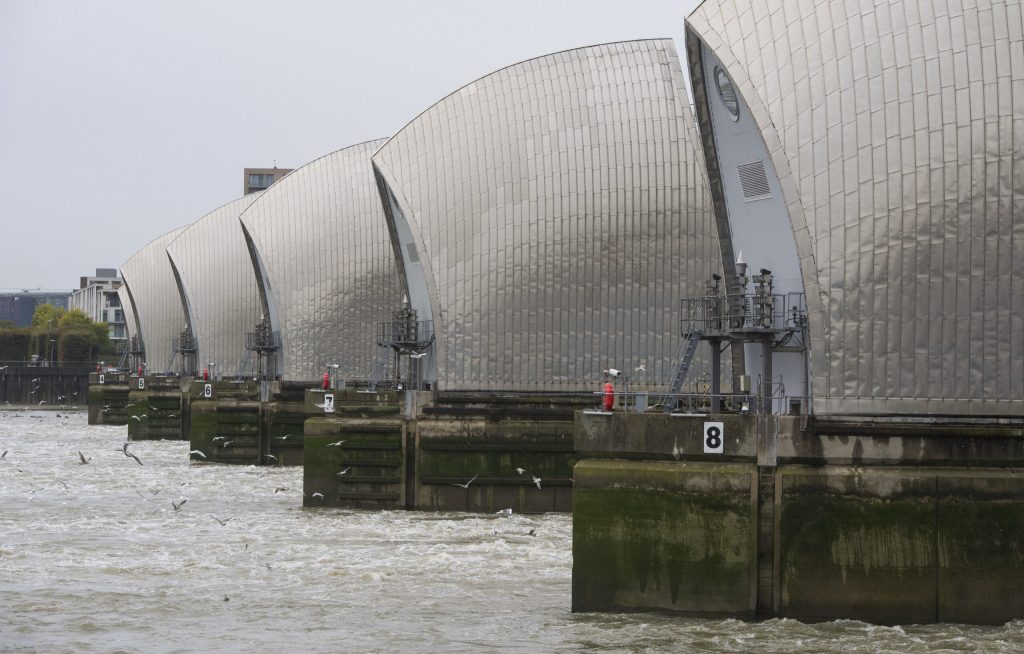
Top photograph: The Thames Barrier in east London is seen fully closed during its annual full test closure on Sunday, Sept. 23, 2018. The barrier’s gates rotate by 90 degrees to the fully closed defense position, which stops the tide from going upstream into London. (Dominic Lipinski/PA via AP)
Related:
In London, a concerning 13% of properties are classified as having a high or medium risk of flooding. This situation poses a significant threat, particularly for residents in east London, where low-lying areas adjacent to the River Thames are increasingly vulnerable to danger-to-life warnings.
Boroughs such as Tower Hamlets, Newham, and Hackney were originally marshlands that naturally absorbed water. However, urban development has led to the loss of over 85% of London’s marshland during the 20th century. This loss has eliminated the natural buffers that once facilitated water drainage. With rising sea levels and more frequent storm surges, the risk of flooding continues to escalate.
As one of the most urbanized cities globally, London has 78% of its land covered by urban development. The prevalence of impermeable surfaces—like concrete, asphalt, and rooftops—prevents water from draining into the ground. This leads to rapid surface water runoff, which can overwhelm drainage systems. Consequently, surface water runoff flooding has emerged as one of the most significant threats to east London.
While large-scale infrastructure, such as the Thames Barrier and tidal flood defenses, protects against major river flooding, they are ineffective against local storm-induced surface water flooding. As these structures age, maintenance costs increase, making reliance on them a precarious strategy, especially as climate change intensifies storm surges.
Specialist organizations like the Environment Agency monitor river water quality to mitigate infection risks from contamination. However, many areas in east London still rely on outdated Victorian-era sewer systems, which are ill-equipped to handle modern rainfall levels. This situation increases the likelihood of sewage contamination, with an estimated 39 million tonnes of untreated sewage being discharged into the Thames annually.
East London also faces significant socioeconomic challenges. Many residents lack the resources to prepare for floods and potential water contamination, exacerbated by high child poverty rates in boroughs like Tower Hamlets (47%), Newham (45%), and Hackney (45%).
To address flood risks, integrating natural solutions with urban infrastructure can be effective. Research indicates that combining nature with urban planning enhances the flood resilience of urban rivers like the Thames. Initial findings from ongoing social research suggest that innovative communication strategies can help communities understand and support natural flood solutions.
Natural Barriers
Planting appropriate wetland species along rivers and rooftops can delay surface water runoff by up to 90%. These plants absorb water and release it gradually, unlike impermeable surfaces that release water immediately. This process slows the flow into drainage systems, reducing the risk of sewer overload and pollution spills.
In the Netherlands, green roofs on bus stops have shown that each square meter of green roof can absorb 20 liters of water, significantly reducing the volume entering drains. Such natural solutions not only mitigate flooding but also enhance air quality, attract pollinators, and provide shade, helping to cool urban areas.
Green roofs on bus stops are becoming increasingly common in UK cities like Brighton and Cardiff. Implementing similar initiatives in east London could be a valuable first step.
One notable project, East London Waterworks Park, aims to rewild a former depot. By transforming concrete-covered land into swimming ponds with reedbeds for filtration, this initiative not only provides additional floodwater storage but also creates a community space for social interaction and connection with nature.
At the Queen Elizabeth Olympic Park, an area previously used for construction debris has been converted into a sustainable urban drainage system. This project features open spaces with natural elements like reedbeds, wetlands, and swales that help slow down water runoff, particularly during heavy rainfall. Studies indicate that improved water management at the park has protected 4,000 homes from flood risk since its opening in 2014.
As London’s population continues to grow, the strain on resources intensifies, exacerbating the effects of urbanization and socioeconomic disparities. Flood risk is not merely an environmental concern; it poses a national security threat.
Incorporating nature into urban resilience strategies can significantly reduce risks and empower communities. However, policymakers require robust evidence to identify the most effective solutions before taking action.
Photograph: Christ Church in Spitalfields in the London Borough of Tower Hamlets, UK; photo credit: Depositphotos
This article is republished from The Conversation under a Creative Commons license. The Conversation is an independent and nonprofit source of news, analysis, and commentary from academic experts. The original article can be accessed here.
Top photograph: The Thames Barrier in east London is seen fully closed during its annual full test closure on Sunday, Sept. 23, 2018. The barrier’s gates rotate by 90 degrees to the fully closed defense position, which stops the tide from going upstream into London. (Dominic Lipinski/PA via AP)
Related: