EU Eases Emissions Regulations for Key Market Companies
The European Union is poised to ease emissions-reduction regulations for thousands of companies, recalibrating the world’s most stringent carbon market amid growing concerns from industry and governments about the region’s declining competitiveness.
As EU leaders prepare for a summit next week focused on bolstering the bloc’s economy, discussions are intensifying around reforming the Emissions Trading System (ETS), a crucial mechanism for reducing greenhouse gas emissions. Less than three years after tightening the market in a green initiative, governments are now considering slowing the pace of pollution reductions and implementing measures to alleviate costs for industries, according to EU policymakers and diplomats familiar with the situation.
The specifics of the planned overhaul, which will significantly affect supply and demand in the market, are expected to be revealed by the European Commission in the third quarter of this year. This announcement is anticipated to spark intense negotiations among member states. Slovakia’s Prime Minister Robert Fico has already called for a suspension of the ETS, while Czech Prime Minister Andrej Babis is advocating for measures to stabilize price fluctuations. On Thursday, carbon futures dropped by as much as 4.6%, reaching their lowest point since November 10.
“The EU narrative has shifted — from aspirational targets to implementation and execution, from idealism to pragmatism,” stated Ingo Ramming, head of carbon markets at Banco Bilbao Vizcaya Argentaria SA in Madrid.
With the EU reassessing its long-standing partnership with the US and facing increasing competition from China, the ambitious green transition has fallen lower on the political agenda. The broad consensus on climate action that existed five years ago has fractured, giving way to trade protectionism and policies that prioritize reducing energy costs.
In December, EU negotiators agreed on a new interim goal to cut emissions by 90% by 2040 compared to 1990 levels. However, they also indicated that 10,000 installations within the ETS should be granted additional time to decarbonize. This adjustment will prevent the caps from dropping to zero in 2039 under the current cap-and-trade system, which is a key aspect of the upcoming market reform.
‘Irresponsible’ Attacks
“All the attacks on the ETS to destroy it or put it on hold are completely irresponsible,” remarked Peter Liese, a German member of the EPP, the largest political group in the EU Parliament. “But changes are needed, and we can ease the pressure on companies without jeopardizing our climate targets.”
The commission has refrained from commenting on the specifics of the overhaul.
The rising political sensitivity surrounding carbon prices was evident during the December discussions on the 2040 climate goal, where the EU agreed to delay the launch of a new carbon market for road transport and heating fuels. The focus is now shifting to preventing price spikes in the existing cap-and-trade program, with analysts predicting benchmark carbon contracts could rise to as high as 400 euros ($472) per ton by 2040, compared to the current level of around 82 euros.
Jos Delbeke, a former senior climate official at the commission and one of the architects of the ETS, believes the market should be integrated into a well-designed industrial policy that avoids “prohibitive” emissions prices. He suggests managing the supply of allowances to moderate prices and creating an implicit price corridor for analytical purposes. This would involve fine-tuning a special tool that automatically adjusts the supply of permits in the market and recalibrating the pace of annual emission cuts.
System Overhaul
The speed at which emission caps will decrease in the coming years is determined by the Linear Reduction Factor, a key indicator that nearly doubled to 4.3% from 2024 as part of the European Green Deal and is set to rise further to 4.4% starting in 2028. While some policymakers do not rule out lowering this factor before 2030, the legislative process for overhauling the system will take at least two years, limiting short-term options to prevent price increases.
To address this, Delbeke suggests that the EU could utilize approximately 370 million free allowances held in a special buffer to support low-carbon investments for companies.
While most allowances in the market are sold at auctions, companies at risk of relocating their production to countries with less stringent climate policies still receive some permits for free. Their allocation is based on emissions efficiency benchmarks, rewarding the cleanest producers. The commission is expected to publish revised benchmarks in April and is already facing pressure from the chemical industry to freeze these indicators.
The allocation of free permits to emitters in the coming years remains one of the most contentious issues in the debate. This is also linked to the introduction of a carbon border tax, which will see the EU gradually phase out free allowances in covered sectors. In the December agreement on the 2040 climate law, policymakers indicated a desire for a slower phaseout pathway.
European climate and energy policies are set to be key topics at the informal gathering of EU leaders in Belgium on February 12. Ahead of the summit, countries including the Czech Republic, Hungary, Slovakia, Bulgaria, Romania, and Poland expressed concerns that carbon prices could undermine EU competitiveness, according to sources familiar with the discussions.
“If we don’t change anything before 2030, some industries covered by the ETS may not survive,” warned Krzysztof Bolesta, Poland’s deputy climate minister, in an interview with Bloomberg News.
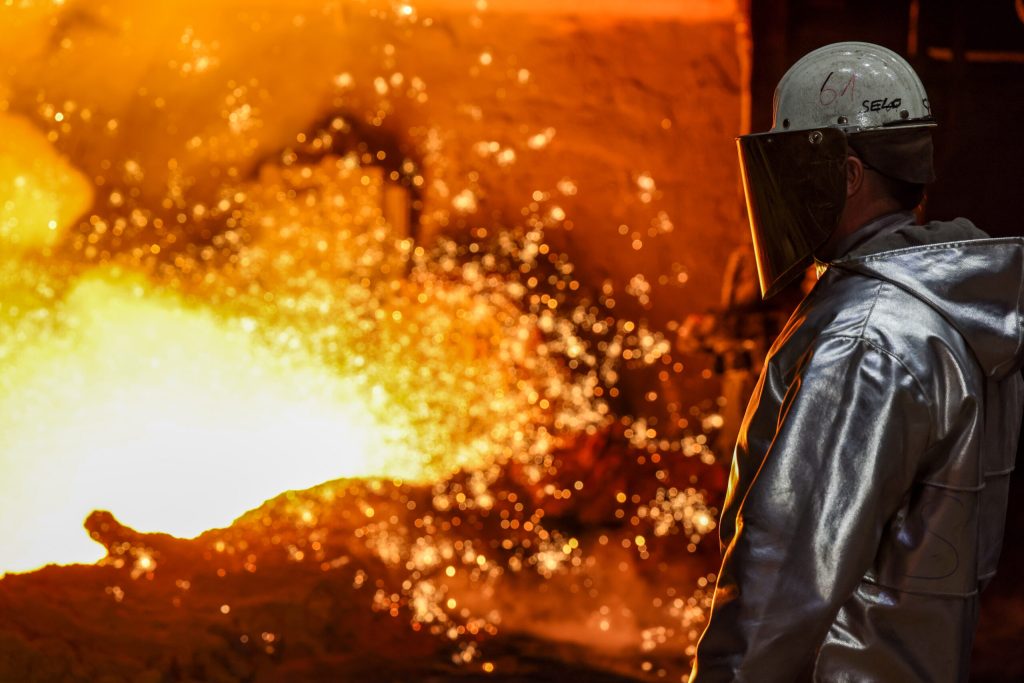
Photograph: A steelworks in Germany; photo credit: Alex Kraus/Bloomberg
Copyright 2026 Bloomberg.
Topics
Europe
Pricing Trends
The European Union is poised to ease emissions-reduction regulations for thousands of companies, recalibrating the world’s most stringent carbon market amid growing concerns from industry and governments about the region’s declining competitiveness.
As EU leaders prepare for a summit next week focused on bolstering the bloc’s economy, discussions are intensifying around reforming the Emissions Trading System (ETS), a crucial mechanism for reducing greenhouse gas emissions. Less than three years after tightening the market in a green initiative, governments are now considering slowing the pace of pollution reductions and implementing measures to alleviate costs for industries, according to EU policymakers and diplomats familiar with the situation.
The specifics of the planned overhaul, which will significantly affect supply and demand in the market, are expected to be revealed by the European Commission in the third quarter of this year. This announcement is anticipated to spark intense negotiations among member states. Slovakia’s Prime Minister Robert Fico has already called for a suspension of the ETS, while Czech Prime Minister Andrej Babis is advocating for measures to stabilize price fluctuations. On Thursday, carbon futures dropped by as much as 4.6%, reaching their lowest point since November 10.
“The EU narrative has shifted — from aspirational targets to implementation and execution, from idealism to pragmatism,” stated Ingo Ramming, head of carbon markets at Banco Bilbao Vizcaya Argentaria SA in Madrid.
With the EU reassessing its long-standing partnership with the US and facing increasing competition from China, the ambitious green transition has fallen lower on the political agenda. The broad consensus on climate action that existed five years ago has fractured, giving way to trade protectionism and policies that prioritize reducing energy costs.
In December, EU negotiators agreed on a new interim goal to cut emissions by 90% by 2040 compared to 1990 levels. However, they also indicated that 10,000 installations within the ETS should be granted additional time to decarbonize. This adjustment will prevent the caps from dropping to zero in 2039 under the current cap-and-trade system, which is a key aspect of the upcoming market reform.
‘Irresponsible’ Attacks
“All the attacks on the ETS to destroy it or put it on hold are completely irresponsible,” remarked Peter Liese, a German member of the EPP, the largest political group in the EU Parliament. “But changes are needed, and we can ease the pressure on companies without jeopardizing our climate targets.”
The commission has refrained from commenting on the specifics of the overhaul.
The rising political sensitivity surrounding carbon prices was evident during the December discussions on the 2040 climate goal, where the EU agreed to delay the launch of a new carbon market for road transport and heating fuels. The focus is now shifting to preventing price spikes in the existing cap-and-trade program, with analysts predicting benchmark carbon contracts could rise to as high as 400 euros ($472) per ton by 2040, compared to the current level of around 82 euros.
Jos Delbeke, a former senior climate official at the commission and one of the architects of the ETS, believes the market should be integrated into a well-designed industrial policy that avoids “prohibitive” emissions prices. He suggests managing the supply of allowances to moderate prices and creating an implicit price corridor for analytical purposes. This would involve fine-tuning a special tool that automatically adjusts the supply of permits in the market and recalibrating the pace of annual emission cuts.
System Overhaul
The speed at which emission caps will decrease in the coming years is determined by the Linear Reduction Factor, a key indicator that nearly doubled to 4.3% from 2024 as part of the European Green Deal and is set to rise further to 4.4% starting in 2028. While some policymakers do not rule out lowering this factor before 2030, the legislative process for overhauling the system will take at least two years, limiting short-term options to prevent price increases.
To address this, Delbeke suggests that the EU could utilize approximately 370 million free allowances held in a special buffer to support low-carbon investments for companies.
While most allowances in the market are sold at auctions, companies at risk of relocating their production to countries with less stringent climate policies still receive some permits for free. Their allocation is based on emissions efficiency benchmarks, rewarding the cleanest producers. The commission is expected to publish revised benchmarks in April and is already facing pressure from the chemical industry to freeze these indicators.
The allocation of free permits to emitters in the coming years remains one of the most contentious issues in the debate. This is also linked to the introduction of a carbon border tax, which will see the EU gradually phase out free allowances in covered sectors. In the December agreement on the 2040 climate law, policymakers indicated a desire for a slower phaseout pathway.
European climate and energy policies are set to be key topics at the informal gathering of EU leaders in Belgium on February 12. Ahead of the summit, countries including the Czech Republic, Hungary, Slovakia, Bulgaria, Romania, and Poland expressed concerns that carbon prices could undermine EU competitiveness, according to sources familiar with the discussions.
“If we don’t change anything before 2030, some industries covered by the ETS may not survive,” warned Krzysztof Bolesta, Poland’s deputy climate minister, in an interview with Bloomberg News.
Photograph: A steelworks in Germany; photo credit: Alex Kraus/Bloomberg
Copyright 2026 Bloomberg.
Topics
Europe
Pricing Trends