EU Must Establish Smart-Car Data Security Regulations, Drawing Insights from China’s Approach, Advocates Say
The European Union is facing an urgent need to establish comprehensive regulations to address the escalating security risks associated with intelligent vehicles, particularly those manufactured in China, which are gaining traction among consumers. This assertion comes from a think tank based in Warsaw.
Intelligent vehicles, which include electric and hybrid models, are capable of collecting vast amounts of data, encompassing both geospatial and personal information. According to the Center for Eastern Studies, this data collection leaves European nations vulnerable to cyberattacks and raises concerns about the potential exposure of sensitive military and economic information.
“The urgency to regulate intelligent vehicles in Europe is increasing, especially as the market share of Chinese-made cars continues to rise,” stated the OSW group.
Interestingly, the Center pointed out that China could serve as a “useful starting point” for Europe in developing a legal framework aimed at mitigating cybersecurity and data risks. Chinese regulations require car manufacturers to secure data safety certifications, outline protocols for data storage and handling, and have even imposed temporary bans on Tesla Inc. in sensitive areas.
Globally, the concern over so-called spy cars is intensifying as more consumers opt for vehicles equipped with advanced driver-assistance systems. While these technologies are designed to enhance safety—such as aiding in speed control and parking—the vehicles’ sensors and high-definition cameras continuously gather real-time information about their environment.
Connected cars can generate an astonishing 1.4 terabytes of data per hour, as per industry estimates. This volume of data is equivalent to over 250 movies. Although much of this data is frequently overwritten due to limited storage capacity, some information can be transmitted to cloud-based servers.
China’s dominance in the new-energy vehicle sector, coupled with deteriorating diplomatic relations with Europe and the US, has heightened concerns regarding the handling of data collected by these vehicles. In December alone, nearly one in ten passenger cars sold in Europe were manufactured by Chinese automakers.
Some countries are already taking proactive measures to mitigate the security risks associated with smart cars. For instance, Poland is considering a ban on Chinese-made vehicles from entering military facilities, while the US has effectively prohibited personal smart cars from China and Russia.
Additionally, The Telegraph has reported that the UK government is wary of the potential national security threats posed by electric vehicles. Similarly, the German publication Handelsblatt has echoed these concerns regarding digitally networked cars from China.
Currently, the EU lacks a unified regulatory framework, although a cybersecurity risk assessment of connected vehicles conducted by the European Commission, along with the EU Data Act, has identified vehicles as a critical category of connected products, according to OSW.
Given the rapid rise in the popularity of electric vehicles, the urgency for comprehensive regulations is paramount. OSW advocates for a “coalition of willing countries” should an EU-wide agreement prove elusive.
“The ideal response would involve the EU mandating that car manufacturers obtain additional security certifications, with a particular focus on manufacturers from third countries,” the report emphasized.
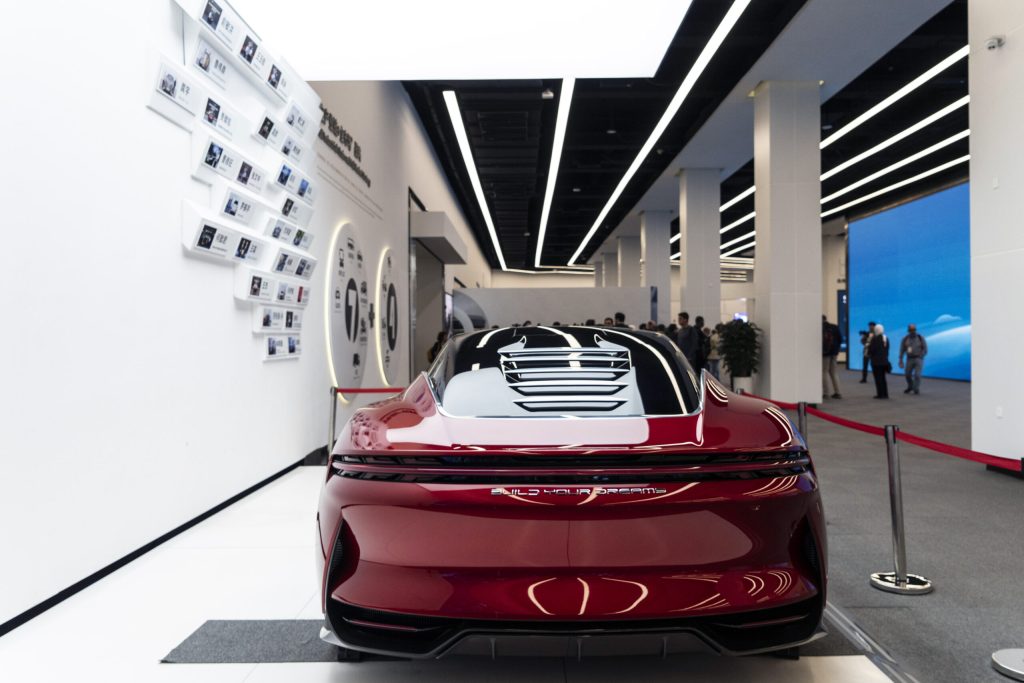
Photograph: A BYD Co. Han electric sedan in an exhibition area at the company’s headquarters in Shenzhen, China, on Monday, Jan. 15, 2024. Photo credit: Qilai Shen/Bloomberg
Copyright 2026 Bloomberg.
Interested in Auto?
Get automatic alerts for this topic.
The European Union is facing an urgent need to establish comprehensive regulations to address the escalating security risks associated with intelligent vehicles, particularly those manufactured in China, which are gaining traction among consumers. This assertion comes from a think tank based in Warsaw.
Intelligent vehicles, which include electric and hybrid models, are capable of collecting vast amounts of data, encompassing both geospatial and personal information. According to the Center for Eastern Studies, this data collection leaves European nations vulnerable to cyberattacks and raises concerns about the potential exposure of sensitive military and economic information.
“The urgency to regulate intelligent vehicles in Europe is increasing, especially as the market share of Chinese-made cars continues to rise,” stated the OSW group.
Interestingly, the Center pointed out that China could serve as a “useful starting point” for Europe in developing a legal framework aimed at mitigating cybersecurity and data risks. Chinese regulations require car manufacturers to secure data safety certifications, outline protocols for data storage and handling, and have even imposed temporary bans on Tesla Inc. in sensitive areas.
Globally, the concern over so-called spy cars is intensifying as more consumers opt for vehicles equipped with advanced driver-assistance systems. While these technologies are designed to enhance safety—such as aiding in speed control and parking—the vehicles’ sensors and high-definition cameras continuously gather real-time information about their environment.
Connected cars can generate an astonishing 1.4 terabytes of data per hour, as per industry estimates. This volume of data is equivalent to over 250 movies. Although much of this data is frequently overwritten due to limited storage capacity, some information can be transmitted to cloud-based servers.
China’s dominance in the new-energy vehicle sector, coupled with deteriorating diplomatic relations with Europe and the US, has heightened concerns regarding the handling of data collected by these vehicles. In December alone, nearly one in ten passenger cars sold in Europe were manufactured by Chinese automakers.
Some countries are already taking proactive measures to mitigate the security risks associated with smart cars. For instance, Poland is considering a ban on Chinese-made vehicles from entering military facilities, while the US has effectively prohibited personal smart cars from China and Russia.
Additionally, The Telegraph has reported that the UK government is wary of the potential national security threats posed by electric vehicles. Similarly, the German publication Handelsblatt has echoed these concerns regarding digitally networked cars from China.
Currently, the EU lacks a unified regulatory framework, although a cybersecurity risk assessment of connected vehicles conducted by the European Commission, along with the EU Data Act, has identified vehicles as a critical category of connected products, according to OSW.
Given the rapid rise in the popularity of electric vehicles, the urgency for comprehensive regulations is paramount. OSW advocates for a “coalition of willing countries” should an EU-wide agreement prove elusive.
“The ideal response would involve the EU mandating that car manufacturers obtain additional security certifications, with a particular focus on manufacturers from third countries,” the report emphasized.
Photograph: A BYD Co. Han electric sedan in an exhibition area at the company’s headquarters in Shenzhen, China, on Monday, Jan. 15, 2024. Photo credit: Qilai Shen/Bloomberg
Copyright 2026 Bloomberg.
Interested in Auto?
Get automatic alerts for this topic.