FBI Reveals Arson Suspect Aimed at Mississippi Synagogue Bombed in 1967

A suspect in an arson fire at a historic synagogue, previously bombed by the Ku Klux Klan, has confessed to targeting the institution due to its Jewish heritage. The FBI reported that the suspect admitted to his father what he had done, leading to his arrest after the father noticed burn marks on his son’s body.
Stephen Pittman, a 19-year-old, faces charges of maliciously damaging or destroying a building through fire or explosives. He confessed to igniting a fire inside the synagogue, referring to it as “the synagogue of Satan,” according to an FBI affidavit filed in U.S. District Court in Mississippi.
During his initial court appearance via video from a hospital bed, where both hands were bandaged, Pittman stated he was a high school graduate with three semesters of college completed. Prosecutors indicated he could face a prison sentence ranging from five to 20 years if convicted. When informed of his rights, Pittman proclaimed, “Jesus Christ is Lord.”
Pittman is scheduled for a preliminary and detention hearing on January 20. Mike Scott, his public defender, did not respond to requests for comment from The Associated Press.
In a statement, the Beth Israel Congregation expressed their determination to continue Jewish life in Jackson despite the tragedy, stating, “This news puts a face and name to this tragedy, but does not change our resolve to proudly — even defiantly — continue Jewish life in Jackson in the face of hatred.”
Attorney General Pam Bondi has directed prosecutors to pursue “severe penalties” for Pittman, as stated by the U.S. Attorney’s Office for the Southern District of Mississippi.
Captured on Video
The fire broke out at the Beth Israel Congregation in Jackson shortly after 3 a.m. on Saturday, with no injuries reported among congregants or firefighters. Security footage released by the synagogue showed a masked individual pouring gasoline on the floor and a couch in the lobby.
The blaze severely damaged the synagogue’s library and administrative offices. Five Torahs, sacred scrolls containing the first five books of the Hebrew Bible, were assessed for smoke damage. Tragically, two Torahs in the library were destroyed, although one that survived the Holocaust remained unharmed behind glass.
Pittman’s father alerted the FBI after his son confessed to the arson. He had sent his father a photo of the synagogue’s rear before the fire, stating, “There’s a furnace in the back.” Despite his father’s pleas for him to return home, Pittman responded, claiming he was “due for a homerun” and had “done his research.”
During an interview with investigators, Pittman admitted to purchasing gasoline at a gas station before heading to the synagogue. He removed his vehicle’s license plate and used an ax to break a window, pouring gasoline inside before igniting it with a torch lighter. The FBI later recovered a burned cellphone believed to belong to Pittman and a hand torch found by a congregant.
Congregation Determined to Rebuild
On Monday, yellow police tape cordoned off the synagogue, which was surrounded by broken glass and soot. Flowers were laid at the entrance, with one note reading, “I’m so very sorry.”
Zach Shemper, the congregation’s president, has vowed to rebuild the synagogue, noting that several churches have offered their spaces for worship during the reconstruction. Shemper attended Pittman’s court appearance but did not comment afterward.
With only a few hundred members, being Jewish in Mississippi’s capital city has always posed challenges. However, the Beth Israel community has taken pride in preserving their traditions in the Deep South.
The midcentury modern building housed not only the congregation but also the Jewish Federation, a nonprofit that provides social services and philanthropy, and the Institute of Southern Jewish Life, which supports Jewish communities across 13 southern states. A Holocaust memorial is located outdoors behind the synagogue.
Many Jewish children from the South have attended summer camp in Utica, Mississippi, fostering a lasting connection to the state’s Jewish community. Rabbi Gary Zola, a historian of American Jewry, described the synagogue as “the capital synagogue in Mississippi,” emphasizing its significance despite the challenges it faces.
A Rabbi Who Stood Up to the KKK
Founded in 1860, Beth Israel acquired its first property after the Civil War, becoming Mississippi’s first synagogue. After relocating in 1967, it was bombed by local KKK members shortly thereafter. The home of Rabbi Perry Nussbaum, who opposed segregation and racism, was also targeted.
Despite the risks, Rabbi Nussbaum remained steadfast in his commitment to civil rights, embodying a strong sense of justice that resonated with many congregants.
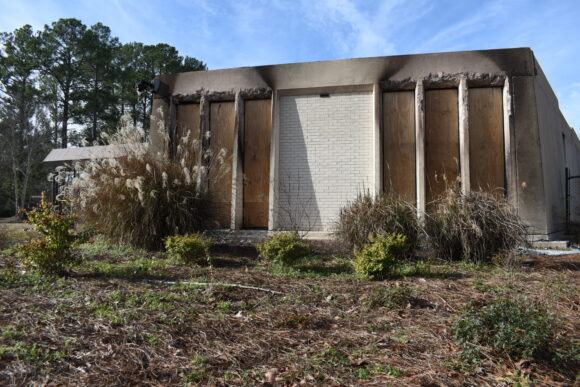
Photo: Boards cover the windows at the charred remains of the Beth Israel Congregation library, which was set on fire January 12 in Jackson. (AP Photo / Sophie Bates)
Copyright 2026 Associated Press. All rights reserved. This material may not be published, broadcast, rewritten, or redistributed.
Topics
Mississippi
A suspect in an arson fire at a historic synagogue, previously bombed by the Ku Klux Klan, has confessed to targeting the institution due to its Jewish heritage. The FBI reported that the suspect admitted to his father what he had done, leading to his arrest after the father noticed burn marks on his son’s body.
Stephen Pittman, a 19-year-old, faces charges of maliciously damaging or destroying a building through fire or explosives. He confessed to igniting a fire inside the synagogue, referring to it as “the synagogue of Satan,” according to an FBI affidavit filed in U.S. District Court in Mississippi.
During his initial court appearance via video from a hospital bed, where both hands were bandaged, Pittman stated he was a high school graduate with three semesters of college completed. Prosecutors indicated he could face a prison sentence ranging from five to 20 years if convicted. When informed of his rights, Pittman proclaimed, “Jesus Christ is Lord.”
Pittman is scheduled for a preliminary and detention hearing on January 20. Mike Scott, his public defender, did not respond to requests for comment from The Associated Press.
In a statement, the Beth Israel Congregation expressed their determination to continue Jewish life in Jackson despite the tragedy, stating, “This news puts a face and name to this tragedy, but does not change our resolve to proudly — even defiantly — continue Jewish life in Jackson in the face of hatred.”
Attorney General Pam Bondi has directed prosecutors to pursue “severe penalties” for Pittman, as stated by the U.S. Attorney’s Office for the Southern District of Mississippi.
Captured on Video
The fire broke out at the Beth Israel Congregation in Jackson shortly after 3 a.m. on Saturday, with no injuries reported among congregants or firefighters. Security footage released by the synagogue showed a masked individual pouring gasoline on the floor and a couch in the lobby.
The blaze severely damaged the synagogue’s library and administrative offices. Five Torahs, sacred scrolls containing the first five books of the Hebrew Bible, were assessed for smoke damage. Tragically, two Torahs in the library were destroyed, although one that survived the Holocaust remained unharmed behind glass.
Pittman’s father alerted the FBI after his son confessed to the arson. He had sent his father a photo of the synagogue’s rear before the fire, stating, “There’s a furnace in the back.” Despite his father’s pleas for him to return home, Pittman responded, claiming he was “due for a homerun” and had “done his research.”
During an interview with investigators, Pittman admitted to purchasing gasoline at a gas station before heading to the synagogue. He removed his vehicle’s license plate and used an ax to break a window, pouring gasoline inside before igniting it with a torch lighter. The FBI later recovered a burned cellphone believed to belong to Pittman and a hand torch found by a congregant.
Congregation Determined to Rebuild
On Monday, yellow police tape cordoned off the synagogue, which was surrounded by broken glass and soot. Flowers were laid at the entrance, with one note reading, “I’m so very sorry.”
Zach Shemper, the congregation’s president, has vowed to rebuild the synagogue, noting that several churches have offered their spaces for worship during the reconstruction. Shemper attended Pittman’s court appearance but did not comment afterward.
With only a few hundred members, being Jewish in Mississippi’s capital city has always posed challenges. However, the Beth Israel community has taken pride in preserving their traditions in the Deep South.
The midcentury modern building housed not only the congregation but also the Jewish Federation, a nonprofit that provides social services and philanthropy, and the Institute of Southern Jewish Life, which supports Jewish communities across 13 southern states. A Holocaust memorial is located outdoors behind the synagogue.
Many Jewish children from the South have attended summer camp in Utica, Mississippi, fostering a lasting connection to the state’s Jewish community. Rabbi Gary Zola, a historian of American Jewry, described the synagogue as “the capital synagogue in Mississippi,” emphasizing its significance despite the challenges it faces.
A Rabbi Who Stood Up to the KKK
Founded in 1860, Beth Israel acquired its first property after the Civil War, becoming Mississippi’s first synagogue. After relocating in 1967, it was bombed by local KKK members shortly thereafter. The home of Rabbi Perry Nussbaum, who opposed segregation and racism, was also targeted.
Despite the risks, Rabbi Nussbaum remained steadfast in his commitment to civil rights, embodying a strong sense of justice that resonated with many congregants.
Photo: Boards cover the windows at the charred remains of the Beth Israel Congregation library, which was set on fire January 12 in Jackson. (AP Photo / Sophie Bates)
Copyright 2026 Associated Press. All rights reserved. This material may not be published, broadcast, rewritten, or redistributed.
Topics
Mississippi