Fla. Commissioner Proposes Significant Revisions to Citizens’ Commercial Clearinghouse Strategy
Just days before a final committee vote on a bill aimed at establishing a clearinghouse for Citizens’ commercial policies, Florida’s insurance commissioner has proposed a significant rewrite. This new version would grant regulators greater authority over the clearinghouse’s administration and impose limits on the fees that administrators can charge brokers.
The original bill, SB 1028, introduced by state Sen. Joe Gruters, recently passed an amended version through the Senate’s Fiscal Policy Committee. Supporters argue that this amendment reinforces the ability of admitted carriers to take over Citizens’ commercial policies.
However, Insurance Commissioner Michael Yaworsky’s proposed changes seek to enhance regulatory oversight. He hopes to incorporate these modifications into the House’s counterpart bill, HB 943, which is set for discussion in the House Commerce Committee next week—the final step before votes in both chambers.
Until recently, Gruters’ bill and its House equivalent had progressed through committees with minimal opposition. However, some Florida brokers and insurance agents, along with Commissioner Yaworsky, have voiced concerns. They argue that the bill seems to favor unregulated surplus lines and Ryan Turner Specialty, one of the largest wholesale insurance brokerages in the nation.
Critics contend that Gruters’ plan could cost millions and effectively place one brokerage in control of the clearinghouse, limiting options for other brokers interested in Citizens’ commercial and condominium policies. Phil Masi, president of AssuredPartners, expressed skepticism, stating, “I just don’t think it’s necessary. It’s a waste to do it on the commercial side. The market is functioning the way it’s supposed to, especially now.”
In contrast, leaders from Ryan Specialty argue that a large brokerage like theirs is well-suited to manage a clearinghouse, potentially reducing Citizens’ exposure while promoting a more market-driven insurance system.
Commissioner Yaworsky, who previously criticized aspects of Gruters’ bill during a Senate committee hearing, has introduced his own version with notable differences. Here’s a comparison of the two:
The equalization clause: Gruters’ bill currently prohibits Citizens from writing or renewing a commercial policy if a surplus lines policy is found within 20% of Citizens’ premium. However, it allows Citizens to adjust its premiums to match those of surplus carriers, seemingly overriding the statutory glidepath. Yaworsky’s version removes this equalization clause.
Who can play: SB 1028 currently permits the program’s administrator to recommend which insurers can participate. Yaworsky’s amendment clarifies that admitted insurers must be included and that the Office of Insurance Regulation must approve all surplus insurers. Additionally, a clearinghouse must be authorized by Citizens’ operational plan, which requires cabinet-level review.
Limits on administrator: Yaworsky’s bill stipulates that a plan administrator can serve for no more than three years, a timeframe absent from Gruters’ version. Furthermore, Yaworsky’s amendment mandates that the administrator be Florida-based and free from potential conflicts of interest, potentially excluding Ryan Specialty, headquartered in Chicago.
Fees and commissions: Gruters’ version lacks parameters on fees or surcharges, only requiring them to be deemed “fair.” In contrast, Yaworsky’s bill caps fees at $100 per policy and requires that the total cost of insurance coverage includes premiums, fees, and surcharges. This implies that any proposed premium from admitted or surplus lines must remain within 20% of Citizens’ price, including broker fees.
SB 1028 mandates that an approved surplus lines carrier pay the producing agent a commission at least equal to Citizens’ standard commission, while Yaworsky’s rewrite caps that commission at 7.5% of the total coverage cost.
Fronting: Yaworsky’s version explicitly prohibits fronting by admitted carriers on behalf of surplus lines firms, a point not addressed in Gruters’ bill.
During the Senate Fiscal Policy Committee hearing last week, a representative from the Florida Association of Insurance Agents noted that the committee’s January 12-approved amendment addresses many of their concerns. However, B.G. Murphy, FAIA’s director of government affairs, indicated that there are still aspects of the bill that require further refinement to ensure the successful establishment of the admitted clearinghouse.
While Citizens officials have not taken a formal stance on the legislation, a lobbyist for Citizens remarked that the January 12 committee substitute is “a worthy amendment.”
The amended Senate bill can be viewed here. Yaworsky’s proposed version is available here.
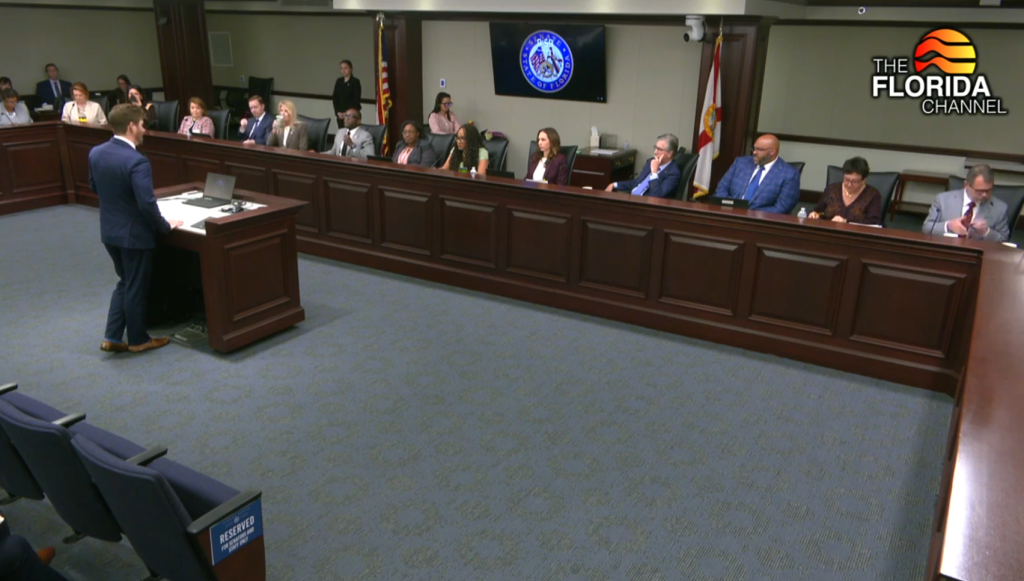
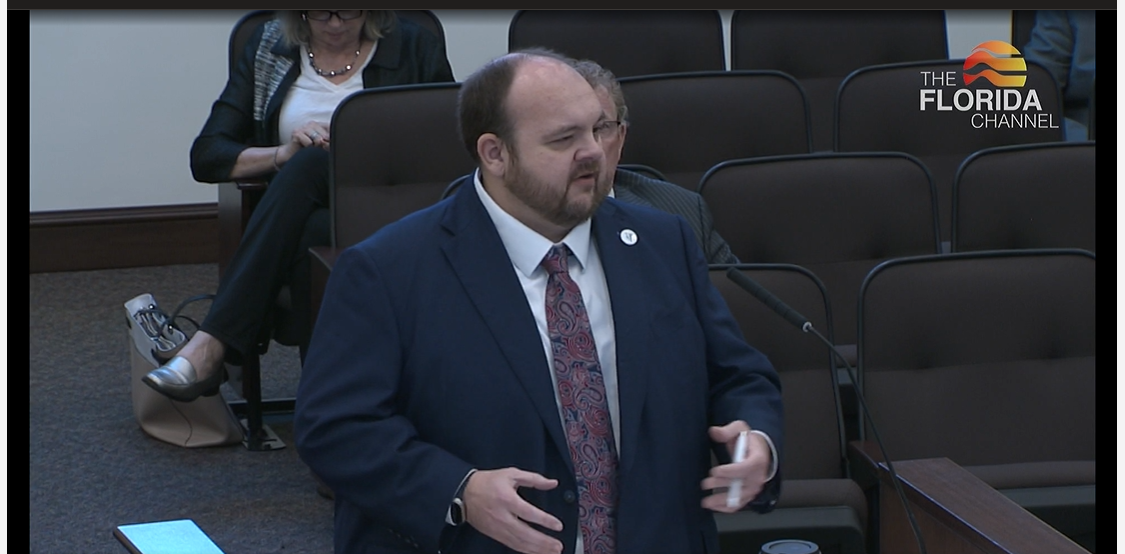
Top photo: FAIA’s Murphy speaking at the Senate Fiscal Policy Committee last week. (The Florida Channel)
Topics
Commercial Lines
Interested in Commercial Lines?
Get automatic alerts for this topic.
Just days before a final committee vote on a bill aimed at establishing a clearinghouse for Citizens’ commercial policies, Florida’s insurance commissioner has proposed a significant rewrite. This new version would grant regulators greater authority over the clearinghouse’s administration and impose limits on the fees that administrators can charge brokers.
The original bill, SB 1028, introduced by state Sen. Joe Gruters, recently passed an amended version through the Senate’s Fiscal Policy Committee. Supporters argue that this amendment reinforces the ability of admitted carriers to take over Citizens’ commercial policies.
However, Insurance Commissioner Michael Yaworsky’s proposed changes seek to enhance regulatory oversight. He hopes to incorporate these modifications into the House’s counterpart bill, HB 943, which is set for discussion in the House Commerce Committee next week—the final step before votes in both chambers.
Until recently, Gruters’ bill and its House equivalent had progressed through committees with minimal opposition. However, some Florida brokers and insurance agents, along with Commissioner Yaworsky, have voiced concerns. They argue that the bill seems to favor unregulated surplus lines and Ryan Turner Specialty, one of the largest wholesale insurance brokerages in the nation.
Critics contend that Gruters’ plan could cost millions and effectively place one brokerage in control of the clearinghouse, limiting options for other brokers interested in Citizens’ commercial and condominium policies. Phil Masi, president of AssuredPartners, expressed skepticism, stating, “I just don’t think it’s necessary. It’s a waste to do it on the commercial side. The market is functioning the way it’s supposed to, especially now.”
In contrast, leaders from Ryan Specialty argue that a large brokerage like theirs is well-suited to manage a clearinghouse, potentially reducing Citizens’ exposure while promoting a more market-driven insurance system.
Commissioner Yaworsky, who previously criticized aspects of Gruters’ bill during a Senate committee hearing, has introduced his own version with notable differences. Here’s a comparison of the two:
The equalization clause: Gruters’ bill currently prohibits Citizens from writing or renewing a commercial policy if a surplus lines policy is found within 20% of Citizens’ premium. However, it allows Citizens to adjust its premiums to match those of surplus carriers, seemingly overriding the statutory glidepath. Yaworsky’s version removes this equalization clause.
Who can play: SB 1028 currently permits the program’s administrator to recommend which insurers can participate. Yaworsky’s amendment clarifies that admitted insurers must be included and that the Office of Insurance Regulation must approve all surplus insurers. Additionally, a clearinghouse must be authorized by Citizens’ operational plan, which requires cabinet-level review.
Limits on administrator: Yaworsky’s bill stipulates that a plan administrator can serve for no more than three years, a timeframe absent from Gruters’ version. Furthermore, Yaworsky’s amendment mandates that the administrator be Florida-based and free from potential conflicts of interest, potentially excluding Ryan Specialty, headquartered in Chicago.
Fees and commissions: Gruters’ version lacks parameters on fees or surcharges, only requiring them to be deemed “fair.” In contrast, Yaworsky’s bill caps fees at $100 per policy and requires that the total cost of insurance coverage includes premiums, fees, and surcharges. This implies that any proposed premium from admitted or surplus lines must remain within 20% of Citizens’ price, including broker fees.
SB 1028 mandates that an approved surplus lines carrier pay the producing agent a commission at least equal to Citizens’ standard commission, while Yaworsky’s rewrite caps that commission at 7.5% of the total coverage cost.
Fronting: Yaworsky’s version explicitly prohibits fronting by admitted carriers on behalf of surplus lines firms, a point not addressed in Gruters’ bill.
During the Senate Fiscal Policy Committee hearing last week, a representative from the Florida Association of Insurance Agents noted that the committee’s January 12-approved amendment addresses many of their concerns. However, B.G. Murphy, FAIA’s director of government affairs, indicated that there are still aspects of the bill that require further refinement to ensure the successful establishment of the admitted clearinghouse.
While Citizens officials have not taken a formal stance on the legislation, a lobbyist for Citizens remarked that the January 12 committee substitute is “a worthy amendment.”
The amended Senate bill can be viewed here. Yaworsky’s proposed version is available here.
Top photo: FAIA’s Murphy speaking at the Senate Fiscal Policy Committee last week. (The Florida Channel)
Topics
Commercial Lines
Interested in Commercial Lines?
Get automatic alerts for this topic.