Florida Condo Market Transforms: Impact of New Transparency Law and Court Ruling
Miami REALTORS Chief of Residential & Advocacy Danielle Blake and Douglas Elliman agent Jessica Julian speak to Fox News Digital about two recent legal changes within Florida’s condominium market.
For decades, purchasing a Florida condo was a leap of faith masked by palm trees and ocean views. But in the new year, the veil of secrecy has lifted.
With the introduction of a mandatory digital transparency law and a landmark court ruling that handed a so-called “poison pill” to developers, the power dynamic in the Sunshine State has shifted dramatically.
“I think it’s definitely correcting,” said Douglas Elliman Palm Beach agent Jessica Julian. “Last year, older buildings were struggling, with fewer buyers willing to take the risk after the Surfside tragedy. Now, as assessments are being paid and repairs are underway, we’re seeing a market correction.”
MIAMI REALTORS Chief of Residential & Advocacy Danielle Blake echoed this sentiment, stating, “Momentum is probably the best word we have. Things have stabilized, and the demand here in South Florida is incredibly strong.”
FLORIDA’S AGING WATERFRONT CONDOS BECOME GOLD MINES AS OWNERS CASH IN ON DEVELOPER BUYOUTS
The first major shift of 2026 includes provisions from House Bill 913, which mandates that associations with 25 units or more establish a secure digital portal. This portal allows prospective buyers to access condo bank statements, reserve details, and structural reports.
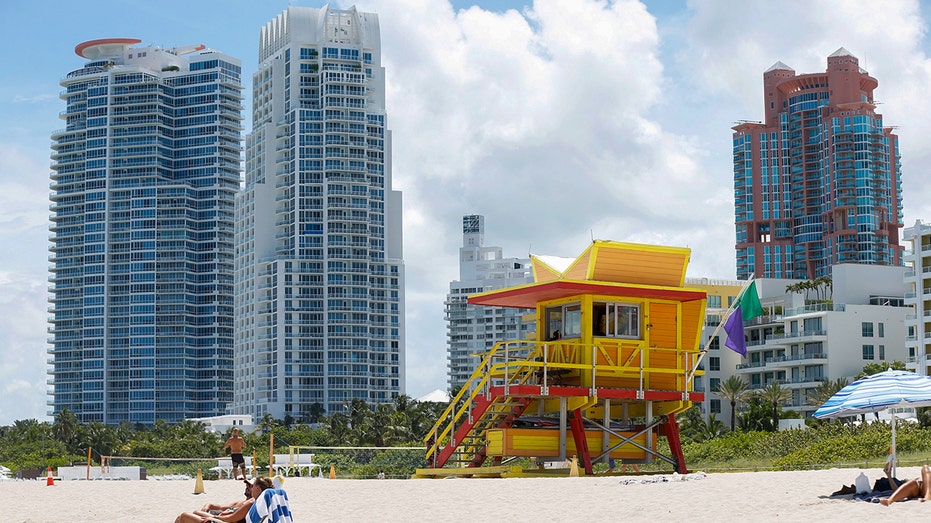
A lifeguard tower sits on the beach on a sunny day in front of condos on August 16, 2023, in Miami, Florida. (Getty Images)
“With just a click, you can access all these documents, including the budget, before making an offer,” Blake explained. “This promotes transparency and accountability, which we wholeheartedly support.”
Julian added, “The condo market is becoming more predictable. Buildings with delayed reserves are seeing ongoing negotiations, while those with fully funded reserves have a competitive edge.”
In Miami-Dade, 65% of active inventory consists of older condo buildings. Sales in the $200,000 to $400,000 range have risen by 21% year over year, despite rising insurance costs and assessments. Experts are weighing whether buyers are being brave or simply eager for a slice of paradise.
Compass broker associate Scott Diffenderfer and BH Group head of acquisitions Alex Tukh speak to Fox News Digital about why South Florida’s older condos are currently selling faster than newer units.
“I would like to think it’s all due to our advocacy work. Transparency is crucial, but market conditions also play a significant role. South Florida is a hot market, and everyone wants to move here,” Blake noted. “This is the last affordable inventory we have, and buyers are moving in.”
Julian observed that many buyers are well-informed, often coming to her after conducting their own research on potential buildings.
The second major shift in Florida’s condo market is the recent Biscayne 21 court ruling, which set a legal precedent allowing minority holdouts—just 5% to 10% of owners—to block major redevelopments if the original declaration requires unanimous consent.
OLDER SOUTH FLORIDA CONDOS NOW SELLING FASTER THAN NEW CONSTRUCTION UNITS AMID AFFORDABILITY CRUNCH
Julian referred to this decision as a “poison pill” for developers eyeing older, waterfront Miami buildings for ultra-luxury conversions.
Harbor Condominium treasurer Juan Llorente, Blanca CRE EVP Cary Cohen, and MSP Group CEO Deme Mekras speak to Fox News Digital about their buyout deal of the North Bay Village, 29-unit, waterfront building.
“The poison pill makes it very difficult for developers to pursue these projects,” she explained. “They are now more cautious and will scrutinize buildings more closely before making any moves.”
Julian has experienced buyout wars firsthand, recalling a battle at Harbor Towers & Marina in West Palm Beach, where developers sued multiple owners caught in the crossfire.
“What they don’t realize, that I see behind the scenes, is these developers are scooping up other buildings that are more affordable to them, that make more sense in pencil. And eventually, we’re gonna be oversaturated.”
Julian pointed out that some buildings still have bylaws allowing 75% to 80% of owners to terminate a building, making them prime targets for developers.
Blake emphasized the importance of understanding government documents, advising developers to thoroughly review these before incorporating them into their plans.
With her advocacy role in mind, Blake suggested that realtors should engage with local and state governments to find solutions that prevent a few residents from hindering an entire community’s progress.
GET FOX BUSINESS ON THE GO BY CLICKING HERE
Gutman Development Marketing’s Phil Gutman, The Continuum Company’s Ian Bruce Eichner, and BH Group CEO Isaac Toledano explain to Fox News Digital why they support Florida’s ‘Condo 3.0’ bill.
While both experts agree that these changes emphasize clarity and communication, Julian cautioned about the future market environment.
“Greed is becoming a factor. Buyers are holding back, waiting for higher offers from developers. However, they may not realize that developers are focusing on more affordable buildings, leading to potential oversaturation,” she warned.
“If they are waiting for the ultimate payout, they might want to reconsider their strategy.”
Miami REALTORS Chief of Residential & Advocacy Danielle Blake and Douglas Elliman agent Jessica Julian speak to Fox News Digital about two recent legal changes within Florida’s condominium market.
For decades, purchasing a Florida condo was a leap of faith masked by palm trees and ocean views. But in the new year, the veil of secrecy has lifted.
With the introduction of a mandatory digital transparency law and a landmark court ruling that handed a so-called “poison pill” to developers, the power dynamic in the Sunshine State has shifted dramatically.
“I think it’s definitely correcting,” said Douglas Elliman Palm Beach agent Jessica Julian. “Last year, older buildings were struggling, with fewer buyers willing to take the risk after the Surfside tragedy. Now, as assessments are being paid and repairs are underway, we’re seeing a market correction.”
MIAMI REALTORS Chief of Residential & Advocacy Danielle Blake echoed this sentiment, stating, “Momentum is probably the best word we have. Things have stabilized, and the demand here in South Florida is incredibly strong.”
FLORIDA’S AGING WATERFRONT CONDOS BECOME GOLD MINES AS OWNERS CASH IN ON DEVELOPER BUYOUTS
The first major shift of 2026 includes provisions from House Bill 913, which mandates that associations with 25 units or more establish a secure digital portal. This portal allows prospective buyers to access condo bank statements, reserve details, and structural reports.
A lifeguard tower sits on the beach on a sunny day in front of condos on August 16, 2023, in Miami, Florida. (Getty Images)
“With just a click, you can access all these documents, including the budget, before making an offer,” Blake explained. “This promotes transparency and accountability, which we wholeheartedly support.”
Julian added, “The condo market is becoming more predictable. Buildings with delayed reserves are seeing ongoing negotiations, while those with fully funded reserves have a competitive edge.”
In Miami-Dade, 65% of active inventory consists of older condo buildings. Sales in the $200,000 to $400,000 range have risen by 21% year over year, despite rising insurance costs and assessments. Experts are weighing whether buyers are being brave or simply eager for a slice of paradise.
Compass broker associate Scott Diffenderfer and BH Group head of acquisitions Alex Tukh speak to Fox News Digital about why South Florida’s older condos are currently selling faster than newer units.
“I would like to think it’s all due to our advocacy work. Transparency is crucial, but market conditions also play a significant role. South Florida is a hot market, and everyone wants to move here,” Blake noted. “This is the last affordable inventory we have, and buyers are moving in.”
Julian observed that many buyers are well-informed, often coming to her after conducting their own research on potential buildings.
The second major shift in Florida’s condo market is the recent Biscayne 21 court ruling, which set a legal precedent allowing minority holdouts—just 5% to 10% of owners—to block major redevelopments if the original declaration requires unanimous consent.
OLDER SOUTH FLORIDA CONDOS NOW SELLING FASTER THAN NEW CONSTRUCTION UNITS AMID AFFORDABILITY CRUNCH
Julian referred to this decision as a “poison pill” for developers eyeing older, waterfront Miami buildings for ultra-luxury conversions.
Harbor Condominium treasurer Juan Llorente, Blanca CRE EVP Cary Cohen, and MSP Group CEO Deme Mekras speak to Fox News Digital about their buyout deal of the North Bay Village, 29-unit, waterfront building.
“The poison pill makes it very difficult for developers to pursue these projects,” she explained. “They are now more cautious and will scrutinize buildings more closely before making any moves.”
Julian has experienced buyout wars firsthand, recalling a battle at Harbor Towers & Marina in West Palm Beach, where developers sued multiple owners caught in the crossfire.
“What they don’t realize, that I see behind the scenes, is these developers are scooping up other buildings that are more affordable to them, that make more sense in pencil. And eventually, we’re gonna be oversaturated.”
Julian pointed out that some buildings still have bylaws allowing 75% to 80% of owners to terminate a building, making them prime targets for developers.
Blake emphasized the importance of understanding government documents, advising developers to thoroughly review these before incorporating them into their plans.
With her advocacy role in mind, Blake suggested that realtors should engage with local and state governments to find solutions that prevent a few residents from hindering an entire community’s progress.
GET FOX BUSINESS ON THE GO BY CLICKING HERE
Gutman Development Marketing’s Phil Gutman, The Continuum Company’s Ian Bruce Eichner, and BH Group CEO Isaac Toledano explain to Fox News Digital why they support Florida’s ‘Condo 3.0’ bill.
While both experts agree that these changes emphasize clarity and communication, Julian cautioned about the future market environment.
“Greed is becoming a factor. Buyers are holding back, waiting for higher offers from developers. However, they may not realize that developers are focusing on more affordable buildings, leading to potential oversaturation,” she warned.
“If they are waiting for the ultimate payout, they might want to reconsider their strategy.”