German Insurers Experience Lower-Than-Average Natural Disaster Claims in 2025
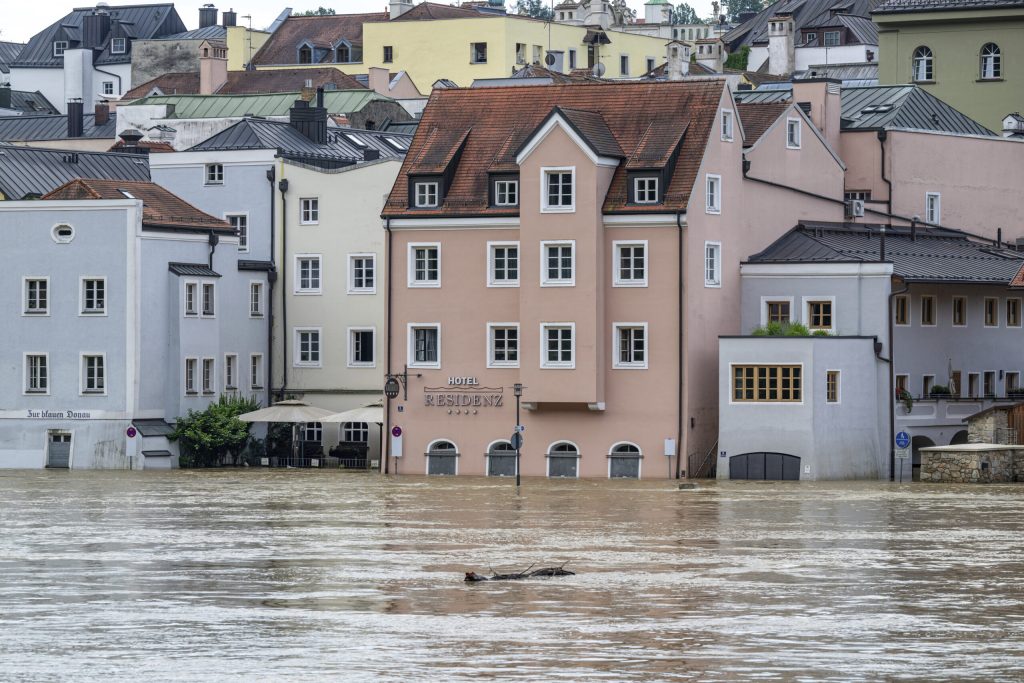
Heavy rain, flooding, storms, and hail—collectively referred to as severe convective storms (SCS)—have led to below-average claims for German insurers in 2025. This trend stands in stark contrast to the long-term expectations regarding the impact of climate change, as reported by the German Insurance Association (GDV).
The situation in Germany mirrors the global catastrophe losses experienced by insurers and their reinsurance partners. A recent report by Guy Carpenter on the January 1 reinsurance renewal season highlights this trend.
“We are currently expecting losses of €2.6 billion ($3.1 billion) from natural hazards. This is around €3 billion ($3.5 billion) less than in 2024. The fact that there was less damage this year is a matter of luck. Overall, however, the number of extreme weather events caused by climate change is increasing,” commented Jörg Asmussen, managing director of the GDV.
The GDV estimates that property insurance will account for approximately €1.4 billion ($1.6 billion) in losses due to storms, hail, and lightning in 2025. Additionally, €500 million ($587.3 million) in claims will arise from other natural hazards, including flooding and heavy rainfall.
In the realm of motor insurance, losses from storms and floods are projected to reach €700 million ($822.2 million). This figure encompasses damage to residential properties, household contents, commercial and industrial enterprises, as well as motor vehicles.
In light of the ongoing threat posed by extreme weather events linked to climate change, the GDV recently proposed a reinsurance vehicle called Elementar Re. This initiative is envisioned as a public-private partnership aimed at creating a model that renders natural disaster risks insurable and affordable.
“In view of the increasing risks, it is urgently necessary to expand holistic hazard prevention,” Asmussen emphasized.
Elementar Re would feature two tiers of private-sector protection: its own reinsurance and a gradually established guarantee fund. This structure would be bolstered by a government-backed stop-loss mechanism, which would activate only in the event of rare extreme occurrences—specifically when private-sector reserves have been significantly depleted.
This innovative approach would provide a targeted safety net for exceptionally severe disasters, with claim volumes exceeding €30 billion ($35.1 billion).
“The government thus assumes neither the role of a primary insurer nor that of a permanent reinsurer,” the GDV clarified. This strategy aims to create a government-supported reinsurance solution that effectively complements the market without replacing it.
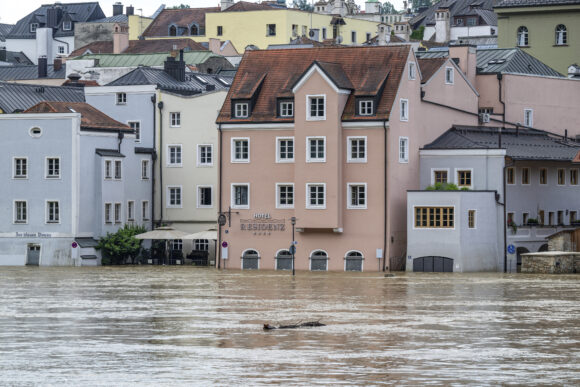
Photograph: Parts of the old town are flooded by the Danube River, in Passau, Germany, Thursday, June 6, 2024. (Armin Weigel/dpa via AP)
Topics
Trends
Natural Disasters
Carriers
Claims
Interested in Carriers?
Get automatic alerts for this topic.
Heavy rain, flooding, storms, and hail—collectively referred to as severe convective storms (SCS)—have led to below-average claims for German insurers in 2025. This trend stands in stark contrast to the long-term expectations regarding the impact of climate change, as reported by the German Insurance Association (GDV).
The situation in Germany mirrors the global catastrophe losses experienced by insurers and their reinsurance partners. A recent report by Guy Carpenter on the January 1 reinsurance renewal season highlights this trend.
“We are currently expecting losses of €2.6 billion ($3.1 billion) from natural hazards. This is around €3 billion ($3.5 billion) less than in 2024. The fact that there was less damage this year is a matter of luck. Overall, however, the number of extreme weather events caused by climate change is increasing,” commented Jörg Asmussen, managing director of the GDV.
The GDV estimates that property insurance will account for approximately €1.4 billion ($1.6 billion) in losses due to storms, hail, and lightning in 2025. Additionally, €500 million ($587.3 million) in claims will arise from other natural hazards, including flooding and heavy rainfall.
In the realm of motor insurance, losses from storms and floods are projected to reach €700 million ($822.2 million). This figure encompasses damage to residential properties, household contents, commercial and industrial enterprises, as well as motor vehicles.
In light of the ongoing threat posed by extreme weather events linked to climate change, the GDV recently proposed a reinsurance vehicle called Elementar Re. This initiative is envisioned as a public-private partnership aimed at creating a model that renders natural disaster risks insurable and affordable.
“In view of the increasing risks, it is urgently necessary to expand holistic hazard prevention,” Asmussen emphasized.
Elementar Re would feature two tiers of private-sector protection: its own reinsurance and a gradually established guarantee fund. This structure would be bolstered by a government-backed stop-loss mechanism, which would activate only in the event of rare extreme occurrences—specifically when private-sector reserves have been significantly depleted.
This innovative approach would provide a targeted safety net for exceptionally severe disasters, with claim volumes exceeding €30 billion ($35.1 billion).
“The government thus assumes neither the role of a primary insurer nor that of a permanent reinsurer,” the GDV clarified. This strategy aims to create a government-supported reinsurance solution that effectively complements the market without replacing it.
Photograph: Parts of the old town are flooded by the Danube River, in Passau, Germany, Thursday, June 6, 2024. (Armin Weigel/dpa via AP)
Topics
Trends
Natural Disasters
Carriers
Claims
Interested in Carriers?
Get automatic alerts for this topic.