Get Social – and Become a Docent
Combine your enthusiasms and meet new people by becoming a guide or a docent at cultural showcases near you.
Debbie Fauteux, 79, is a dedicated volunteer at the New Bedford Whaling Museum in Massachusetts. She recalls a particularly moving experience when she welcomed a group of blind visitors for a special tour. These guests were invited to touch the exhibits, including immense whale bones and historic objects from the museum’s educational collection. Witnessing their engagement with history in such a unique, hands-on way filled her with gratitude and a renewed sense of purpose.
“It was one of the most unforgettable experiences of my life,” she reflects.
More than a Hobby
After retiring from a 50-year nursing career, Fauteux sought a more fulfilling way to spend her time than “watching soap operas.” She responded to a local newspaper ad looking for volunteers and has been dedicating her Wednesdays to the museum since 2011.
“I love it, I love it, I love it. I’ve learned so much about the history of the area I grew up in, and I’ve met wonderful people from all walks of life. I still have my nursing friends, but I’ve made new friends volunteering. Every day is an adventure, not to mention the fun we have. School groups come in, and you see the kids’ faces light up when they see the giant skeletons they think are dinosaurs (those are the whales). They are just in awe.”
“Volunteering has kept me interested and interesting. It keeps you young, healthy, and active at any age. When you retire, you’re not as involved anymore. By volunteering, you have that great community that’s all yours. It’s a win-win all around.”
Victoria Hughes, the associate director of museum learning at the New Bedford Whaling Museum, notes that they have about 100 volunteers, many of whom are retirees. “Some are people who grew up in the area and came here as children and just want to give back to the community,” she explains.
No Experience Needed
Hughes emphasizes that becoming a museum docent doesn’t require previous expertise—just a passion for learning and connecting with people. New volunteers embark on a hands-on adventure, starting with interactive classroom sessions that delve into the museum’s history and offer tips on how to give a tour. Once equipped with these skills, aspiring docents have the chance to shadow seasoned guides, witnessing firsthand how a tour can spark curiosity and wonder in visitors of all ages.
“Our volunteers make a big impact in the galleries,” Hughes says. “They do more than share facts—they create memorable experiences by answering questions, guiding guests, and offering a warm welcome. Their work helps make our museum inviting for everyone.”
Volunteers also enjoy social opportunities, including monthly meetings with coffee and snacks, special events, and field trips to other museums with fellow volunteers. “Our volunteers contribute 13,000 hours annually. We could not engage all our visitors alone—82,000 in 2024—so we are so appreciative of what they do, and we offer flexibility because we recognize people have different commitments and volunteer for different reasons,” Hughes adds.
A Passion for Space—and Volunteering
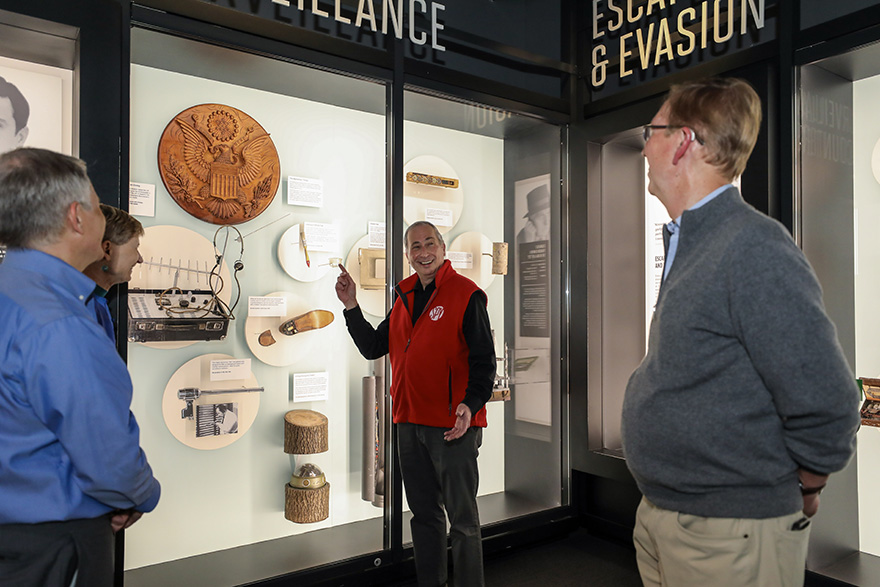
Lloyd Franklin, 65, volunteers as a docent at the private, non-profit International Spy Museum in Washington, DC, which is dedicated to the history and tradecraft of espionage and intelligence.
After concluding a distinguished 36-year career as an aerospace engineer, Franklin continues to seek meaningful ways to contribute to the community. “When I first heard about the museum, I became a member and helped support it. In 2019, they built a brand-new building to house the museum with double the exhibit space. They have fascinating events like a panel on the future of NATO, moderated by Leon Panetta.”
“Then, last summer, they decided to start a docent program. I applied, had an interview, and entered a three-month training program conducted both in person and virtually on ZOOM. I was familiar with the exhibits, but it was a great learning experience,” Franklin shares.
Each docent leads personalized tours, covering gallery highlights and sharing stories not found on exhibit labels. Franklin explains intelligence collection, spy gadgets, codebreaking, and features unexpected spies like famed chef Julia Child and professional baseball player and coach Moe Berg.
Over the past year, Franklin has donated 300 hours of his time volunteering, signing up for shifts via the museum’s website. “It’s like a second career—I get to share my knowledge with visitors from around the world, connect with museum staff and volunteers who feel like family, and genuinely have fun.”
Corey Price, Volunteer Manager at the International Spy Museum, notes that this role is ideal for lifelong learners. “The docent program enables participants, especially seniors, to share their knowledge, find purpose, and engage with a diverse community. Training is collaborative, and giving tours offers opportunities to connect with visitors worldwide, exchange perspectives, and teach others.”
If you’re age 50-plus and passionate about empowering older adults to use technology to make changes in their lives, then volunteering with Senior Planet may be the perfect opportunity for you. There are many different ways to volunteer online or in-person at one of our centers.
Tips for Volunteering
If you have a specific art gallery or museum in mind, start by visiting their website. Look for a tab labeled “get involved” or “volunteer.” You’ll be more passionate about a place you already enjoy visiting.
Check for training times. For instance, the Orlando Art Museum offers docent training only once a year in the spring.
Be aware of how much time training will require. For example, the Walter Anderson Museum of Art in Ocean Springs, MS, has a four-day training program for docents.
Check if there is a required minimum number of work hours per week or month.
If you love your city and want to share its history and culture, organizations like the International Association of Tour Directors & Guides offer education, networking, and hiring at their yearly conference.
Many cities also have local associations, such as the The Guide Association of NYC, which focuses on training and education.

Jennifer Juergens Thomas has a lifelong interest in how people come together. As a former AP reporter, she covered feature stories and later wrote about conventions from Anaheim to New Zealand as editor of Meetings and Conventions magazine. She was a public relations consultant for clients like the Society of Incentive and Travel Executives, focusing on how and why people need to gather. An Orlando resident, she continues to contribute to Meetings Today magazine among other ventures.
Combine your enthusiasms and meet new people by becoming a guide or a docent at cultural showcases near you.
Debbie Fauteux, 79, is a dedicated volunteer at the New Bedford Whaling Museum in Massachusetts. She recalls a particularly moving experience when she welcomed a group of blind visitors for a special tour. These guests were invited to touch the exhibits, including immense whale bones and historic objects from the museum’s educational collection. Witnessing their engagement with history in such a unique, hands-on way filled her with gratitude and a renewed sense of purpose.
“It was one of the most unforgettable experiences of my life,” she reflects.
More than a Hobby
After retiring from a 50-year nursing career, Fauteux sought a more fulfilling way to spend her time than “watching soap operas.” She responded to a local newspaper ad looking for volunteers and has been dedicating her Wednesdays to the museum since 2011.
“I love it, I love it, I love it. I’ve learned so much about the history of the area I grew up in, and I’ve met wonderful people from all walks of life. I still have my nursing friends, but I’ve made new friends volunteering. Every day is an adventure, not to mention the fun we have. School groups come in, and you see the kids’ faces light up when they see the giant skeletons they think are dinosaurs (those are the whales). They are just in awe.”
“Volunteering has kept me interested and interesting. It keeps you young, healthy, and active at any age. When you retire, you’re not as involved anymore. By volunteering, you have that great community that’s all yours. It’s a win-win all around.”
Victoria Hughes, the associate director of museum learning at the New Bedford Whaling Museum, notes that they have about 100 volunteers, many of whom are retirees. “Some are people who grew up in the area and came here as children and just want to give back to the community,” she explains.
No Experience Needed
Hughes emphasizes that becoming a museum docent doesn’t require previous expertise—just a passion for learning and connecting with people. New volunteers embark on a hands-on adventure, starting with interactive classroom sessions that delve into the museum’s history and offer tips on how to give a tour. Once equipped with these skills, aspiring docents have the chance to shadow seasoned guides, witnessing firsthand how a tour can spark curiosity and wonder in visitors of all ages.
“Our volunteers make a big impact in the galleries,” Hughes says. “They do more than share facts—they create memorable experiences by answering questions, guiding guests, and offering a warm welcome. Their work helps make our museum inviting for everyone.”
Volunteers also enjoy social opportunities, including monthly meetings with coffee and snacks, special events, and field trips to other museums with fellow volunteers. “Our volunteers contribute 13,000 hours annually. We could not engage all our visitors alone—82,000 in 2024—so we are so appreciative of what they do, and we offer flexibility because we recognize people have different commitments and volunteer for different reasons,” Hughes adds.
A Passion for Space—and Volunteering
Lloyd Franklin, 65, volunteers as a docent at the private, non-profit International Spy Museum in Washington, DC, which is dedicated to the history and tradecraft of espionage and intelligence.
After concluding a distinguished 36-year career as an aerospace engineer, Franklin continues to seek meaningful ways to contribute to the community. “When I first heard about the museum, I became a member and helped support it. In 2019, they built a brand-new building to house the museum with double the exhibit space. They have fascinating events like a panel on the future of NATO, moderated by Leon Panetta.”
“Then, last summer, they decided to start a docent program. I applied, had an interview, and entered a three-month training program conducted both in person and virtually on ZOOM. I was familiar with the exhibits, but it was a great learning experience,” Franklin shares.
Each docent leads personalized tours, covering gallery highlights and sharing stories not found on exhibit labels. Franklin explains intelligence collection, spy gadgets, codebreaking, and features unexpected spies like famed chef Julia Child and professional baseball player and coach Moe Berg.
Over the past year, Franklin has donated 300 hours of his time volunteering, signing up for shifts via the museum’s website. “It’s like a second career—I get to share my knowledge with visitors from around the world, connect with museum staff and volunteers who feel like family, and genuinely have fun.”
Corey Price, Volunteer Manager at the International Spy Museum, notes that this role is ideal for lifelong learners. “The docent program enables participants, especially seniors, to share their knowledge, find purpose, and engage with a diverse community. Training is collaborative, and giving tours offers opportunities to connect with visitors worldwide, exchange perspectives, and teach others.”
If you’re age 50-plus and passionate about empowering older adults to use technology to make changes in their lives, then volunteering with Senior Planet may be the perfect opportunity for you. There are many different ways to volunteer online or in-person at one of our centers.
Tips for Volunteering
If you have a specific art gallery or museum in mind, start by visiting their website. Look for a tab labeled “get involved” or “volunteer.” You’ll be more passionate about a place you already enjoy visiting.
Check for training times. For instance, the Orlando Art Museum offers docent training only once a year in the spring.
Be aware of how much time training will require. For example, the Walter Anderson Museum of Art in Ocean Springs, MS, has a four-day training program for docents.
Check if there is a required minimum number of work hours per week or month.
If you love your city and want to share its history and culture, organizations like the International Association of Tour Directors & Guides offer education, networking, and hiring at their yearly conference.
Many cities also have local associations, such as the The Guide Association of NYC, which focuses on training and education.
Jennifer Juergens Thomas has a lifelong interest in how people come together. As a former AP reporter, she covered feature stories and later wrote about conventions from Anaheim to New Zealand as editor of Meetings and Conventions magazine. She was a public relations consultant for clients like the Society of Incentive and Travel Executives, focusing on how and why people need to gather. An Orlando resident, she continues to contribute to Meetings Today magazine among other ventures.