Google CEO Sundar Pichai Urges US to Find Balance in AI Regulation to Stay Competitive
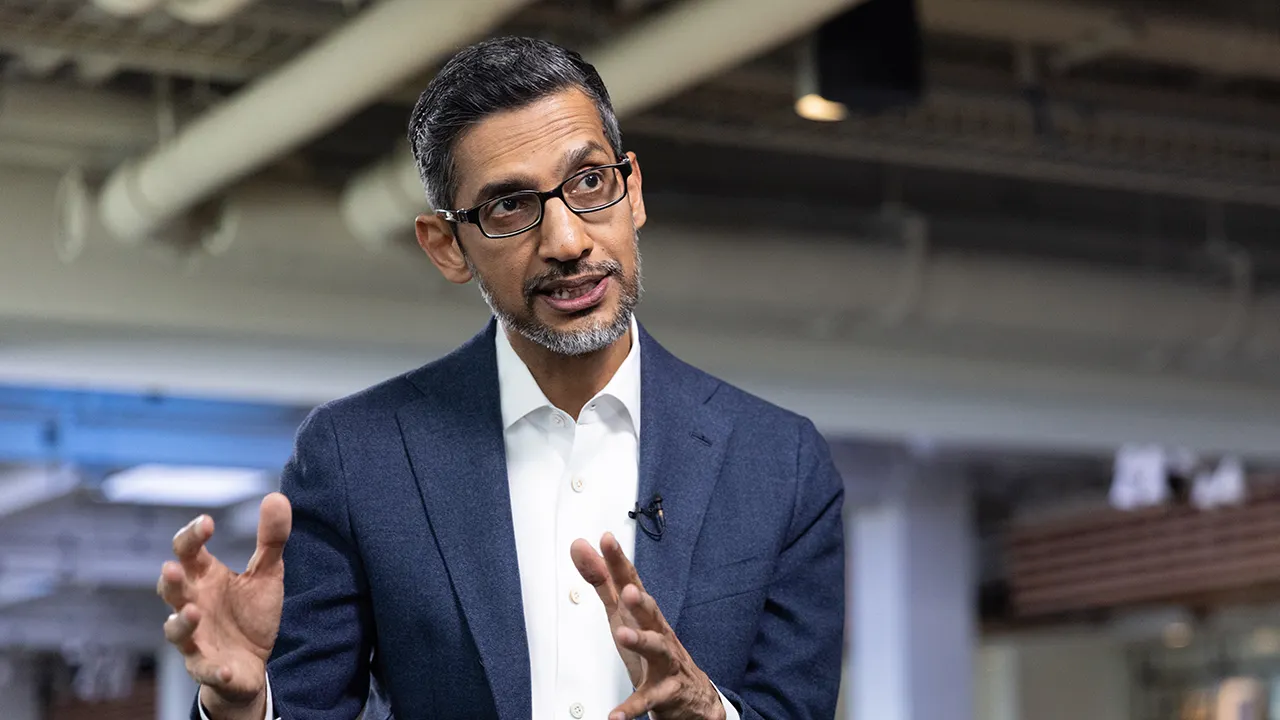
Daniel Newman of The Futurum Group joins ‘Varney & Co.’ to break down the escalating AI chip battle as Google supplies Meta and challenges NVIDIA.
Google CEO Sundar Pichai recently emphasized the importance of finding the right balance in artificial intelligence (AI) regulation during an interview on “Fox News Sunday” with Shannon Bream. He warned that the U.S. risks falling behind China if it fails to establish coherent guidelines.
Pichai pointed out that over 1,000 AI-related bills are currently in motion across various state legislatures, potentially leading to a patchwork of confusing regulations. “How do you cope with those varied regulations, and how do you compete with countries like China, which are moving fast in this technology?” he asked. He stressed the need for a balanced approach that encourages innovation while implementing necessary guardrails, ideally at the national level.
GOOGLE TO INVEST $40B IN TEXAS DATA CENTERS IN MAJOR AI PUSH
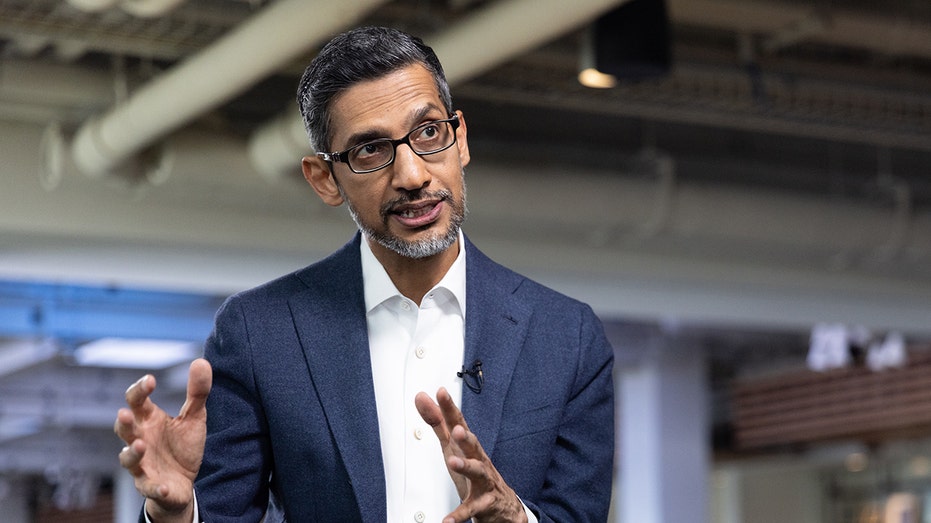
Sundar Pichai, CEO of Google and its parent company, Alphabet, during an interview for an episode of “The David Rubenstein Show: Peer-to-Peer Conversations” in New York on Sept. 20, 2024. (Jeenah Moon/Bloomberg via Getty Images / Getty Images)
Pichai also highlighted the necessity for both governments and tech companies to bolster their defenses against potential misuse of AI technologies. He advocated for international cooperation to develop frameworks that prevent the weaponization of these advancements. “Part of it is us as companies making our products better,” he stated. “Part of it is governments working together to create standards and frameworks by which we all use technology in a cooperative way.”
While acknowledging the “great benefits” of AI, such as its potential in developing new drugs and cancer treatments, Pichai cautioned that these same tools could be exploited by malicious actors. “Any technology has a dual side to it,” he remarked. “… The journey of humanity is always, ‘How do you harness technology to benefit society?’ And I think this technology is no different.”
AI CHATBOTS SHOWN EFFECTIVE AGAINST ANTISEMITIC CONSPIRACIES IN NEW STUDY

A photo illustration of a hacker. Google is increasingly using AI defensively to stop criminals who may use the technology for scams and hacking. (Getty Images / Getty Images)
Google is actively employing AI to combat criminal activities that leverage technology for scams and hacking. Pichai highlighted SynthID, a Google DeepMind tool designed to identify AI-generated images and videos. He also mentioned a recent court ruling in favor of Google against a phishing operator that targeted over a million individuals across more than 100 countries.
“You want to use AI on the defense side too,” Pichai stated. “The same way bad actors can use AI, we can also use AI to better detect those operations.”
Additionally, Pichai discussed Google’s ambitious “Suncatcher” project, aimed at creating solar-powered AI data centers in outer space. “There’s no doubt to me that a decade or so away we’ll be viewing it as a more normal way to build data centers,” he remarked.
AMAZON TO INVEST UP TO $50B TO BUILD AI INFRASTRUCTURE FOR US GOVERNMENT AGENCIES
The logo for Google LLC is seen at the Google Store Chelsea in Manhattan, New York City, on Nov. 17, 2021. (Andrew Kelly/Reuters / Reuters)
GET FOX BUSINESS ON THE GO BY CLICKING HERE
When addressing concerns about AI potentially undermining human thought, Pichai drew parallels to early criticisms of Google search. “About twenty-five years ago, people were asking the same questions about Google search,” he reflected. “I think as a society we will adapt, and I expect our creative days are going to be even richer in the future.”
Daniel Newman of The Futurum Group joins ‘Varney & Co.’ to break down the escalating AI chip battle as Google supplies Meta and challenges NVIDIA.
Google CEO Sundar Pichai recently emphasized the importance of finding the right balance in artificial intelligence (AI) regulation during an interview on “Fox News Sunday” with Shannon Bream. He warned that the U.S. risks falling behind China if it fails to establish coherent guidelines.
Pichai pointed out that over 1,000 AI-related bills are currently in motion across various state legislatures, potentially leading to a patchwork of confusing regulations. “How do you cope with those varied regulations, and how do you compete with countries like China, which are moving fast in this technology?” he asked. He stressed the need for a balanced approach that encourages innovation while implementing necessary guardrails, ideally at the national level.
GOOGLE TO INVEST $40B IN TEXAS DATA CENTERS IN MAJOR AI PUSH
Sundar Pichai, CEO of Google and its parent company, Alphabet, during an interview for an episode of “The David Rubenstein Show: Peer-to-Peer Conversations” in New York on Sept. 20, 2024. (Jeenah Moon/Bloomberg via Getty Images / Getty Images)
Pichai also highlighted the necessity for both governments and tech companies to bolster their defenses against potential misuse of AI technologies. He advocated for international cooperation to develop frameworks that prevent the weaponization of these advancements. “Part of it is us as companies making our products better,” he stated. “Part of it is governments working together to create standards and frameworks by which we all use technology in a cooperative way.”
While acknowledging the “great benefits” of AI, such as its potential in developing new drugs and cancer treatments, Pichai cautioned that these same tools could be exploited by malicious actors. “Any technology has a dual side to it,” he remarked. “… The journey of humanity is always, ‘How do you harness technology to benefit society?’ And I think this technology is no different.”
AI CHATBOTS SHOWN EFFECTIVE AGAINST ANTISEMITIC CONSPIRACIES IN NEW STUDY
A photo illustration of a hacker. Google is increasingly using AI defensively to stop criminals who may use the technology for scams and hacking. (Getty Images / Getty Images)
Google is actively employing AI to combat criminal activities that leverage technology for scams and hacking. Pichai highlighted SynthID, a Google DeepMind tool designed to identify AI-generated images and videos. He also mentioned a recent court ruling in favor of Google against a phishing operator that targeted over a million individuals across more than 100 countries.
“You want to use AI on the defense side too,” Pichai stated. “The same way bad actors can use AI, we can also use AI to better detect those operations.”
Additionally, Pichai discussed Google’s ambitious “Suncatcher” project, aimed at creating solar-powered AI data centers in outer space. “There’s no doubt to me that a decade or so away we’ll be viewing it as a more normal way to build data centers,” he remarked.
AMAZON TO INVEST UP TO $50B TO BUILD AI INFRASTRUCTURE FOR US GOVERNMENT AGENCIES
The logo for Google LLC is seen at the Google Store Chelsea in Manhattan, New York City, on Nov. 17, 2021. (Andrew Kelly/Reuters / Reuters)
GET FOX BUSINESS ON THE GO BY CLICKING HERE
When addressing concerns about AI potentially undermining human thought, Pichai drew parallels to early criticisms of Google search. “About twenty-five years ago, people were asking the same questions about Google search,” he reflected. “I think as a society we will adapt, and I expect our creative days are going to be even richer in the future.”