Healthcare Sector Innovates Cancer Detection Through Advanced Technology
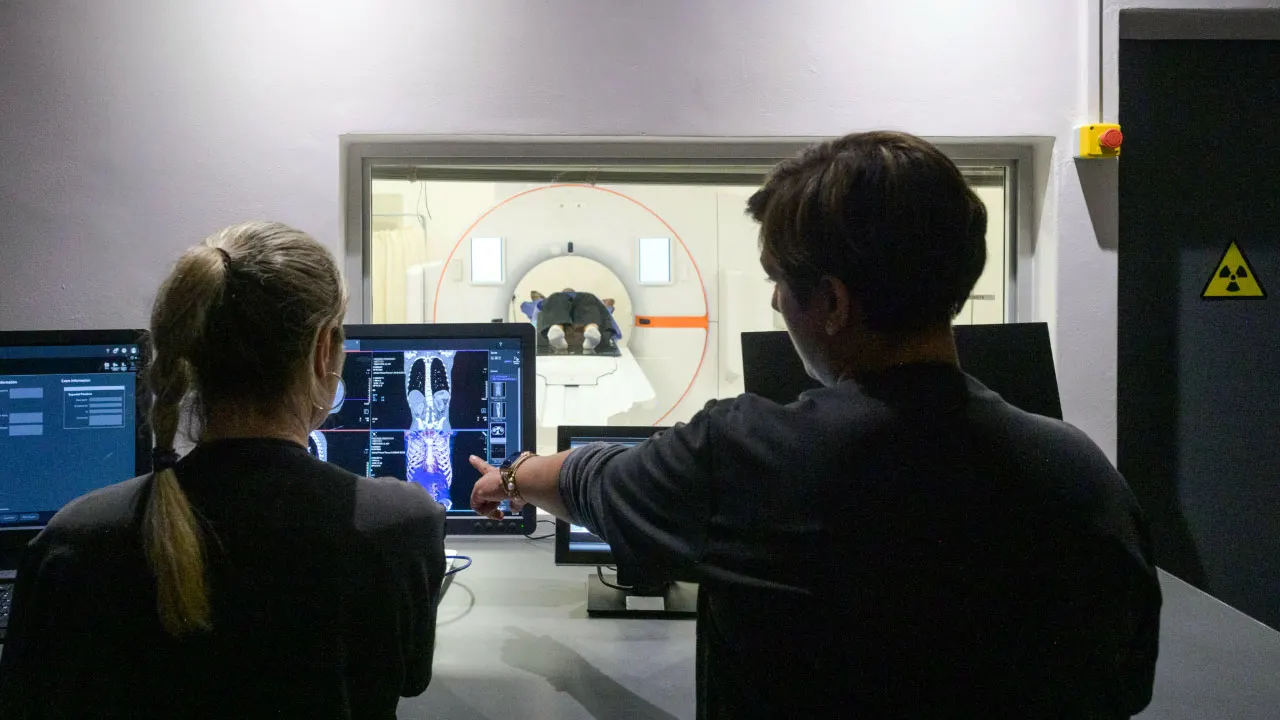
FOX Business’ Geri Willis and ‘The Big Money Show’ panel discuss the application of artificial intelligence in the medical field and people flocking to the technology for health information.
Artificial intelligence is rapidly reshaping the healthcare industry, with an increasing number of Americans turning to AI tools for medical guidance.
According to OpenAI, approximately 40 million users worldwide now utilize ChatGPT daily for health-related inquiries. Recently, the company introduced ChatGPT Health, a feature designed to help users analyze medical test results, prepare for doctor appointments, and seek general health advice.
In a similar vein, competitor Anthropic has launched Claude for Healthcare, aimed at enhancing clinical workflows and patient education.
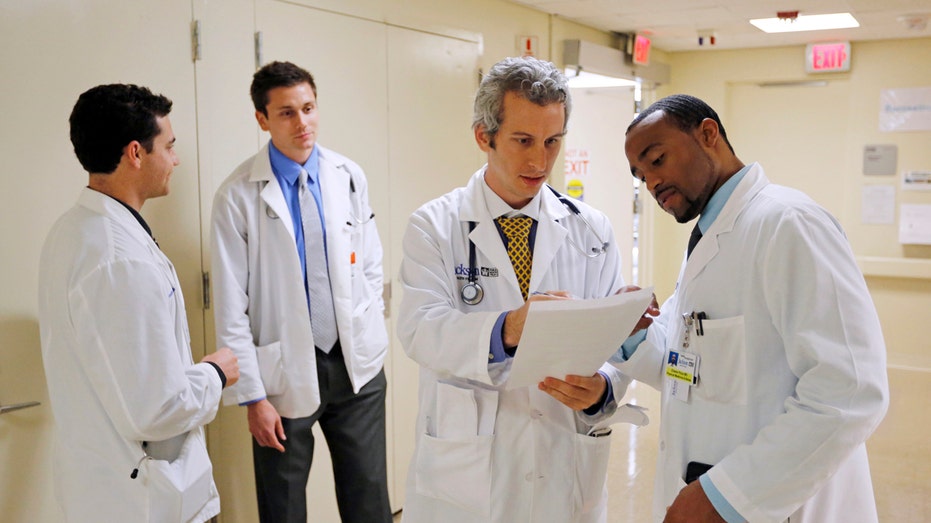
Hospitals and health systems are increasingly partnering with major AI companies to improve diagnostics and more. (Joe Skipper/Reuters)
Healthcare institutions are forming partnerships with leading AI companies to enhance diagnostics, streamline operations, and broaden access to medical information.
NUCLEAR WASTE BEING TRANSFORMED INTO PROMISING CANCER TREATMENT AT FORMER MANHATTAN PROJECT SITE
Memorial Sloan Kettering Cancer Center is among OpenAI’s healthcare partners, collaborating with several prominent U.S. hospital systems. Dr. Anaeze Offodile II, Chief Strategy Officer at MSK, shared insights with FOX Business about the responsible use of AI in research, patient education, and administrative tasks.
“Over the next year, we’ll identify where these tools can add value, evaluate them carefully, and work toward scaling them responsibly,” Offodile stated. “Our responsibility is to ensure these technologies are safe, ethical, and genuinely beneficial to patients.”
He emphasized that the healthcare industry is already transitioning beyond a pre-ChatGPT era.
“I don’t think we can revert to a world before generative AI,” Offodile remarked. “The key question now is how we ensure it’s used responsibly.”

Memorial Sloan Kettering Cancer Center in New York City is one of OpenAI’s healthcare partners. (Plexi Images/GHI/UCG/Universal Images Group via Getty Images)
A recent industry survey indicates that nearly one-third of U.S. health systems are now investing in commercial AI licenses as adoption accelerates.
One promising application of this technology is in skin cancer detection. At MSK’s Dermatology Lab, researchers are testing AI tools that analyze medical images and patient data to identify suspicious lesions and flag high-risk individuals.
“I believe AI will be a game changer for skin cancer detection,” said Dr. Veronica Rotemberg, director of the dermatology informatics program at MSK. “The priority now is to test these technologies in real clinical settings to gauge their true impact.”
CANCER SURVIVAL RATES REACH RECORD HIGH, BUT DEADLIEST TYPES STILL PUT AMERICANS AT RISK
One of the innovative tools being evaluated is a 360-degree total-body photography system that employs 92 cameras to capture detailed images of a patient’s skin. The aim is to leverage AI to automatically detect new or changing lesions over time, a task currently performed manually by clinicians.
Another promising technology is reflectance confocal microscopy, which allows doctors to visualize beneath the skin’s surface. This light-powered microscope can detect melanoma, the most lethal form of skin cancer, with approximately 80% accuracy. Each year, around 112,000 Americans are diagnosed with melanoma, according to the American Cancer Society.

OpenAI reports that around 40 million users globally now use ChatGPT daily for health-related inquiries. (Idrees Abbas/SOPA Images/LightRocket via Getty Images)
“As dermatologists, our objective is to identify all skin cancers while minimizing unnecessary biopsies,” Rotemberg explained. “Achieving this balance is crucial. These tools enhance our specificity, allowing for more accurate cancer identification while avoiding unnecessary procedures.”
BREAKTHROUGH BLOOD TEST COULD SPOT DOZENS OF CANCERS BEFORE SYMPTOMS APPEAR
Additionally, doctors are experimenting with an AI-powered dermatoscope that connects to a smartphone camera, enabling rapid assessments that could broaden screening capabilities in both clinical and remote environments.
Experts stress that these tools are intended to support, not replace, physicians.
CLICK HERE TO GET FOX BUSINESS ON THE GO
“These technologies still require clinical judgment,” Rotemberg noted. “They are not substitutes for trained medical professionals.”
Moreover, doctors caution that consumer AI health applications can be inconsistent and should never replace professional medical evaluations.
As AI continues to permeate the healthcare sector, physicians emphasize the importance of maintaining the doctor-patient relationship.
FOX Business’ Geri Willis and ‘The Big Money Show’ panel discuss the application of artificial intelligence in the medical field and people flocking to the technology for health information.
Artificial intelligence is rapidly reshaping the healthcare industry, with an increasing number of Americans turning to AI tools for medical guidance.
According to OpenAI, approximately 40 million users worldwide now utilize ChatGPT daily for health-related inquiries. Recently, the company introduced ChatGPT Health, a feature designed to help users analyze medical test results, prepare for doctor appointments, and seek general health advice.
In a similar vein, competitor Anthropic has launched Claude for Healthcare, aimed at enhancing clinical workflows and patient education.
Hospitals and health systems are increasingly partnering with major AI companies to improve diagnostics and more. (Joe Skipper/Reuters)
Healthcare institutions are forming partnerships with leading AI companies to enhance diagnostics, streamline operations, and broaden access to medical information.
NUCLEAR WASTE BEING TRANSFORMED INTO PROMISING CANCER TREATMENT AT FORMER MANHATTAN PROJECT SITE
Memorial Sloan Kettering Cancer Center is among OpenAI’s healthcare partners, collaborating with several prominent U.S. hospital systems. Dr. Anaeze Offodile II, Chief Strategy Officer at MSK, shared insights with FOX Business about the responsible use of AI in research, patient education, and administrative tasks.
“Over the next year, we’ll identify where these tools can add value, evaluate them carefully, and work toward scaling them responsibly,” Offodile stated. “Our responsibility is to ensure these technologies are safe, ethical, and genuinely beneficial to patients.”
He emphasized that the healthcare industry is already transitioning beyond a pre-ChatGPT era.
“I don’t think we can revert to a world before generative AI,” Offodile remarked. “The key question now is how we ensure it’s used responsibly.”
Memorial Sloan Kettering Cancer Center in New York City is one of OpenAI’s healthcare partners. (Plexi Images/GHI/UCG/Universal Images Group via Getty Images)
A recent industry survey indicates that nearly one-third of U.S. health systems are now investing in commercial AI licenses as adoption accelerates.
One promising application of this technology is in skin cancer detection. At MSK’s Dermatology Lab, researchers are testing AI tools that analyze medical images and patient data to identify suspicious lesions and flag high-risk individuals.
“I believe AI will be a game changer for skin cancer detection,” said Dr. Veronica Rotemberg, director of the dermatology informatics program at MSK. “The priority now is to test these technologies in real clinical settings to gauge their true impact.”
CANCER SURVIVAL RATES REACH RECORD HIGH, BUT DEADLIEST TYPES STILL PUT AMERICANS AT RISK
One of the innovative tools being evaluated is a 360-degree total-body photography system that employs 92 cameras to capture detailed images of a patient’s skin. The aim is to leverage AI to automatically detect new or changing lesions over time, a task currently performed manually by clinicians.
Another promising technology is reflectance confocal microscopy, which allows doctors to visualize beneath the skin’s surface. This light-powered microscope can detect melanoma, the most lethal form of skin cancer, with approximately 80% accuracy. Each year, around 112,000 Americans are diagnosed with melanoma, according to the American Cancer Society.
OpenAI reports that around 40 million users globally now use ChatGPT daily for health-related inquiries. (Idrees Abbas/SOPA Images/LightRocket via Getty Images)
“As dermatologists, our objective is to identify all skin cancers while minimizing unnecessary biopsies,” Rotemberg explained. “Achieving this balance is crucial. These tools enhance our specificity, allowing for more accurate cancer identification while avoiding unnecessary procedures.”
BREAKTHROUGH BLOOD TEST COULD SPOT DOZENS OF CANCERS BEFORE SYMPTOMS APPEAR
Additionally, doctors are experimenting with an AI-powered dermatoscope that connects to a smartphone camera, enabling rapid assessments that could broaden screening capabilities in both clinical and remote environments.
Experts stress that these tools are intended to support, not replace, physicians.
CLICK HERE TO GET FOX BUSINESS ON THE GO
“These technologies still require clinical judgment,” Rotemberg noted. “They are not substitutes for trained medical professionals.”
Moreover, doctors caution that consumer AI health applications can be inconsistent and should never replace professional medical evaluations.
As AI continues to permeate the healthcare sector, physicians emphasize the importance of maintaining the doctor-patient relationship.