Housing Affordability Likely to Remain Below Pre-Pandemic Levels Until 2047

PMG Affordable principal Dan Coakley speaks to Fox News Digital about what it may take to make housing affordable again across the country.
For years, home buyers have been told that the housing market would eventually “normalize.” This notion implies that if mortgage rates decrease or inventory improves, affordability would return to levels similar to those seen in 2019, before the pandemic.
However, recent data from Realtor.com indicates that this idealized version of the market may never materialize. Returning to pre-pandemic affordability would necessitate outcomes that economists deem highly unlikely.
These statistics reveal a harsher reality for buyers. One expert emphasizes that America’s housing affordability issue is not merely cyclical but fundamentally structural. “It’s not a realistic benchmark,” said Dan Coakley, principal at PMG Affordable, in an interview with Fox News Digital.
TRUMP HOUSING PLAN COULD BRING ‘BIG WIN’ FOR AMERICANS, PULTE SAYS
Coakley elaborated, “While it might seem that things were more affordable in 2019, the trend toward unaffordability has been ongoing for decades. It will take considerable time to address this issue.”
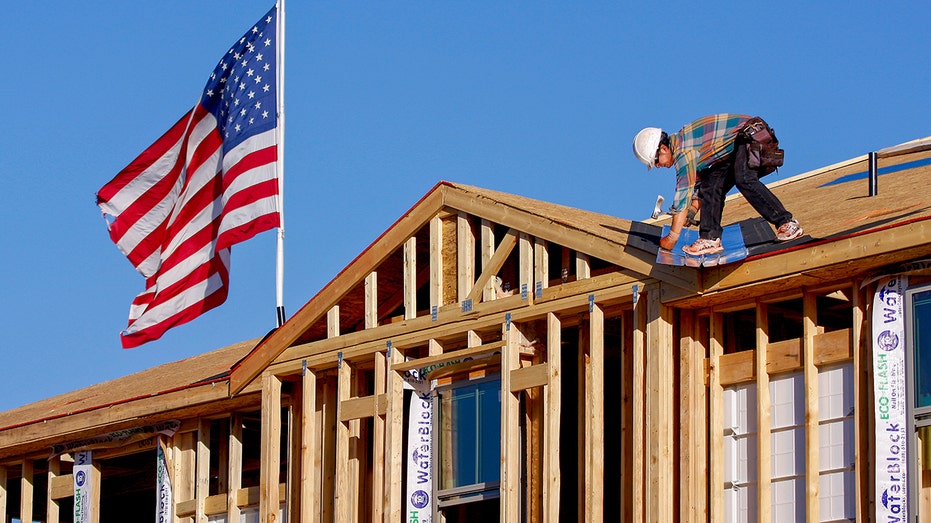
A worker affixes panels to the roof of a new KB Home unit in Phoenix, Arizona. (Getty Images)
Coakley believes that affordability will not revert to a level where it feels manageable for most people. According to a recent report from Realtor.com, achieving affordability in the U.S. housing market would require mortgage rates to drop to approximately 2.65%, median household incomes to rise by about 56%, or home prices to decrease by around 35%. Realtor.com defines “affordable” as a mortgage payment that constitutes about 21% of median household income, compared to the current figure of over 30%.
“The radical changes needed in interest rates, home prices, or income levels highlight the significant work ahead of us,” Coakley noted. He commended the Trump administration for bringing this issue to the forefront, emphasizing the importance of addressing these factors.
U.S. Federal Housing Finance Agency Director and Fannie Mae Chairman William Pulte discusses buying $200 billion in mortgage bonds, future rates, and banning large institutions from acquiring single-family homes.
Coakley expressed skepticism about rates falling below 3%, noting that median incomes have not kept pace with rising rents and home prices. “Individuals at lower and middle-income levels have struggled to benefit from the asset appreciation that is crucial to the American dream,” he explained.
“Increasing supply is one of the most critical actions we can take to alleviate this crisis,” Coakley stated. He suggested that incentives and subsidies for developers to create affordable for-sale housing would be beneficial.
ESCROW PAYMENTS RISING NATIONWIDE WITH HOMEOWNERSHIP LESS ATTAINABLE
Attempts to address one aspect of the housing market often backfire, Coakley warned, as housing intersects with financing, wages, and long-term price trends that have outstripped income growth.
As of Tuesday, the rate for a 30-year fixed-rate loan in the U.S. was 6.037%. | Getty Images
“If we lower interest rates too much, it could indicate an unhealthy economy, leading to income stagnation amid rising inflation,” he cautioned.
Recently, the Trump administration proposed two significant federal housing policies that Coakley views positively: directing Fannie Mae and Freddie Mac to purchase up to $200 billion in mortgage bonds and imposing limits on large institutional investors buying single-family homes.
“These are the types of structural changes that could genuinely shift the needle,” Coakley remarked. “It’s encouraging to see an administration that recognizes fairness in housing.”
‘Mansion Global’ host Katrina Campins praises President Donald Trump’s planned move to eliminate ‘institutional investors’ from purchasing single-family homes on ‘Making Money.’
Looking ahead, Realtor.com estimates that if mortgage rates remain in the mid-6% range and wages and prices grow at a 2025 pace, a return to pre-pandemic affordability could be postponed until around 2047, highlighting the enormity of the challenge.
Coakley argues that pursuing past affordability levels is misguided. Instead, he believes policymakers and the real estate sector should focus on restructuring housing costs for greater long-term affordability.
GET FOX BUSINESS ON THE GO BY CLICKING HERE
“We risk normalizing this level of unaffordability, which poses a serious problem,” he cautioned. “This situation is detrimental to family formation, job creation, and the vitality of our communities.”
“While interest rate policies can provide some relief, we must return to the drawing board to find ways to reduce costs for for-sale housing. Developing new programs that facilitate affordable housing options will be essential for allowing people to participate in the appreciation of their most significant asset,” he concluded.
PMG Affordable principal Dan Coakley speaks to Fox News Digital about what it may take to make housing affordable again across the country.
For years, home buyers have been told that the housing market would eventually “normalize.” This notion implies that if mortgage rates decrease or inventory improves, affordability would return to levels similar to those seen in 2019, before the pandemic.
However, recent data from Realtor.com indicates that this idealized version of the market may never materialize. Returning to pre-pandemic affordability would necessitate outcomes that economists deem highly unlikely.
These statistics reveal a harsher reality for buyers. One expert emphasizes that America’s housing affordability issue is not merely cyclical but fundamentally structural. “It’s not a realistic benchmark,” said Dan Coakley, principal at PMG Affordable, in an interview with Fox News Digital.
TRUMP HOUSING PLAN COULD BRING ‘BIG WIN’ FOR AMERICANS, PULTE SAYS
Coakley elaborated, “While it might seem that things were more affordable in 2019, the trend toward unaffordability has been ongoing for decades. It will take considerable time to address this issue.”
A worker affixes panels to the roof of a new KB Home unit in Phoenix, Arizona. (Getty Images)
Coakley believes that affordability will not revert to a level where it feels manageable for most people. According to a recent report from Realtor.com, achieving affordability in the U.S. housing market would require mortgage rates to drop to approximately 2.65%, median household incomes to rise by about 56%, or home prices to decrease by around 35%. Realtor.com defines “affordable” as a mortgage payment that constitutes about 21% of median household income, compared to the current figure of over 30%.
“The radical changes needed in interest rates, home prices, or income levels highlight the significant work ahead of us,” Coakley noted. He commended the Trump administration for bringing this issue to the forefront, emphasizing the importance of addressing these factors.
U.S. Federal Housing Finance Agency Director and Fannie Mae Chairman William Pulte discusses buying $200 billion in mortgage bonds, future rates, and banning large institutions from acquiring single-family homes.
Coakley expressed skepticism about rates falling below 3%, noting that median incomes have not kept pace with rising rents and home prices. “Individuals at lower and middle-income levels have struggled to benefit from the asset appreciation that is crucial to the American dream,” he explained.
“Increasing supply is one of the most critical actions we can take to alleviate this crisis,” Coakley stated. He suggested that incentives and subsidies for developers to create affordable for-sale housing would be beneficial.
ESCROW PAYMENTS RISING NATIONWIDE WITH HOMEOWNERSHIP LESS ATTAINABLE
Attempts to address one aspect of the housing market often backfire, Coakley warned, as housing intersects with financing, wages, and long-term price trends that have outstripped income growth.
As of Tuesday, the rate for a 30-year fixed-rate loan in the U.S. was 6.037%. | Getty Images
“If we lower interest rates too much, it could indicate an unhealthy economy, leading to income stagnation amid rising inflation,” he cautioned.
Recently, the Trump administration proposed two significant federal housing policies that Coakley views positively: directing Fannie Mae and Freddie Mac to purchase up to $200 billion in mortgage bonds and imposing limits on large institutional investors buying single-family homes.
“These are the types of structural changes that could genuinely shift the needle,” Coakley remarked. “It’s encouraging to see an administration that recognizes fairness in housing.”
‘Mansion Global’ host Katrina Campins praises President Donald Trump’s planned move to eliminate ‘institutional investors’ from purchasing single-family homes on ‘Making Money.’
Looking ahead, Realtor.com estimates that if mortgage rates remain in the mid-6% range and wages and prices grow at a 2025 pace, a return to pre-pandemic affordability could be postponed until around 2047, highlighting the enormity of the challenge.
Coakley argues that pursuing past affordability levels is misguided. Instead, he believes policymakers and the real estate sector should focus on restructuring housing costs for greater long-term affordability.
GET FOX BUSINESS ON THE GO BY CLICKING HERE
“We risk normalizing this level of unaffordability, which poses a serious problem,” he cautioned. “This situation is detrimental to family formation, job creation, and the vitality of our communities.”
“While interest rate policies can provide some relief, we must return to the drawing board to find ways to reduce costs for for-sale housing. Developing new programs that facilitate affordable housing options will be essential for allowing people to participate in the appreciation of their most significant asset,” he concluded.