Impact of Water Shortages on Corpus Christi’s Economic Outlook in South Texas
A drought in South Texas has led to a significant downgrade of Corpus Christi by Moody’s Ratings, which warns that the demand for water is expected to surpass supply by spring 2027.
The ratings agency has lowered the city’s rating from Aa2 to A1, and its utility revenue bond rating has also been downgraded from Aa3 to A1. Corpus Christi, a Gulf Coast city with a population of approximately 320,000, currently holds about $2 billion in outstanding debt.
City Manager Peter Zanoni expressed the city’s commitment to addressing the urgent need for water supply diversification in a statement released on Friday.
Related: Texas Drought Threatens Industrial Hotspot for Exxon, Koch
According to the city’s official website, Corpus Christi is facing an “urgent” drought, which has led to restrictions on lawn watering for residents. The city is actively working to enhance its water supply to prevent a Level 1 water emergency, a situation that arises when the total water supply is projected to be insufficient to meet demand within 180 days. Current estimates suggest that the city is about a year away from facing such a crisis.
Despite benefiting from the Permian Basin oil and gas boom, Corpus Christi previously halted plans for a desalination plant intended to alleviate water shortages, a decision that has drawn criticism from the governor’s office. In addition to implementing water-use restrictions, the city is also focused on increasing the capacity of its water pipeline and developing groundwater resources, as stated on its website.
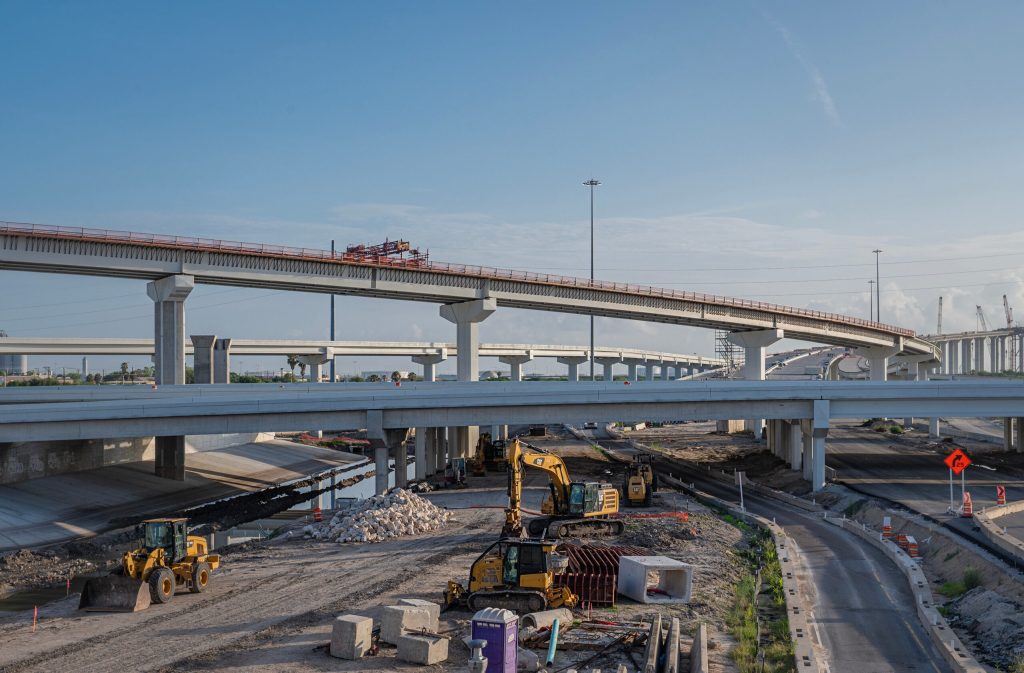
Photo: Construction in Corpus Christi, Texas. (Eddie Seal/Bloomberg)
Copyright 2025 Bloomberg.
Topics
Texas
Was this article valuable?
Here are more articles you may enjoy.
The most important insurance news, in your inbox every business day.
Get the insurance industry’s trusted newsletter
A drought in South Texas has led to a significant downgrade of Corpus Christi by Moody’s Ratings, which warns that the demand for water is expected to surpass supply by spring 2027.
The ratings agency has lowered the city’s rating from Aa2 to A1, and its utility revenue bond rating has also been downgraded from Aa3 to A1. Corpus Christi, a Gulf Coast city with a population of approximately 320,000, currently holds about $2 billion in outstanding debt.
City Manager Peter Zanoni expressed the city’s commitment to addressing the urgent need for water supply diversification in a statement released on Friday.
Related: Texas Drought Threatens Industrial Hotspot for Exxon, Koch
According to the city’s official website, Corpus Christi is facing an “urgent” drought, which has led to restrictions on lawn watering for residents. The city is actively working to enhance its water supply to prevent a Level 1 water emergency, a situation that arises when the total water supply is projected to be insufficient to meet demand within 180 days. Current estimates suggest that the city is about a year away from facing such a crisis.
Despite benefiting from the Permian Basin oil and gas boom, Corpus Christi previously halted plans for a desalination plant intended to alleviate water shortages, a decision that has drawn criticism from the governor’s office. In addition to implementing water-use restrictions, the city is also focused on increasing the capacity of its water pipeline and developing groundwater resources, as stated on its website.
Photo: Construction in Corpus Christi, Texas. (Eddie Seal/Bloomberg)
Copyright 2025 Bloomberg.
Topics
Texas
Was this article valuable?
Here are more articles you may enjoy.
The most important insurance news, in your inbox every business day.
Get the insurance industry’s trusted newsletter