Insurers Acquire Erste SRT Transaction Tied to €10 Billion Loans for Mergers and Acquisitions
Erste Group Bank AG has made headlines by executing a significant risk transfer (SRT) linked to over €10 billion ($11.7 billion) in loans. This strategic move aims to free up capital for the bank’s largest acquisition to date.
The Vienna-based lender sold the SRT to a select group of insurance companies, as reported by sources familiar with the transaction who requested anonymity due to the private nature of the details. The reference portfolio consists of loans from small and mid-sized firms, which were originated through Erste’s extensive network of Austrian savings banks.
This transaction stands out as one of the largest SRT deals specifically targeting insurance companies. Erste has confirmed that it has completed its planned SRTs for the 2025 financial year, which includes transactions across Austria, Romania, the Czech Republic, Slovakia, and Hungary.
“These transactions support our growth ambitions in the respective geographies, as well as group-wide,” stated a representative from Erste in an email response to inquiries, although no further specifics on the SRTs were provided.
Currently, Erste is in the final stages of acquiring a 49% stake in Santander Bank Polska as part of a €7 billion deal. The bank aims to finalize this transaction, which also includes the Polish bank’s asset management arm, by mid-January, pending regulatory approvals obtained last year.
To finance the acquisition of the Polish bank, Erste plans to do so without raising new capital. However, it anticipates a decline in its common equity tier 1 (CET1) ratio, a crucial indicator of financial strength, by approximately 460 basis points. The SRT transactions are expected to help mitigate the impact of this expansion, contributing over 40 basis points to the CET1 ratio, as noted by Chief Financial Officer Stefan Doerfler during an analyst call in August.
SRTs enable banks to insure loans against default by selling credit-linked notes to investment funds. Typically, lenders secure default protection for between 5% and 15% of the loan value. According to estimates from Man Group, the market for these financial instruments could potentially double within the next five years.
While insurance companies are active participants in this market, they often prefer to issue guarantees rather than purchasing the notes directly. European policymakers are currently exploring ways to enhance the conditions under which insurers can invest in SRTs as part of a broader reform of the region’s capital markets.
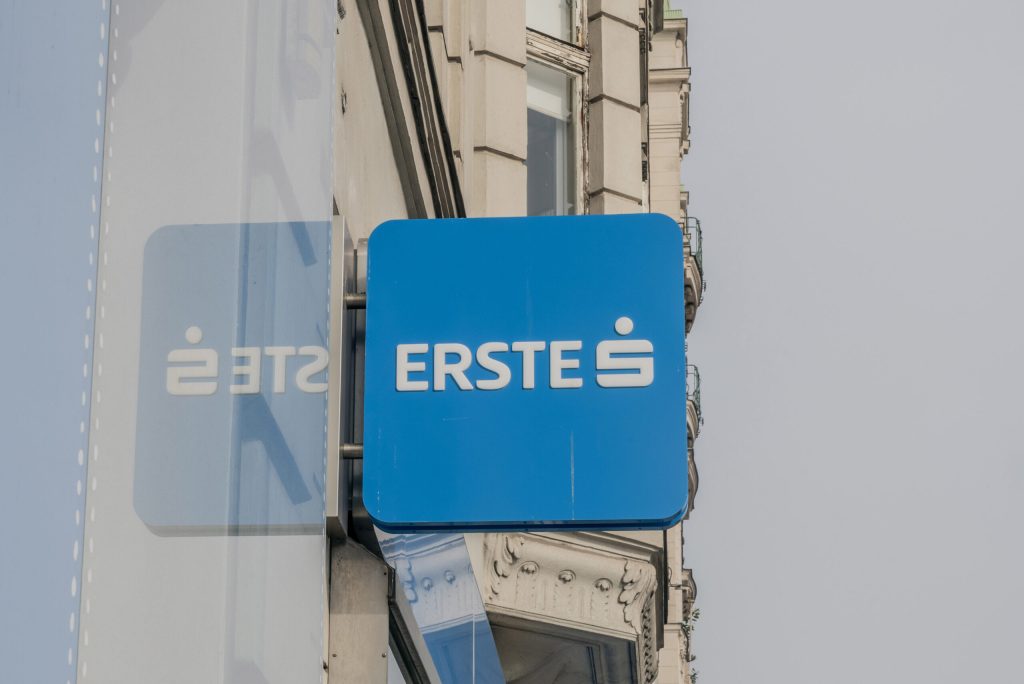
Photograph: Erste Group branding. Photo credit: Michaela Nagyidaiova/Bloomberg
Copyright 2026 Bloomberg.
Topics
Mergers & Acquisitions
Carriers
Interested in Carriers?
Get automatic alerts for this topic.
Erste Group Bank AG has made headlines by executing a significant risk transfer (SRT) linked to over €10 billion ($11.7 billion) in loans. This strategic move aims to free up capital for the bank’s largest acquisition to date.
The Vienna-based lender sold the SRT to a select group of insurance companies, as reported by sources familiar with the transaction who requested anonymity due to the private nature of the details. The reference portfolio consists of loans from small and mid-sized firms, which were originated through Erste’s extensive network of Austrian savings banks.
This transaction stands out as one of the largest SRT deals specifically targeting insurance companies. Erste has confirmed that it has completed its planned SRTs for the 2025 financial year, which includes transactions across Austria, Romania, the Czech Republic, Slovakia, and Hungary.
“These transactions support our growth ambitions in the respective geographies, as well as group-wide,” stated a representative from Erste in an email response to inquiries, although no further specifics on the SRTs were provided.
Currently, Erste is in the final stages of acquiring a 49% stake in Santander Bank Polska as part of a €7 billion deal. The bank aims to finalize this transaction, which also includes the Polish bank’s asset management arm, by mid-January, pending regulatory approvals obtained last year.
To finance the acquisition of the Polish bank, Erste plans to do so without raising new capital. However, it anticipates a decline in its common equity tier 1 (CET1) ratio, a crucial indicator of financial strength, by approximately 460 basis points. The SRT transactions are expected to help mitigate the impact of this expansion, contributing over 40 basis points to the CET1 ratio, as noted by Chief Financial Officer Stefan Doerfler during an analyst call in August.
SRTs enable banks to insure loans against default by selling credit-linked notes to investment funds. Typically, lenders secure default protection for between 5% and 15% of the loan value. According to estimates from Man Group, the market for these financial instruments could potentially double within the next five years.
While insurance companies are active participants in this market, they often prefer to issue guarantees rather than purchasing the notes directly. European policymakers are currently exploring ways to enhance the conditions under which insurers can invest in SRTs as part of a broader reform of the region’s capital markets.
Photograph: Erste Group branding. Photo credit: Michaela Nagyidaiova/Bloomberg
Copyright 2026 Bloomberg.
Topics
Mergers & Acquisitions
Carriers
Interested in Carriers?
Get automatic alerts for this topic.