Intensifying Arctic Freeze Amplifies Travel and Energy Challenges Across Europe

A wave of Arctic air has swept across Europe, bringing frigid temperatures and heavy snowfall that have disrupted travel and caused power outages in various regions.
Northerly winds, fueled by high-pressure systems in the Atlantic and Arctic, led to a significant drop in temperatures on Monday and Tuesday, particularly in northern and central Europe.
In Marham, southeastern England, overnight lows plummeted to -12.5°C (9.5°F), as reported by the UK Met Office. Meanwhile, Mouthe in eastern France and Oberstdorf in the Bavarian Alps recorded chilling temperatures of -22°C, according to government meteorologists.
This cold snap has resulted in a surge in power demand, as the decline in wind and solar energy generation has strained the continent’s electricity supply. France had to increase its reliance on gas generators to meet a power demand that reached a five-year high on Monday. Projections indicate that demand could rise further to 91.9 gigawatts on Tuesday, the highest level since February 2012. Even with a public holiday in several large states, Bloomberg models predict that power demand in Germany will climb to approximately 69 gigawatts, significantly above the seasonal average of 63 gigawatts.
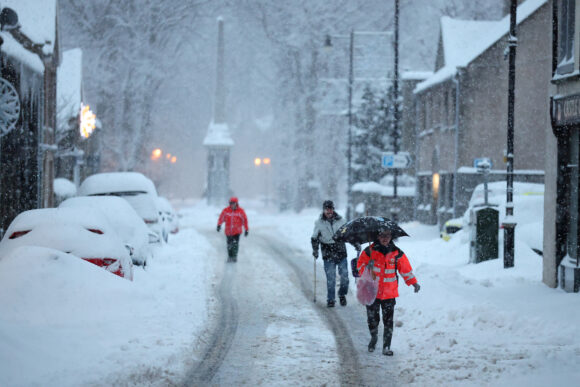
Heavy snowfall has led to runway closures and limited flight operations, resulting in hundreds of cancellations at airports from Paris to Amsterdam. Nantes airport in Brittany experienced particularly severe disruptions. Rail and bus services across the UK, Netherlands, and France also faced significant setbacks, with some Eurostar trains connecting London to Paris, Amsterdam, and Brussels being canceled or delayed.
This cold spell marks France’s most severe winter weather since 2012, according to meteorologists at Meteo France. Many areas are experiencing temperatures 10°C to 15°C below seasonal norms. Snowfall has reached up to 30 centimeters (11.8 inches) in the Charente-Maritime department along the Atlantic coast, although the weather service downgraded snow and ice alerts from orange to yellow on Tuesday.
Another wave of snow is anticipated in France on Wednesday. Tragically, two fatalities and two injuries have been reported in road accidents attributed to icy conditions in the Paris region, as confirmed by authorities. School transportation was suspended in parts of the northwest, and officials have implemented lower speed limits and banned heavy cargo vehicles in regions under orange weather alerts.
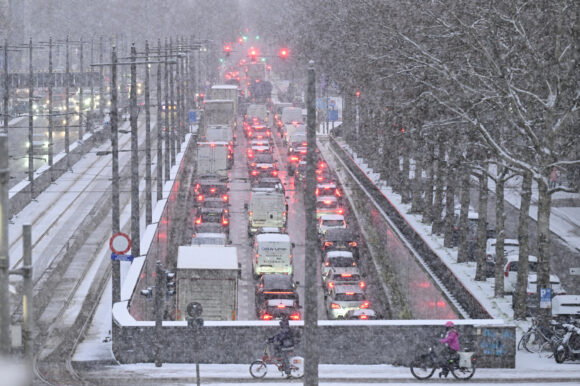
Snow and ice have also caused power outages affecting approximately 7,500 households in Loire-Atlantique and Vendée, as reported by France Info. In Berlin, around 27,000 homes remain without power for a fourth consecutive day following an arson attack that resulted in a major blackout on Saturday. The frozen ground has complicated repair efforts for the damaged cables.
Top photograph: Pedestrians walk through snow near the Sacre Coeur in Montmartre, Paris, on Jan. 5, 2026; photo credit: Aurore Marechal/Getty Images.
Copyright 2026 Bloomberg.
Topics
Europe
Interested in Travel?
Get automatic alerts for this topic.
A wave of Arctic air has swept across Europe, bringing frigid temperatures and heavy snowfall that have disrupted travel and caused power outages in various regions.
Northerly winds, fueled by high-pressure systems in the Atlantic and Arctic, led to a significant drop in temperatures on Monday and Tuesday, particularly in northern and central Europe.
In Marham, southeastern England, overnight lows plummeted to -12.5°C (9.5°F), as reported by the UK Met Office. Meanwhile, Mouthe in eastern France and Oberstdorf in the Bavarian Alps recorded chilling temperatures of -22°C, according to government meteorologists.
This cold snap has resulted in a surge in power demand, as the decline in wind and solar energy generation has strained the continent’s electricity supply. France had to increase its reliance on gas generators to meet a power demand that reached a five-year high on Monday. Projections indicate that demand could rise further to 91.9 gigawatts on Tuesday, the highest level since February 2012. Even with a public holiday in several large states, Bloomberg models predict that power demand in Germany will climb to approximately 69 gigawatts, significantly above the seasonal average of 63 gigawatts.
Heavy snowfall has led to runway closures and limited flight operations, resulting in hundreds of cancellations at airports from Paris to Amsterdam. Nantes airport in Brittany experienced particularly severe disruptions. Rail and bus services across the UK, Netherlands, and France also faced significant setbacks, with some Eurostar trains connecting London to Paris, Amsterdam, and Brussels being canceled or delayed.
This cold spell marks France’s most severe winter weather since 2012, according to meteorologists at Meteo France. Many areas are experiencing temperatures 10°C to 15°C below seasonal norms. Snowfall has reached up to 30 centimeters (11.8 inches) in the Charente-Maritime department along the Atlantic coast, although the weather service downgraded snow and ice alerts from orange to yellow on Tuesday.
Another wave of snow is anticipated in France on Wednesday. Tragically, two fatalities and two injuries have been reported in road accidents attributed to icy conditions in the Paris region, as confirmed by authorities. School transportation was suspended in parts of the northwest, and officials have implemented lower speed limits and banned heavy cargo vehicles in regions under orange weather alerts.
Snow and ice have also caused power outages affecting approximately 7,500 households in Loire-Atlantique and Vendée, as reported by France Info. In Berlin, around 27,000 homes remain without power for a fourth consecutive day following an arson attack that resulted in a major blackout on Saturday. The frozen ground has complicated repair efforts for the damaged cables.
Top photograph: Pedestrians walk through snow near the Sacre Coeur in Montmartre, Paris, on Jan. 5, 2026; photo credit: Aurore Marechal/Getty Images.
Copyright 2026 Bloomberg.
Topics
Europe
Interested in Travel?
Get automatic alerts for this topic.