Jamie Dimon’s Insights on Trump’s Proposal for Credit Card Rate Caps

Klarna CEO Sebastian Siemiatkowski explains why he supports President Donald Trump’s push to cap credit card interest rates at 10% on ‘The Claman Countdown.’
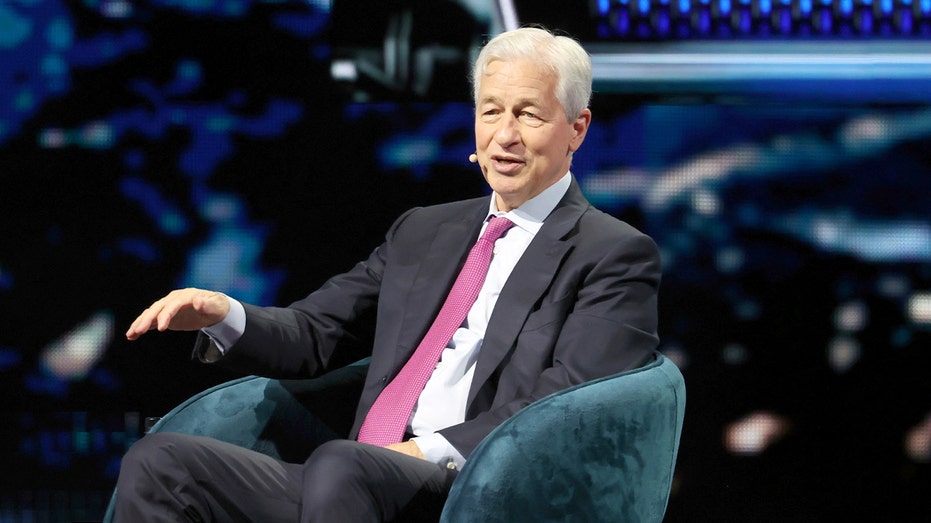
At the World Economic Forum in Davos, JPMorgan Chase CEO Jamie Dimon issued a stark warning regarding President Donald Trump’s proposal to cap credit card interest rates at 10%. He described the initiative as an “economic disaster.”
Trump’s proposal aims to impose a one-year cap on credit card interest rates, intending to protect consumers from exorbitant rates that can exceed 20% for some borrowers. Dimon, during a moderated discussion, acknowledged that while the cap would impact the bank’s business, it would “survive it.” However, he cautioned that such a cap would restrict credit access for a significant portion of consumers.
TRUMP CALLS FOR 1-YEAR 10% CAP ON CREDIT CARD INTEREST RATES
“It would be an economic disaster,” Dimon emphasized. “It would remove credit from 80% of Americans. And that is their back-up credit.”
President Donald Trump said that he wants to impose a 10% cap on credit card interest rates for one year. (Alexander Tamargo/Getty Images for America Business Forum)
Dimon suggested that before implementing such a cap, it should be tested in two states. “They should force all the banks to do it in two states, Vermont and Massachusetts, and see what happens,” he remarked, eliciting laughter from the audience.
TRUMP’S PROPOSED CREDIT CARD INTEREST RATE CAP COULD CURB ACCESS FOR MILLIONS OF AMERICANS: REPORT
His concerns were echoed by JPMorgan CFO Jeremy Barnum, who stated that the proposed 10% cap could negatively impact the broader economy and significantly limit access to credit. “What’s actually simply going to happen is that the provision of the service will change dramatically. Specifically, people will lose access to credit, like on a very, very extensive and broad basis, especially the people who need it,” Barnum explained during a call related to the bank’s fourth-quarter earnings release.

President Donald Trump called for a one-year cap on credit card interest rates, blaming high costs on the Biden administration. (Brent Lewin/Bloomberg via Getty Images / Getty Images)
Barnum warned that this could lead to “severely negative consequences for consumers and, frankly, probably also a negative consequence for the economy as a whole.”
The president’s proposal aligns with a bill introduced last year by Senators Bernie Sanders, I-Vt., and Josh Hawley, R-Mo., which also sought to cap credit card APRs at 10%.

Before implementing this, Dimon said it should be tested in two states. (iStock)
GET FOX BUSINESS ON THE GO BY CLICKING HERE
Richard Hunt, executive chairman of the Electronic Payments Coalition (EPC), shared insights indicating that nearly every credit card account linked to a credit score below 740 would be closed or severely restricted if a 10% interest rate cap were enacted. This change could affect between 175 million to 190 million American cardholders, primarily targeting lower- and middle-income households. According to data from the Federal Reserve Bank of New York, the average credit score for low-income Americans stands at 658, while it is 735 for middle-income households.
Klarna CEO Sebastian Siemiatkowski explains why he supports President Donald Trump’s push to cap credit card interest rates at 10% on ‘The Claman Countdown.’
At the World Economic Forum in Davos, JPMorgan Chase CEO Jamie Dimon issued a stark warning regarding President Donald Trump’s proposal to cap credit card interest rates at 10%. He described the initiative as an “economic disaster.”
Trump’s proposal aims to impose a one-year cap on credit card interest rates, intending to protect consumers from exorbitant rates that can exceed 20% for some borrowers. Dimon, during a moderated discussion, acknowledged that while the cap would impact the bank’s business, it would “survive it.” However, he cautioned that such a cap would restrict credit access for a significant portion of consumers.
TRUMP CALLS FOR 1-YEAR 10% CAP ON CREDIT CARD INTEREST RATES
“It would be an economic disaster,” Dimon emphasized. “It would remove credit from 80% of Americans. And that is their back-up credit.”
President Donald Trump said that he wants to impose a 10% cap on credit card interest rates for one year. (Alexander Tamargo/Getty Images for America Business Forum)
Dimon suggested that before implementing such a cap, it should be tested in two states. “They should force all the banks to do it in two states, Vermont and Massachusetts, and see what happens,” he remarked, eliciting laughter from the audience.
TRUMP’S PROPOSED CREDIT CARD INTEREST RATE CAP COULD CURB ACCESS FOR MILLIONS OF AMERICANS: REPORT
His concerns were echoed by JPMorgan CFO Jeremy Barnum, who stated that the proposed 10% cap could negatively impact the broader economy and significantly limit access to credit. “What’s actually simply going to happen is that the provision of the service will change dramatically. Specifically, people will lose access to credit, like on a very, very extensive and broad basis, especially the people who need it,” Barnum explained during a call related to the bank’s fourth-quarter earnings release.
President Donald Trump called for a one-year cap on credit card interest rates, blaming high costs on the Biden administration. (Brent Lewin/Bloomberg via Getty Images / Getty Images)
Barnum warned that this could lead to “severely negative consequences for consumers and, frankly, probably also a negative consequence for the economy as a whole.”
The president’s proposal aligns with a bill introduced last year by Senators Bernie Sanders, I-Vt., and Josh Hawley, R-Mo., which also sought to cap credit card APRs at 10%.
Before implementing this, Dimon said it should be tested in two states. (iStock)
GET FOX BUSINESS ON THE GO BY CLICKING HERE
Richard Hunt, executive chairman of the Electronic Payments Coalition (EPC), shared insights indicating that nearly every credit card account linked to a credit score below 740 would be closed or severely restricted if a 10% interest rate cap were enacted. This change could affect between 175 million to 190 million American cardholders, primarily targeting lower- and middle-income households. According to data from the Federal Reserve Bank of New York, the average credit score for low-income Americans stands at 658, while it is 735 for middle-income households.