Larry Kudlow: The Dow 50,000 Economic Growth Catalyst
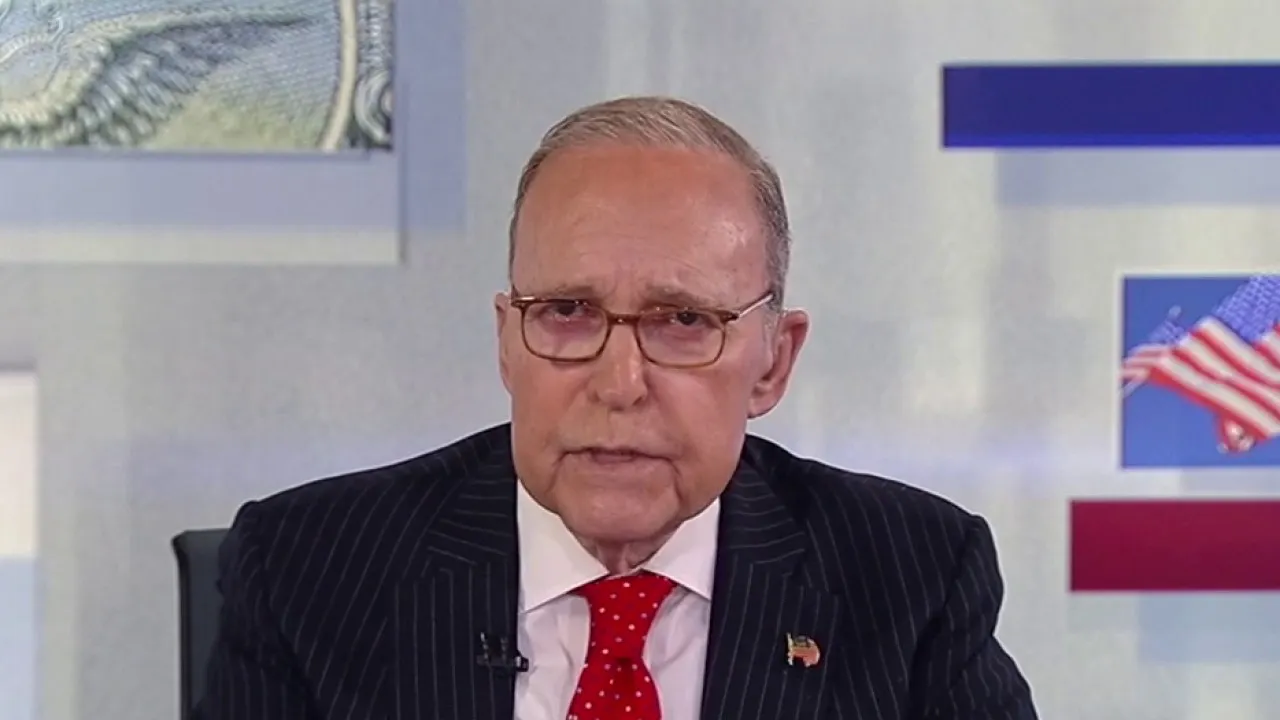
FOX Business host Larry Kudlow unpacks U.S. market performance under the Trump administration on ‘Kudlow.’
To quote President Trump’s Truth Social post, “Congratulations America” on Dow 50,000.
The widely recognized index didn’t just crawl above 50,000; it surged by over 1,100 points. Despite the usual tech skeptics, the market has shown resilience, with tech stocks up nearly 2 percent and the broad-based S&P also reflecting similar gains.
Market fluctuations often include a frothy selling period, which can serve as a healthy cleansing process. As I have maintained for decades, investing in stocks is a long-term strategy. Purchasing indexes or ETFs and holding them over time is essential. Currently, we are witnessing a market supported by robust fundamentals.
National Economic Council Director Kevin Hassett breaks down President Donald Trump’s economic agenda as the Dow hits 50,000 and explains how growth policies aim to increase Americans’ take-home pay on ‘Kudlow.’
Indeed, profits are the lifeblood of stocks, and they are currently strong. Future earnings estimates indicate double-digit profit growth, driven by productivity. Unit labor costs are barely above one percent, which is a good indicator of low inflation and reflects the overall Trump economic boom.
The success of the One, Big, Beautiful Bill of tax cuts, deregulation, “drill, baby, drill,” and reciprocal fair trade has provided substantial backing for the stock market.
We are also experiencing a business investment boom, known as capital deepening, which is enhancing productivity and real wages for middle-class workers. It’s important to note that approximately 135 million Americans are invested in stocks through 401(k)s, IRAs, brokerage accounts, or union pension funds.
Furthermore, the success of Trump’s savings accounts for newborns aims to foster a generation that appreciates the stock market, business, and the principles of free-market capitalism. From poverty to millionaire status, the possibilities are vast. Treasury Man Scott Bessent highlighted this earlier, stating that “Trump accounts are a generational down payment on the American dream.” Each eligible American child will receive a $1,000 seed contribution invested in the U.S. stock market, giving them a tangible stake in the world’s most powerful economy.
As children observe their accounts grow, they will learn how markets function, the value of patience, and how financial stability fosters independence.
Part of today’s stock market rally can be attributed to the third consecutive increase in consumer confidence, reaching a six-month high. While I have reservations about this survey due to its Democratic weighting, perhaps some have begun to see the light and will stop lamenting about tariff inflation and other economic concerns that have not materialized.
Additionally, a noteworthy piece by Kim Strassel in the Wall Street Journal highlights a significant reduction in the federal budget deficit outlook. The Office of Management and Budget director, Russell Vought, is re-estimating a near $12 trillion reduction in the deficit outlook, which includes $2 trillion from the One, Big, Beautiful Bill and $5.6 trillion attributable to sustained economic growth. Furthermore, $290 billion from tariff revenues in 2025 could amount to $4 trillion over ten years, ultimately reducing interest expenses by $1.8 trillion.
In summary, the spending curve is finally beginning to decline, contributing to a thriving stock market. Congratulations, America. Enjoy the prosperity!
FOX Business host Larry Kudlow unpacks U.S. market performance under the Trump administration on ‘Kudlow.’
To quote President Trump’s Truth Social post, “Congratulations America” on Dow 50,000.
The widely recognized index didn’t just crawl above 50,000; it surged by over 1,100 points. Despite the usual tech skeptics, the market has shown resilience, with tech stocks up nearly 2 percent and the broad-based S&P also reflecting similar gains.
Market fluctuations often include a frothy selling period, which can serve as a healthy cleansing process. As I have maintained for decades, investing in stocks is a long-term strategy. Purchasing indexes or ETFs and holding them over time is essential. Currently, we are witnessing a market supported by robust fundamentals.
National Economic Council Director Kevin Hassett breaks down President Donald Trump’s economic agenda as the Dow hits 50,000 and explains how growth policies aim to increase Americans’ take-home pay on ‘Kudlow.’
Indeed, profits are the lifeblood of stocks, and they are currently strong. Future earnings estimates indicate double-digit profit growth, driven by productivity. Unit labor costs are barely above one percent, which is a good indicator of low inflation and reflects the overall Trump economic boom.
The success of the One, Big, Beautiful Bill of tax cuts, deregulation, “drill, baby, drill,” and reciprocal fair trade has provided substantial backing for the stock market.
We are also experiencing a business investment boom, known as capital deepening, which is enhancing productivity and real wages for middle-class workers. It’s important to note that approximately 135 million Americans are invested in stocks through 401(k)s, IRAs, brokerage accounts, or union pension funds.
Furthermore, the success of Trump’s savings accounts for newborns aims to foster a generation that appreciates the stock market, business, and the principles of free-market capitalism. From poverty to millionaire status, the possibilities are vast. Treasury Man Scott Bessent highlighted this earlier, stating that “Trump accounts are a generational down payment on the American dream.” Each eligible American child will receive a $1,000 seed contribution invested in the U.S. stock market, giving them a tangible stake in the world’s most powerful economy.
As children observe their accounts grow, they will learn how markets function, the value of patience, and how financial stability fosters independence.
Part of today’s stock market rally can be attributed to the third consecutive increase in consumer confidence, reaching a six-month high. While I have reservations about this survey due to its Democratic weighting, perhaps some have begun to see the light and will stop lamenting about tariff inflation and other economic concerns that have not materialized.
Additionally, a noteworthy piece by Kim Strassel in the Wall Street Journal highlights a significant reduction in the federal budget deficit outlook. The Office of Management and Budget director, Russell Vought, is re-estimating a near $12 trillion reduction in the deficit outlook, which includes $2 trillion from the One, Big, Beautiful Bill and $5.6 trillion attributable to sustained economic growth. Furthermore, $290 billion from tariff revenues in 2025 could amount to $4 trillion over ten years, ultimately reducing interest expenses by $1.8 trillion.
In summary, the spending curve is finally beginning to decline, contributing to a thriving stock market. Congratulations, America. Enjoy the prosperity!