Mattel Unveils Groundbreaking Autistic Barbie Doll Created in Collaboration with Autism Advocates

Check out what’s clicking on FoxBusiness.com.
Mattel is making strides in promoting inclusivity with the introduction of its first autistic Barbie. This innovative doll was developed in collaboration with autism advocates to authentically represent how some individuals on the spectrum perceive and interact with the world.
The creation of the autistic Barbie took over 18 months, with Mattel partnering closely with the Autistic Self Advocacy Network (ASAN). This nonprofit organization is dedicated to advancing the rights and media representation of autistic individuals. Mattel’s goal was to design a doll that resonates with the unique experiences of those on the autism spectrum.
Jamie Cygielman, Mattel’s global head of dolls, expressed pride in this initiative, stating, “Barbie has always strived to reflect the world kids see and the possibilities they imagine, and we’re proud to introduce our first autistic Barbie as part of that ongoing work.”
The Barbie design team collaborated with ASAN to ensure that the doll authentically mirrors the experiences of individuals on the autism spectrum.
AUTISM BY THE NUMBERS: EXPERTS SHARE REASONS FOR THE DRAMATIC SURGE IN DIAGNOSES
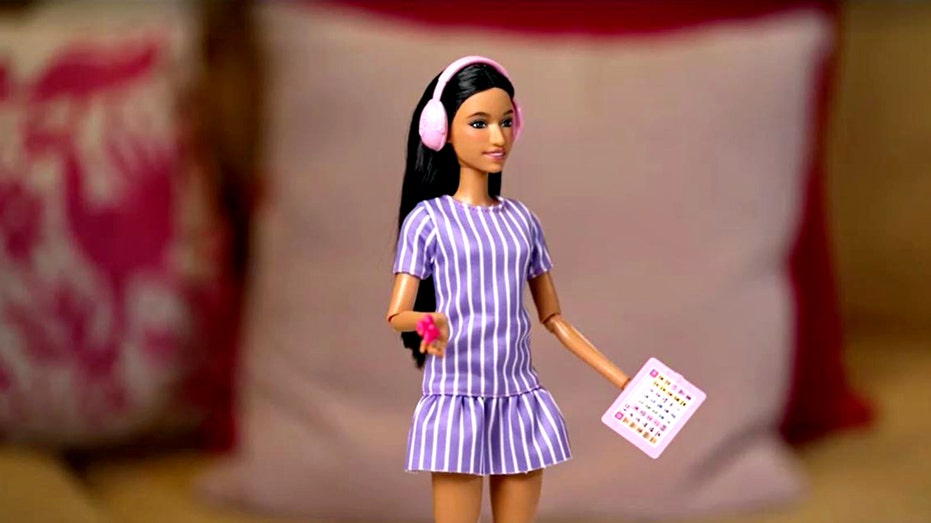
Mattel spent more than 18 months developing the autistic Barbie in partnership with the Autistic Self Advocacy Network (ASAN), a nonprofit that works to advance the rights and media representation of autistic people. (Mattel / Reuters)
The doll features articulated elbows and wrists, enabling movements such as hand flapping—gestures often used for sensory regulation or expression. Additionally, the doll’s eyes are designed with a slightly averted gaze, reflecting how some individuals on the autism spectrum may avoid direct eye contact.
Included accessories feature a pink finger-clip fidget spinner, pink noise-canceling headphones to help reduce sensory overload, and a pink tablet displaying symbol-based Augmentative and Alternative Communication (AAC) apps to support communication.
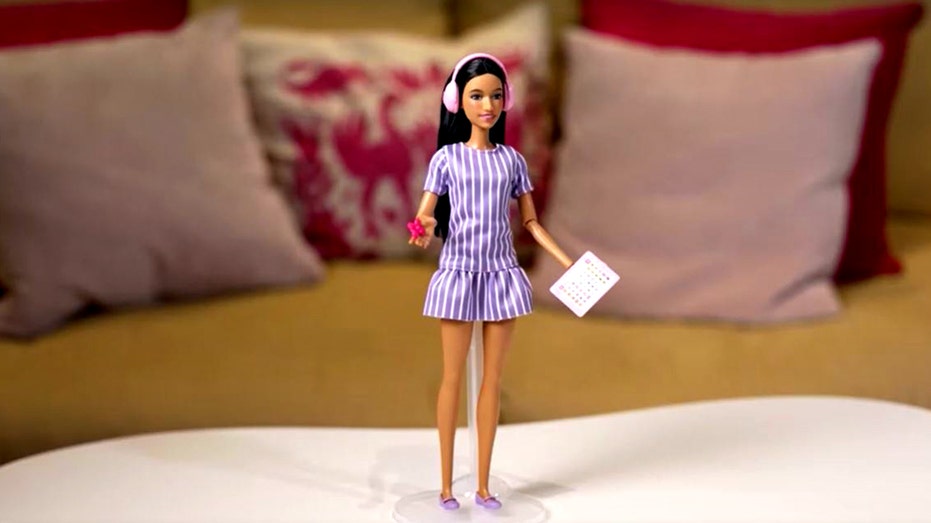
The new doll has a suggested retail price of $11.87. (Mattel / Reuters)
CDC QUIETLY CHANGES VACCINE AND AUTISM STANCE AFTER YEARS OF CONTROVERSY
The doll also features sensory-conscious clothing, including a loose-fitting purple pinstripe A-line dress with short sleeves and a flowy skirt designed to minimize fabric-to-skin contact. Flat purple shoes are included to enhance stability and ease of movement.
Mattel said the new doll was designed with the intention of reflecting how some people on the spectrum experience the world. (Mark Makela/Getty Images / Getty Images)
“Autism doesn’t look any one way,” said Noor Pervez, the ASAN community engagement manager who collaborated closely with Mattel on the Barbie prototype. “But we can try and show some of the ways that autism expresses itself.”
CLICK HERE TO DOWNLOAD THE FOX NEWS APP
The doll is priced at a suggested retail of $11.87 and joins a lineup of other inclusive Barbies, including those representing individuals with blindness, Down syndrome, and Type 1 diabetes.
Reuters contributed to this report.
Check out what’s clicking on FoxBusiness.com.
Mattel is making strides in promoting inclusivity with the introduction of its first autistic Barbie. This innovative doll was developed in collaboration with autism advocates to authentically represent how some individuals on the spectrum perceive and interact with the world.
The creation of the autistic Barbie took over 18 months, with Mattel partnering closely with the Autistic Self Advocacy Network (ASAN). This nonprofit organization is dedicated to advancing the rights and media representation of autistic individuals. Mattel’s goal was to design a doll that resonates with the unique experiences of those on the autism spectrum.
Jamie Cygielman, Mattel’s global head of dolls, expressed pride in this initiative, stating, “Barbie has always strived to reflect the world kids see and the possibilities they imagine, and we’re proud to introduce our first autistic Barbie as part of that ongoing work.”
The Barbie design team collaborated with ASAN to ensure that the doll authentically mirrors the experiences of individuals on the autism spectrum.
AUTISM BY THE NUMBERS: EXPERTS SHARE REASONS FOR THE DRAMATIC SURGE IN DIAGNOSES
Mattel spent more than 18 months developing the autistic Barbie in partnership with the Autistic Self Advocacy Network (ASAN), a nonprofit that works to advance the rights and media representation of autistic people. (Mattel / Reuters)
The doll features articulated elbows and wrists, enabling movements such as hand flapping—gestures often used for sensory regulation or expression. Additionally, the doll’s eyes are designed with a slightly averted gaze, reflecting how some individuals on the autism spectrum may avoid direct eye contact.
Included accessories feature a pink finger-clip fidget spinner, pink noise-canceling headphones to help reduce sensory overload, and a pink tablet displaying symbol-based Augmentative and Alternative Communication (AAC) apps to support communication.
The new doll has a suggested retail price of $11.87. (Mattel / Reuters)
CDC QUIETLY CHANGES VACCINE AND AUTISM STANCE AFTER YEARS OF CONTROVERSY
The doll also features sensory-conscious clothing, including a loose-fitting purple pinstripe A-line dress with short sleeves and a flowy skirt designed to minimize fabric-to-skin contact. Flat purple shoes are included to enhance stability and ease of movement.
Mattel said the new doll was designed with the intention of reflecting how some people on the spectrum experience the world. (Mark Makela/Getty Images / Getty Images)
“Autism doesn’t look any one way,” said Noor Pervez, the ASAN community engagement manager who collaborated closely with Mattel on the Barbie prototype. “But we can try and show some of the ways that autism expresses itself.”
CLICK HERE TO DOWNLOAD THE FOX NEWS APP
The doll is priced at a suggested retail of $11.87 and joins a lineup of other inclusive Barbies, including those representing individuals with blindness, Down syndrome, and Type 1 diabetes.
Reuters contributed to this report.