McKinsey Plans Major Job Reductions Amid Consulting Industry Slowdown
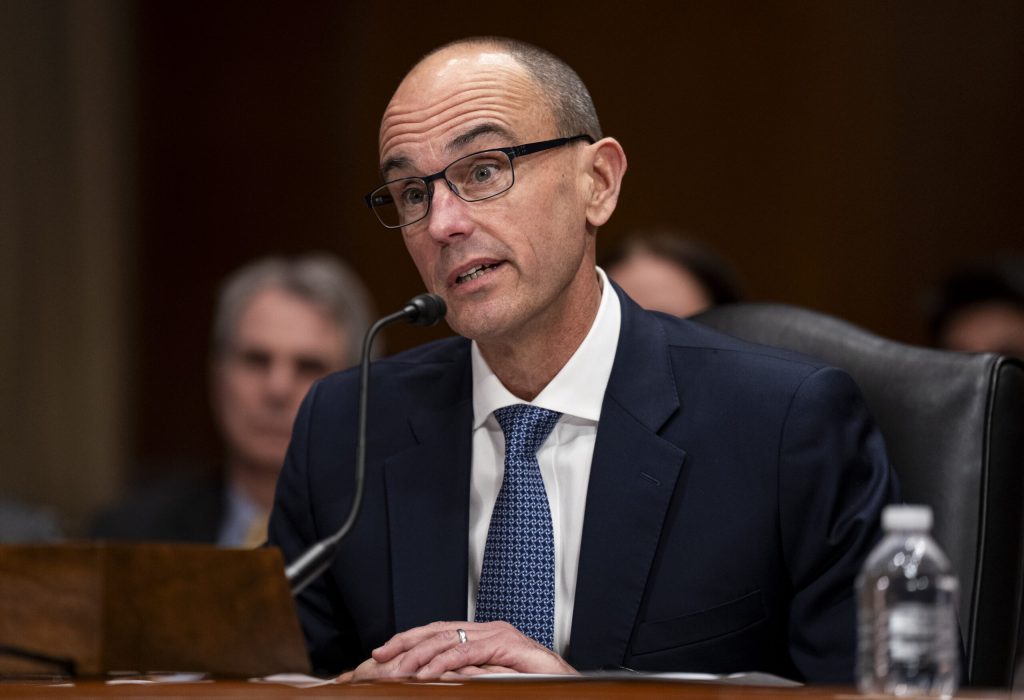
As McKinsey & Co. partners gathered in the consulting giant’s birthplace in late October, Bob Sternfels delivered a rallying cry. “We will kick some ass as we start our second century,” the firm’s top executive told the thousands of attendees.
However, away from the 100-year festivities in Chicago, McKinsey’s leadership has been conveying a more pragmatic message: it’s time to get leaner. The firm’s leadership has discussed with managers in non-client-facing departments the need to cut about 10% of headcount across their business. This could translate to a few thousand job cuts, which McKinsey plans to stagger over the next 18 to 24 months, according to sources who requested anonymity due to the private nature of the discussions.
For McKinsey, the go-to adviser for companies and countries, this cost-cutting approach mirrors the strategies its consultants often recommend to clients. The firm’s revenue growth has flatlined over the last five years, prompting a reset after a decade of rapid hiring.
“As our firm marks its 100th year, we’re operating in a moment shaped by rapid advances in AI that are transforming business and society,” a McKinsey spokesman stated. “Just as we’re partnering with clients to strengthen their organizations, we’re on our own journey to improve the effectiveness and efficiency of our support functions.”
While it’s still early to gauge the net impact on headcount, the spokesman noted that from 2012 to 2022, the firm’s employee count rose from 17,000 to as high as 45,000, but has since decreased to around 40,000.
Firmwide revenue has remained steady at approximately $15 billion to $16 billion over the past five years, although Sternfels has informed partners that the company is witnessing improving growth. Despite the cuts in support functions, McKinsey still plans to hire more consultants. Interestingly, the firm has not designated a code name for this latest plan, unlike its previous initiative, Project Magnolia, which aimed to cut about 1,400 jobs in 2023 and caused considerable unease among staff.
Challenging Period
This is a pivotal moment for the consulting industry’s flagship, which traces its roots back to a University of Chicago accounting professor. James McKinsey founded the company in 1926, initially advising a local meatpacker. Since then, the firm has built an impressive roster of clients, including blue-chip companies like Coca-Cola Co. and Goldman Sachs Group Inc., as well as governments worldwide.
The firm’s extensive network was evident at the annual partner conference in October, which also marked the kickoff of McKinsey’s centennial celebration. Notable attendees included Rio Tinto Chairman Dominic Barton, Visa Inc. chief Ryan McInerney, and former US Secretary of State Condoleezza Rice, with surprise star power added by hometown talk show legend Oprah Winfrey.
Sternfels took center stage, urging his peers to embrace the firm’s mission. “I’d like to ask you, are you excited about our mission? Do you feel we have a good shot?” he asked the crowd, promising that good times were ahead for those who responded positively. Currently in his second three-year term as McKinsey’s global managing partner, Sternfels is steering the firm through these turbulent waters.
Despite its significant influence, McKinsey faces a challenging period as clients become more cost-conscious, leading to a slowdown in demand for traditional services. The firm, along with EY and PwC, has been cutting jobs in response to this downturn. Recently, McKinsey cut about 200 global tech jobs as it joins competitors in leveraging artificial intelligence to automate certain roles.
Other challenges loom on the horizon. Accenture Plc has warned that US government spending cuts on consulting could hinder growth, while in China, the government is promoting local firms over international consultants. Additionally, in Saudi Arabia, the government is reducing payments to consulting firms, impacting McKinsey, which previously earned at least $500 million annually from the kingdom.
Despite these hurdles, Sternfels maintains an optimistic outlook, emphasizing that the firm is ready to move past its setbacks and the scandals that have tarnished its reputation. McKinsey has faced backlash in the US over its engagements with China and Saudi Arabia, as well as its past associations with major opioid manufacturers, resulting in substantial legal settlements.
“I feel we’ve collectively righted our ship,” Sternfels assured his fellow partners in Chicago.
Photo: Bob Sternfels/Bloomberg
Copyright 2025 Bloomberg.
Topics
Talent
Interested in Talent?
Get automatic alerts for this topic.
As McKinsey & Co. partners gathered in the consulting giant’s birthplace in late October, Bob Sternfels delivered a rallying cry. “We will kick some ass as we start our second century,” the firm’s top executive told the thousands of attendees.
However, away from the 100-year festivities in Chicago, McKinsey’s leadership has been conveying a more pragmatic message: it’s time to get leaner. The firm’s leadership has discussed with managers in non-client-facing departments the need to cut about 10% of headcount across their business. This could translate to a few thousand job cuts, which McKinsey plans to stagger over the next 18 to 24 months, according to sources who requested anonymity due to the private nature of the discussions.
For McKinsey, the go-to adviser for companies and countries, this cost-cutting approach mirrors the strategies its consultants often recommend to clients. The firm’s revenue growth has flatlined over the last five years, prompting a reset after a decade of rapid hiring.
“As our firm marks its 100th year, we’re operating in a moment shaped by rapid advances in AI that are transforming business and society,” a McKinsey spokesman stated. “Just as we’re partnering with clients to strengthen their organizations, we’re on our own journey to improve the effectiveness and efficiency of our support functions.”
While it’s still early to gauge the net impact on headcount, the spokesman noted that from 2012 to 2022, the firm’s employee count rose from 17,000 to as high as 45,000, but has since decreased to around 40,000.
Firmwide revenue has remained steady at approximately $15 billion to $16 billion over the past five years, although Sternfels has informed partners that the company is witnessing improving growth. Despite the cuts in support functions, McKinsey still plans to hire more consultants. Interestingly, the firm has not designated a code name for this latest plan, unlike its previous initiative, Project Magnolia, which aimed to cut about 1,400 jobs in 2023 and caused considerable unease among staff.
Challenging Period
This is a pivotal moment for the consulting industry’s flagship, which traces its roots back to a University of Chicago accounting professor. James McKinsey founded the company in 1926, initially advising a local meatpacker. Since then, the firm has built an impressive roster of clients, including blue-chip companies like Coca-Cola Co. and Goldman Sachs Group Inc., as well as governments worldwide.
The firm’s extensive network was evident at the annual partner conference in October, which also marked the kickoff of McKinsey’s centennial celebration. Notable attendees included Rio Tinto Chairman Dominic Barton, Visa Inc. chief Ryan McInerney, and former US Secretary of State Condoleezza Rice, with surprise star power added by hometown talk show legend Oprah Winfrey.
Sternfels took center stage, urging his peers to embrace the firm’s mission. “I’d like to ask you, are you excited about our mission? Do you feel we have a good shot?” he asked the crowd, promising that good times were ahead for those who responded positively. Currently in his second three-year term as McKinsey’s global managing partner, Sternfels is steering the firm through these turbulent waters.
Despite its significant influence, McKinsey faces a challenging period as clients become more cost-conscious, leading to a slowdown in demand for traditional services. The firm, along with EY and PwC, has been cutting jobs in response to this downturn. Recently, McKinsey cut about 200 global tech jobs as it joins competitors in leveraging artificial intelligence to automate certain roles.
Other challenges loom on the horizon. Accenture Plc has warned that US government spending cuts on consulting could hinder growth, while in China, the government is promoting local firms over international consultants. Additionally, in Saudi Arabia, the government is reducing payments to consulting firms, impacting McKinsey, which previously earned at least $500 million annually from the kingdom.
Despite these hurdles, Sternfels maintains an optimistic outlook, emphasizing that the firm is ready to move past its setbacks and the scandals that have tarnished its reputation. McKinsey has faced backlash in the US over its engagements with China and Saudi Arabia, as well as its past associations with major opioid manufacturers, resulting in substantial legal settlements.
“I feel we’ve collectively righted our ship,” Sternfels assured his fellow partners in Chicago.
Photo: Bob Sternfels/Bloomberg
Copyright 2025 Bloomberg.
Topics
Talent
Interested in Talent?
Get automatic alerts for this topic.