Mexico Train Derailment Intensifies Sheinbaum’s Accountability for Megaproject Safety

Mexico’s President Claudia Sheinbaum faced tough questions on Tuesday regarding the recent derailment of a passenger train that tragically resulted in 13 fatalities and left 98 others injured. This incident adds to a troubling series of accidents that have intensified scrutiny on her administration’s commitment to ensuring the safety of major infrastructure projects.
The conductor of the train, who survived the crash, has been taken in for questioning as part of an ongoing investigation. Opposition lawmakers are calling for a thorough inquiry into the circumstances surrounding the derailment.
“The prosecutor’s office has already interviewed the operator and several other individuals – they will have to report what happens next,” Sheinbaum stated during her regular press conference.
Read more: Deadly Train Derailment in Mexico Hits Priority Rail Project
The crash occurred in the southern state of Oaxaca and marks the third train accident in Mexico this year. Notably, the new tourist-focused Mayan Train in the Yucatan Peninsula has experienced two derailments previously, though fortunately, no casualties were reported in those incidents.
Both the Mayan Train and the Interoceanic Train, which derailed on Sunday, are operated by Mexico’s military. This has raised questions about the military’s role and the Sheinbaum administration’s efforts to ensure safety in these flagship infrastructure projects.
“The government should be very concerned with the safety record and go to great lengths to determine the cause of the derailment,” emphasized Gustavo Flores-Macias, dean of the University of Maryland School of Public Policy.
Survivors recounted that the crash occurred as the train navigated a curve on the Interoceanic Railway of the Isthmus of Tehuantepec, a crucial corridor linking the Pacific Ocean to the Gulf of Mexico.
This railway is part of a broader trade and transit initiative known as the Interoceanic Corridor, which was launched in 2023 by Sheinbaum’s predecessor, former President Andres Manuel Lopez Obrador. The project aims to provide an alternative to the Panama Canal.
However, the initiative has been marred by allegations of corruption, inadequate oversight, and potential conflicts of interest. A 2020 report from Mexico’s federal audit office highlighted irregularities in four construction contracts for the Interoceanic Train, including overpayments for materials.
In the wake of Sunday’s crash, local media reported that companies associated with Lopez Obrador’s sons may have profited from government contracts linked to significant infrastructure projects, including the Interoceanic Train. Lopez Obrador has dismissed these allegations as politically motivated.
Opposition lawmakers are demanding an independent investigation into the derailment. Alejandro Moreno, leader of the Institutional Revolutionary Party (PRI), has called for the suspension of all projects associated with the former president’s sons and their business partners.
Senator Mario Vazquez of the opposition National Action Party (PAN) labeled the derailment as “criminal negligence.”
The accident poses a risk to public confidence in Sheinbaum’s broader infrastructure agenda, according to political consultant Antonio Ocaranza. “The discussion surrounding this accident could trigger a broader and more damaging conversation about other projects,” he noted, referencing the Mayan Train and the Olmeca refinery, both of which have seen escalating budgets.
“If these accidents become more frequent and the causes are deemed unreliable, there will be increased public scrutiny and a higher cost to the government,” Ocaranza added.
(Reporting by Cassandra Garrison and Raul Cortes; editing by Emily Green and Rosalba O’Brien)
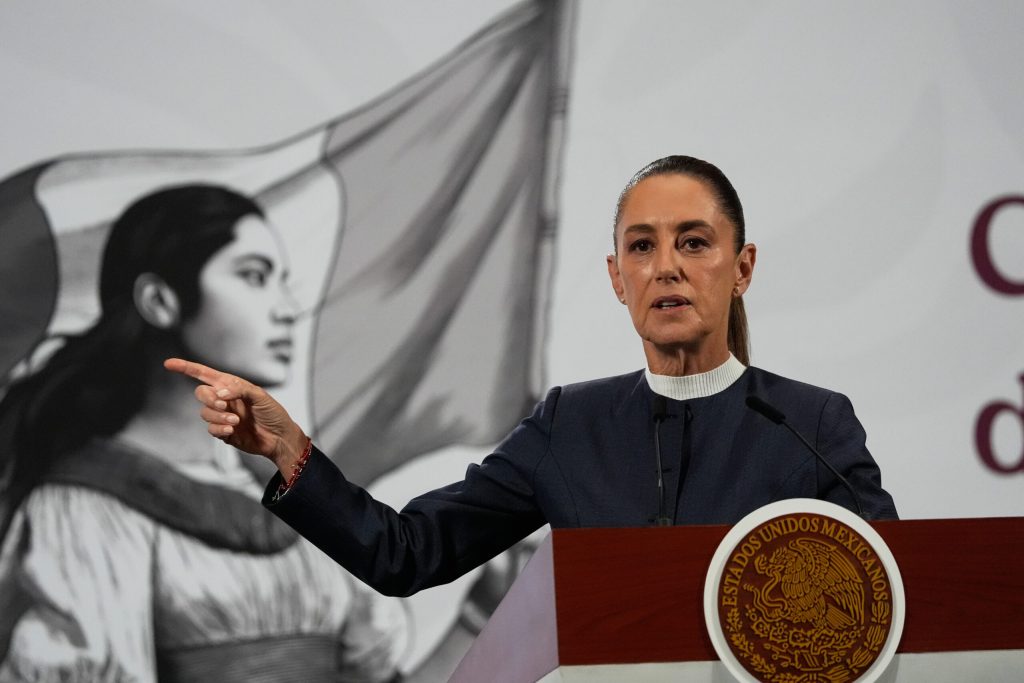
Photograph: Mexican President Claudia Sheinbaum gives a morning press conference at the National Palace in Mexico City, on Monday, Nov. 3, 2025. (AP Photo/Marco Ugarte)
Mexico’s President Claudia Sheinbaum faced tough questions on Tuesday regarding the recent derailment of a passenger train that tragically resulted in 13 fatalities and left 98 others injured. This incident adds to a troubling series of accidents that have intensified scrutiny on her administration’s commitment to ensuring the safety of major infrastructure projects.
The conductor of the train, who survived the crash, has been taken in for questioning as part of an ongoing investigation. Opposition lawmakers are calling for a thorough inquiry into the circumstances surrounding the derailment.
“The prosecutor’s office has already interviewed the operator and several other individuals – they will have to report what happens next,” Sheinbaum stated during her regular press conference.
Read more: Deadly Train Derailment in Mexico Hits Priority Rail Project
The crash occurred in the southern state of Oaxaca and marks the third train accident in Mexico this year. Notably, the new tourist-focused Mayan Train in the Yucatan Peninsula has experienced two derailments previously, though fortunately, no casualties were reported in those incidents.
Both the Mayan Train and the Interoceanic Train, which derailed on Sunday, are operated by Mexico’s military. This has raised questions about the military’s role and the Sheinbaum administration’s efforts to ensure safety in these flagship infrastructure projects.
“The government should be very concerned with the safety record and go to great lengths to determine the cause of the derailment,” emphasized Gustavo Flores-Macias, dean of the University of Maryland School of Public Policy.
Survivors recounted that the crash occurred as the train navigated a curve on the Interoceanic Railway of the Isthmus of Tehuantepec, a crucial corridor linking the Pacific Ocean to the Gulf of Mexico.
This railway is part of a broader trade and transit initiative known as the Interoceanic Corridor, which was launched in 2023 by Sheinbaum’s predecessor, former President Andres Manuel Lopez Obrador. The project aims to provide an alternative to the Panama Canal.
However, the initiative has been marred by allegations of corruption, inadequate oversight, and potential conflicts of interest. A 2020 report from Mexico’s federal audit office highlighted irregularities in four construction contracts for the Interoceanic Train, including overpayments for materials.
In the wake of Sunday’s crash, local media reported that companies associated with Lopez Obrador’s sons may have profited from government contracts linked to significant infrastructure projects, including the Interoceanic Train. Lopez Obrador has dismissed these allegations as politically motivated.
Opposition lawmakers are demanding an independent investigation into the derailment. Alejandro Moreno, leader of the Institutional Revolutionary Party (PRI), has called for the suspension of all projects associated with the former president’s sons and their business partners.
Senator Mario Vazquez of the opposition National Action Party (PAN) labeled the derailment as “criminal negligence.”
The accident poses a risk to public confidence in Sheinbaum’s broader infrastructure agenda, according to political consultant Antonio Ocaranza. “The discussion surrounding this accident could trigger a broader and more damaging conversation about other projects,” he noted, referencing the Mayan Train and the Olmeca refinery, both of which have seen escalating budgets.
“If these accidents become more frequent and the causes are deemed unreliable, there will be increased public scrutiny and a higher cost to the government,” Ocaranza added.
(Reporting by Cassandra Garrison and Raul Cortes; editing by Emily Green and Rosalba O’Brien)
Photograph: Mexican President Claudia Sheinbaum gives a morning press conference at the National Palace in Mexico City, on Monday, Nov. 3, 2025. (AP Photo/Marco Ugarte)