Miami Surpasses New York as the Premier Hub for Luxury Real Estate in America
Former Miami Mayor Francis Suarez discusses how New York’s high taxes and left-wing policies are driving wealthy residents to Florida and fueling record growth in Miami’s booming economy.
Miami has officially surpassed New York in the number of million-dollar listings, signaling a significant shift in the luxury housing market. As of December, Miami boasts 10,591 homes listed at $1 million or more, compared to New York’s 10,176 listings, according to Realtor.com’s luxury housing report.
This marks a notable change, as New York held the top position for nearly a decade. By late December, Miami has not only taken the lead but has also established itself as a long-term destination for wealth and housing demand.
“This is not a temporary surge; it’s an evolving market,” said Douglas Elliman Vice Chair Dottie Herman in an interview with Fox News Digital. “The drivers supporting Miami’s growth are long-term: demographic trends favoring the Sun Belt, increasing international capital flows, and a deepening presence of finance, technology, and global business infrastructure.”
FLORIDA WINS AGAIN: QUANTUM COMPUTING COMPANY JOINS EXODUS FROM HIGH-TAX CALIFORNIA
However, Herman cautioned that growth is not limitless. “Insurance costs, climate considerations, and the risk of overdevelopment in certain submarkets will require disciplined planning and thoughtful execution,” she noted.
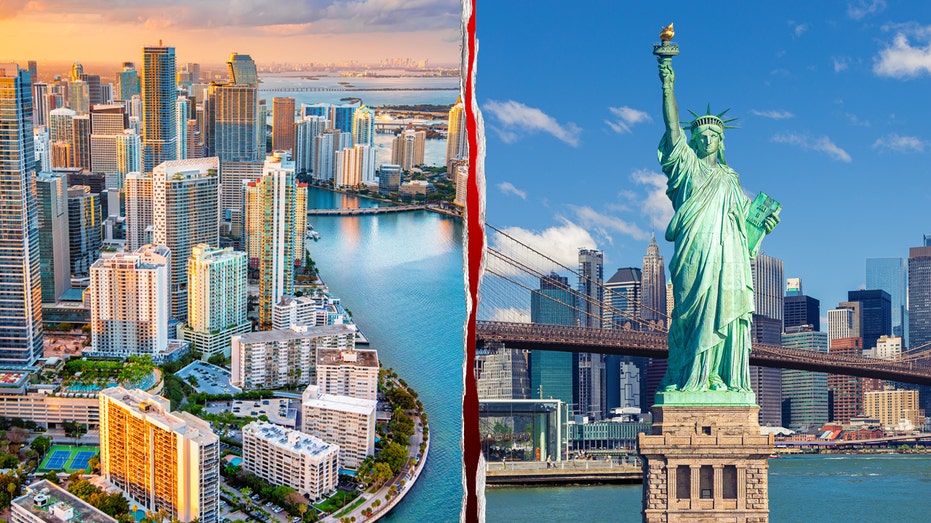
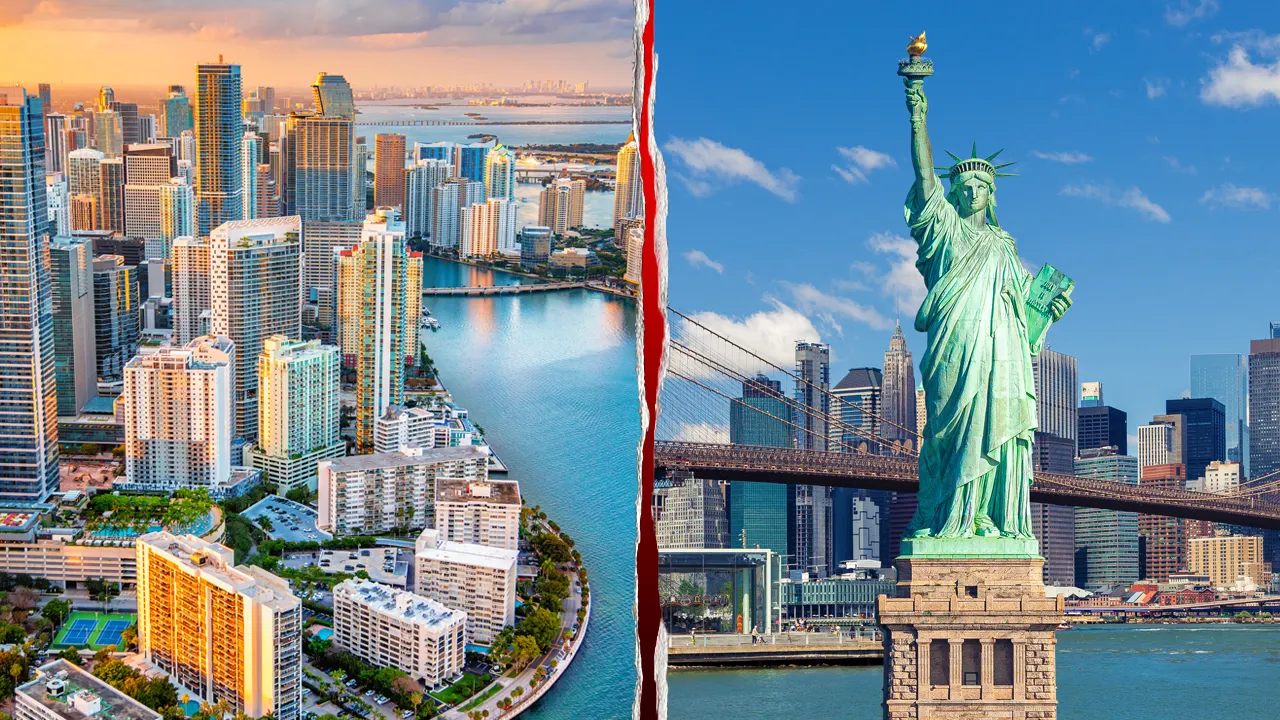
Miami’s metro area has surpassed New York for the largest number of million-dollar home listings. (Getty Images)
Miami’s luxury buyers are increasingly comprised of cash buyers, international purchasers, retirees, and second-home buyers. This demographic is less sensitive to mortgage rates, school calendars, and seasonal norms, which helps maintain higher inventory levels throughout the year.
Unlike New York, where luxury listings follow a traditional cycle with a spring surge and winter drop-off, Miami enjoys a more stable inventory. This allows developers to rebuild supply more quickly, maintaining a higher baseline.
“Miami surpassing New York in million-dollar listings is more reflective of Miami’s expansion, versus New York’s weakness,” Herman stated.
OutKick’s Tomi Lahren joins ‘Varney & Co.’ to break down why Americans are fleeing blue states, warn newcomers not to change red-state values and weigh in on the National Education Association’s push for neo pronouns in schools.
Over the past decade, Miami has redefined luxury living. The market now offers waterfront properties, newer constructions, resort-level amenities, and a lifestyle component that is integral to the product. In contrast, New York’s luxury market is limited by land, zoning, and supply constraints.
While New York’s market isn’t collapsing, it is losing ground in a mature environment. The Big Apple has seen its housing market contract post-pandemic, driven by fewer new high-end listings and owners holding onto properties longer.
“Florida’s lack of a state income tax versus New York’s combined state and city tax burden represents a meaningful financial difference for high earners,” Herman explained. “For many buyers, those savings translate directly into enhanced purchasing power or long-term capital preservation.”
Douglas Elliman Real Estate CEO Dottie Herman argues small businesses are finding good deals on NYC property.
Interestingly, 26.3% of Miami’s luxury demand originates from the New York metro area—more than the next eight source metros combined. “New Yorkers have played a critical role as market shapers,” Herman noted. “This is not a broad-based migration of the entire New York population. It’s a targeted relocation of high-earning professionals in finance, tech, and real estate who have the means and flexibility to choose their residence.”
On a national scale, luxury prices are stabilizing, with the top-tier threshold at $1.19 million, slightly down from the previous year. Luxury homes are taking longer to sell, with a median time of 88 days, reflecting cautious buyers and seasonal cooling.
GET FOX BUSINESS ON THE GO BY CLICKING HERE
Naftali Group Chairman and CEO Miki Naftali and Informa President of U.S. Boat Shows Andrew Doole speak to Fox News Digital about the pro-business direction of the Sunshine State.
Overall, the price gaps in luxury real estate are significant, with luxury homes ranging from two to five times the local median home price, depending on the specific market.
“The most accurate framing is this,” Herman concluded. “Miami is not replacing New York. It is joining New York as a co-capital of American luxury real estate. New York remains the cultural, financial, and institutional anchor—Miami has emerged as the lifestyle center, the flexibility market, and a global magnet for mobile wealth.”
Former Miami Mayor Francis Suarez discusses how New York’s high taxes and left-wing policies are driving wealthy residents to Florida and fueling record growth in Miami’s booming economy.
Miami has officially surpassed New York in the number of million-dollar listings, signaling a significant shift in the luxury housing market. As of December, Miami boasts 10,591 homes listed at $1 million or more, compared to New York’s 10,176 listings, according to Realtor.com’s luxury housing report.
This marks a notable change, as New York held the top position for nearly a decade. By late December, Miami has not only taken the lead but has also established itself as a long-term destination for wealth and housing demand.
“This is not a temporary surge; it’s an evolving market,” said Douglas Elliman Vice Chair Dottie Herman in an interview with Fox News Digital. “The drivers supporting Miami’s growth are long-term: demographic trends favoring the Sun Belt, increasing international capital flows, and a deepening presence of finance, technology, and global business infrastructure.”
FLORIDA WINS AGAIN: QUANTUM COMPUTING COMPANY JOINS EXODUS FROM HIGH-TAX CALIFORNIA
However, Herman cautioned that growth is not limitless. “Insurance costs, climate considerations, and the risk of overdevelopment in certain submarkets will require disciplined planning and thoughtful execution,” she noted.
Miami’s metro area has surpassed New York for the largest number of million-dollar home listings. (Getty Images)
Miami’s luxury buyers are increasingly comprised of cash buyers, international purchasers, retirees, and second-home buyers. This demographic is less sensitive to mortgage rates, school calendars, and seasonal norms, which helps maintain higher inventory levels throughout the year.
Unlike New York, where luxury listings follow a traditional cycle with a spring surge and winter drop-off, Miami enjoys a more stable inventory. This allows developers to rebuild supply more quickly, maintaining a higher baseline.
“Miami surpassing New York in million-dollar listings is more reflective of Miami’s expansion, versus New York’s weakness,” Herman stated.
OutKick’s Tomi Lahren joins ‘Varney & Co.’ to break down why Americans are fleeing blue states, warn newcomers not to change red-state values and weigh in on the National Education Association’s push for neo pronouns in schools.
Over the past decade, Miami has redefined luxury living. The market now offers waterfront properties, newer constructions, resort-level amenities, and a lifestyle component that is integral to the product. In contrast, New York’s luxury market is limited by land, zoning, and supply constraints.
While New York’s market isn’t collapsing, it is losing ground in a mature environment. The Big Apple has seen its housing market contract post-pandemic, driven by fewer new high-end listings and owners holding onto properties longer.
“Florida’s lack of a state income tax versus New York’s combined state and city tax burden represents a meaningful financial difference for high earners,” Herman explained. “For many buyers, those savings translate directly into enhanced purchasing power or long-term capital preservation.”
Douglas Elliman Real Estate CEO Dottie Herman argues small businesses are finding good deals on NYC property.
Interestingly, 26.3% of Miami’s luxury demand originates from the New York metro area—more than the next eight source metros combined. “New Yorkers have played a critical role as market shapers,” Herman noted. “This is not a broad-based migration of the entire New York population. It’s a targeted relocation of high-earning professionals in finance, tech, and real estate who have the means and flexibility to choose their residence.”
On a national scale, luxury prices are stabilizing, with the top-tier threshold at $1.19 million, slightly down from the previous year. Luxury homes are taking longer to sell, with a median time of 88 days, reflecting cautious buyers and seasonal cooling.
GET FOX BUSINESS ON THE GO BY CLICKING HERE
Naftali Group Chairman and CEO Miki Naftali and Informa President of U.S. Boat Shows Andrew Doole speak to Fox News Digital about the pro-business direction of the Sunshine State.
Overall, the price gaps in luxury real estate are significant, with luxury homes ranging from two to five times the local median home price, depending on the specific market.
“The most accurate framing is this,” Herman concluded. “Miami is not replacing New York. It is joining New York as a co-capital of American luxury real estate. New York remains the cultural, financial, and institutional anchor—Miami has emerged as the lifestyle center, the flexibility market, and a global magnet for mobile wealth.”