New Stanford Study Reveals AI Boosting Average Wages by 21 Percent

FOX Business’ Geri Willis and ‘The Big Money Show’ panel discuss the application of artificial intelligence in the medical field and people flocking to the technology for health information.
Artificial intelligence is making waves in the workforce, with a new working paper co-authored by a Stanford University assistant professor revealing that it “substantially reduces wage inequality while raising average wages by 21 percent.” This insightful paper, titled “Task-Specific Technical Change and Comparative Advantage”, was written by Lukas Althoff and Hugo Reichardt from the Barcelona School of Economics.
The authors emphasize that “Artificial intelligence is changing which tasks workers do and how they do them.” They argue that understanding AI’s impact on the labor market requires a nuanced look at how technical changes affect productivity, occupational shifts, and wage adjustments. Their dynamic task-based model illustrates how workers accumulate diverse skills that shape their comparative advantage and influence their career choices.
HOW ARTIFICIAL INTELLIGENCE IS TRANSFORMING HEALTHCARE

A silhouette of an engineer and worker team on a building site and an artificial intelligence logo. A new working paper declared that AI “substantially reduces wage inequality while raising average wages by 21 percent.” (iStock / iStock)
The researchers highlight that their model examines generative AI’s impact through three lenses: augmentation, automation, and a novel channel—simplification. This simplification alters the skills required for various tasks, leading to significant findings. They assert that AI’s equalizing effect is primarily driven by simplification, allowing workers of varying skill levels to compete for the same positions. Their predictions align with recent labor market data.
David Sacks, the White House AI and cryptocurrency czar, remarked on X that these findings represent a “narrative violation.”
ADS COMING TO CHATGPT FOR SOME US USERS AS OPENAI SEEKS TO GENERATE NEW REVENUE
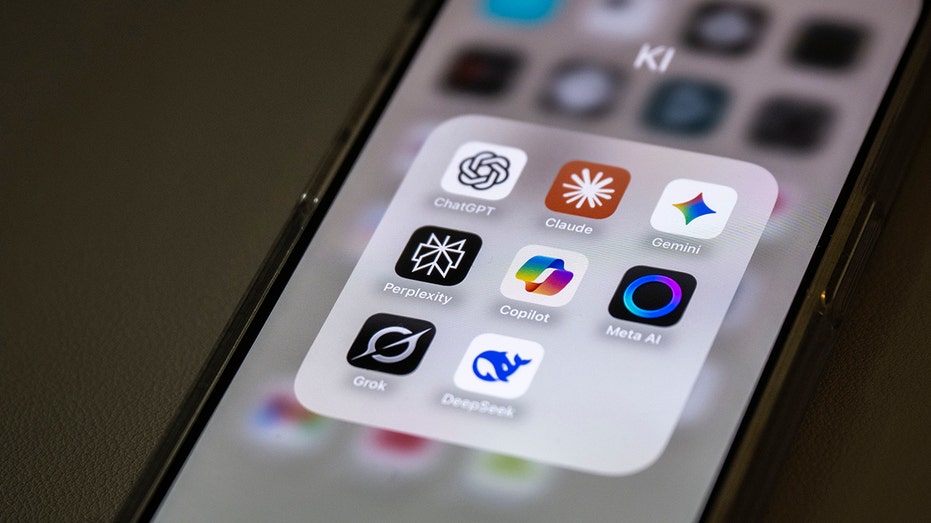
Several AI applications can be seen on a smartphone screen, including ChatGPT, Claude, Gemini, Perplexity, Microsoft Copilot, Meta AI, Grok and DeepSeek. (Philip Dulian/dpa/Getty Images / Getty Images)
The researchers further explain that simplification through AI enhances the productivity of lower-skill workers in tasks traditionally dominated by higher-skilled individuals. This reduction in skill-based barriers is a crucial factor in diminishing wage inequality.
Moreover, they estimate that AI generates significant welfare gains for nearly all workers entering the labor market, equating to permanent wage increases of 26–34% for most individuals.
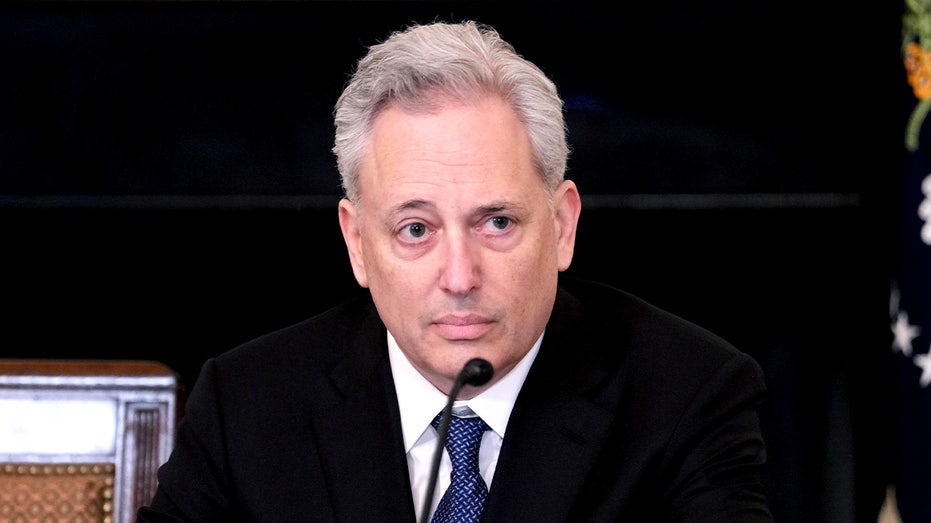
David Sacks, the White House Artificial Intelligence (AI) and Crypto czar, during The White House Digital Assets Summit in the State Dining Room of the White House in Washington, D.C., on March 7, 2025. (Chris Kleponis/CNP/Bloomberg via Getty Images / Getty Images)
CLICK HERE TO READ MORE ON FOX BUSINESS
The researchers conclude that AI’s influence, coupled with workers’ adaptations, significantly reshapes the occupational landscape. They note a substantial reallocation of employment across various fields. For instance, administrative roles, such as financial clerks, are witnessing a decline, while science-related positions, like life scientists, are on the rise. Although average wages are increasing, certain professions—architects, engineers, and executives—are experiencing absolute wage declines. Interestingly, the occupations with the most significant employment growth often see the largest relative wage decreases.
FOX Business’ Geri Willis and ‘The Big Money Show’ panel discuss the application of artificial intelligence in the medical field and people flocking to the technology for health information.
Artificial intelligence is making waves in the workforce, with a new working paper co-authored by a Stanford University assistant professor revealing that it “substantially reduces wage inequality while raising average wages by 21 percent.” This insightful paper, titled “Task-Specific Technical Change and Comparative Advantage”, was written by Lukas Althoff and Hugo Reichardt from the Barcelona School of Economics.
The authors emphasize that “Artificial intelligence is changing which tasks workers do and how they do them.” They argue that understanding AI’s impact on the labor market requires a nuanced look at how technical changes affect productivity, occupational shifts, and wage adjustments. Their dynamic task-based model illustrates how workers accumulate diverse skills that shape their comparative advantage and influence their career choices.
HOW ARTIFICIAL INTELLIGENCE IS TRANSFORMING HEALTHCARE
A silhouette of an engineer and worker team on a building site and an artificial intelligence logo. A new working paper declared that AI “substantially reduces wage inequality while raising average wages by 21 percent.” (iStock / iStock)
The researchers highlight that their model examines generative AI’s impact through three lenses: augmentation, automation, and a novel channel—simplification. This simplification alters the skills required for various tasks, leading to significant findings. They assert that AI’s equalizing effect is primarily driven by simplification, allowing workers of varying skill levels to compete for the same positions. Their predictions align with recent labor market data.
David Sacks, the White House AI and cryptocurrency czar, remarked on X that these findings represent a “narrative violation.”
ADS COMING TO CHATGPT FOR SOME US USERS AS OPENAI SEEKS TO GENERATE NEW REVENUE
Several AI applications can be seen on a smartphone screen, including ChatGPT, Claude, Gemini, Perplexity, Microsoft Copilot, Meta AI, Grok and DeepSeek. (Philip Dulian/dpa/Getty Images / Getty Images)
The researchers further explain that simplification through AI enhances the productivity of lower-skill workers in tasks traditionally dominated by higher-skilled individuals. This reduction in skill-based barriers is a crucial factor in diminishing wage inequality.
Moreover, they estimate that AI generates significant welfare gains for nearly all workers entering the labor market, equating to permanent wage increases of 26–34% for most individuals.
David Sacks, the White House Artificial Intelligence (AI) and Crypto czar, during The White House Digital Assets Summit in the State Dining Room of the White House in Washington, D.C., on March 7, 2025. (Chris Kleponis/CNP/Bloomberg via Getty Images / Getty Images)
CLICK HERE TO READ MORE ON FOX BUSINESS
The researchers conclude that AI’s influence, coupled with workers’ adaptations, significantly reshapes the occupational landscape. They note a substantial reallocation of employment across various fields. For instance, administrative roles, such as financial clerks, are witnessing a decline, while science-related positions, like life scientists, are on the rise. Although average wages are increasing, certain professions—architects, engineers, and executives—are experiencing absolute wage declines. Interestingly, the occupations with the most significant employment growth often see the largest relative wage decreases.