New US Automotive Safety Bill Aims at Tesla Door Design Regulations
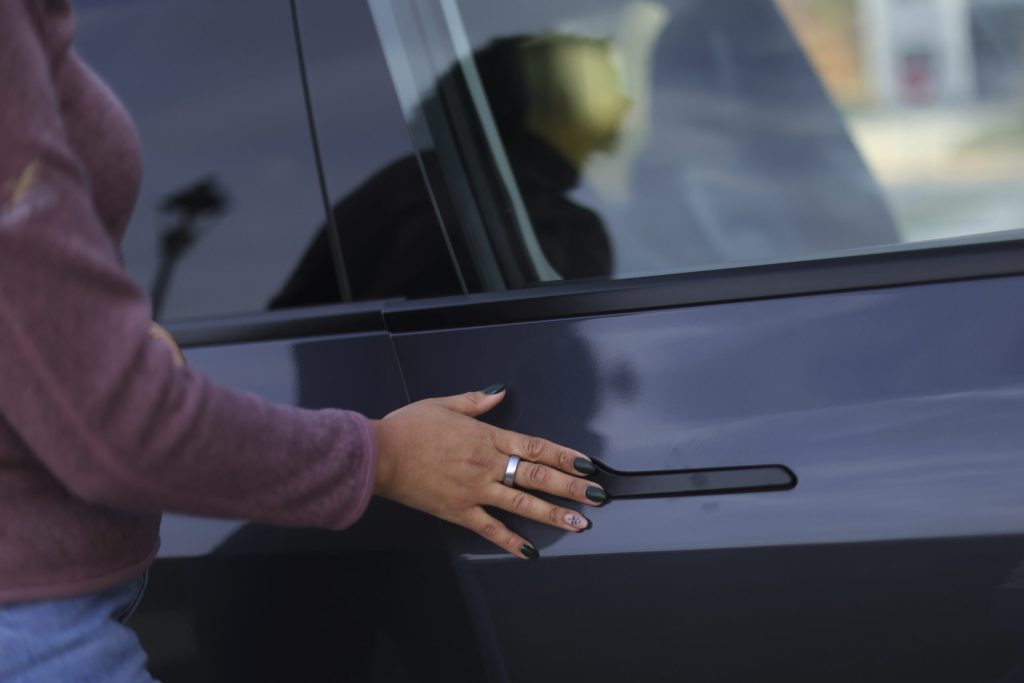
A US lawmaker is proposing legislation that would require manual door releases in new cars, aiming to address growing safety concerns associated with electrically powered handles popularized by Tesla Inc.
The measure, introduced by Representative Robin Kelly, an Illinois Democrat, mandates that automobiles equipped with electric door systems include a clearly labeled mechanical latch that is “intuitive to use and readily accessible for the occupant.” Additionally, it would require mechanisms for first responders to access vehicles in the event of power loss.
This bill, introduced late Tuesday, marks the first indication that safety risks posed by electrically powered vehicle doors have caught the attention of lawmakers on Capitol Hill. The scrutiny surrounding electric vehicle doors has intensified following a series of incidents where individuals were severely injured or lost their lives because they could not escape their vehicles.
Bloomberg News has extensively reported on modern door systems unexpectedly losing power, including after crashes. Their investigation revealed at least 15 fatalities across a dozen incidents where occupants or rescuers were unable to open the doors of a Tesla that had crashed and caught fire. Notably, CEO Elon Musk insisted on the use of electric doors despite internal safety concerns being raised.
Related: Tesla Door Safety Issues Have Owners Buying Car Escape Tools
“Elon Musk and his Tesla designs are not safe, nor efficient, and it has cost people their lives,” Kelly stated in a press release referencing Bloomberg’s findings. “When crashes or power loss leave drivers and passengers trapped inside their own cars, that is not innovation — it’s a safety failure.”
Tesla representatives did not respond to requests for comment. However, a top executive mentioned in September that the company is working on redesigning its door handles.
The proposed legislation, known as the Securing Accessible Functional Emergency Exit Act — or SAFE Exit Act — is scheduled for discussion during a legislative hearing on January 13 before a House Energy & Commerce committee panel overseeing auto industry issues. It remains uncertain how much support the bill will garner from other lawmakers, and it may not ultimately be signed into law.
If passed, the legislation would necessitate rule changes within two years.
Regulatory Probes
Following Bloomberg’s initial report in September, the National Highway Traffic Safety Administration (NHTSA) launched an investigation into potential defects in the doors of certain Tesla Model Y SUVs. Additionally, the NHTSA opened a probe into the emergency releases in specific Model 3 vehicles after a Tesla owner claimed they were “hidden, unlabeled, and not intuitive to locate during an emergency.”
In China, transport authorities have proposed new safety standards to mitigate risks associated with electrically powered door handles that sit flush against a vehicle’s body. While these designs were pioneered by Tesla, they have become standard in modern cars and have raised concerns following high-profile fatal crashes involving EVs from Xiaomi Corp.
Recently, Tesla updated its website to state that after detecting a serious collision, hazard lights will activate to enhance visibility, and “doors will automatically unlock for emergency access.”
Photo: Photographer: Travis Dove/Bloomberg
Copyright 2026 Bloomberg.
The most important insurance news, in your inbox every business day.
Get the insurance industry’s trusted newsletter
A US lawmaker is proposing legislation that would require manual door releases in new cars, aiming to address growing safety concerns associated with electrically powered handles popularized by Tesla Inc.
The measure, introduced by Representative Robin Kelly, an Illinois Democrat, mandates that automobiles equipped with electric door systems include a clearly labeled mechanical latch that is “intuitive to use and readily accessible for the occupant.” Additionally, it would require mechanisms for first responders to access vehicles in the event of power loss.
This bill, introduced late Tuesday, marks the first indication that safety risks posed by electrically powered vehicle doors have caught the attention of lawmakers on Capitol Hill. The scrutiny surrounding electric vehicle doors has intensified following a series of incidents where individuals were severely injured or lost their lives because they could not escape their vehicles.
Bloomberg News has extensively reported on modern door systems unexpectedly losing power, including after crashes. Their investigation revealed at least 15 fatalities across a dozen incidents where occupants or rescuers were unable to open the doors of a Tesla that had crashed and caught fire. Notably, CEO Elon Musk insisted on the use of electric doors despite internal safety concerns being raised.
Related: Tesla Door Safety Issues Have Owners Buying Car Escape Tools
“Elon Musk and his Tesla designs are not safe, nor efficient, and it has cost people their lives,” Kelly stated in a press release referencing Bloomberg’s findings. “When crashes or power loss leave drivers and passengers trapped inside their own cars, that is not innovation — it’s a safety failure.”
Tesla representatives did not respond to requests for comment. However, a top executive mentioned in September that the company is working on redesigning its door handles.
The proposed legislation, known as the Securing Accessible Functional Emergency Exit Act — or SAFE Exit Act — is scheduled for discussion during a legislative hearing on January 13 before a House Energy & Commerce committee panel overseeing auto industry issues. It remains uncertain how much support the bill will garner from other lawmakers, and it may not ultimately be signed into law.
If passed, the legislation would necessitate rule changes within two years.
Regulatory Probes
Following Bloomberg’s initial report in September, the National Highway Traffic Safety Administration (NHTSA) launched an investigation into potential defects in the doors of certain Tesla Model Y SUVs. Additionally, the NHTSA opened a probe into the emergency releases in specific Model 3 vehicles after a Tesla owner claimed they were “hidden, unlabeled, and not intuitive to locate during an emergency.”
In China, transport authorities have proposed new safety standards to mitigate risks associated with electrically powered door handles that sit flush against a vehicle’s body. While these designs were pioneered by Tesla, they have become standard in modern cars and have raised concerns following high-profile fatal crashes involving EVs from Xiaomi Corp.
Recently, Tesla updated its website to state that after detecting a serious collision, hazard lights will activate to enhance visibility, and “doors will automatically unlock for emergency access.”
Photo: Photographer: Travis Dove/Bloomberg
Copyright 2026 Bloomberg.
The most important insurance news, in your inbox every business day.
Get the insurance industry’s trusted newsletter