New York Announces 25% Increase in Cab and Rideshare Insurance Rates
New York officials have informed rideshare companies, driver representatives, and stakeholders in the for-hire vehicle industry that insurance policy rates are set to increase by an average of 25% over the next three years. This change is expected to lead to higher passenger fares.
The state has urged insurance carriers to adjust their fees to actuarially justified levels as part of efforts to stabilize an industry that has been struggling following the insolvency of its largest provider, American Transit Insurance Co.
American Transit had captured nearly 60% of the market by offering low policy rates, which ultimately contributed to its financial troubles. The company lacked sufficient funds to cover the losses it insured, as reported by Bloomberg News last year.
As part of remedial measures implemented earlier this year, policy rates are projected to increase by approximately 25% on a weighted average over the next three years, according to sources who requested anonymity due to the sensitive nature of the information.
City’s Biggest Taxi Insurer Is Insolvent, Risking Transit Meltdown
This increase could mean an additional $1,500 per year for drivers, as noted by Bhairavi Desai, executive director of the New York Taxi Workers Alliance, which represents over 28,000 drivers.
The phased approach “allows policymakers and the industry an opportunity to collaborate on ways to manage these costs over time, including potential adjustments to passenger fares,” stated the Department of Financial Services, New York’s insurance regulator, in a memo to industry members last week. Both Desai and Uber Technologies Inc. confirmed receipt of this document.
NYC Mayor Adams Signs Bill Lowering For-Hire Vehicles’ Insurance Mandate
Bill Aims to Drive Down New York City Taxi Drivers’ Insurance Costs. But Will It?
In an email to Bloomberg, the department indicated that it is collaborating with carriers to finalize the rate adjustments, which will roll out starting March 1, based on individual drivers’ policy renewal dates. Policyholders may experience varying increases, as the department has only approved average rate changes for each carrier.
While the state cannot mandate fare increases—responsibility for fare rules lies with the city’s Taxi and Limousine Commission—the latest notice highlights concerns raised by driver groups and rideshare companies amid rising inflation in an already expensive city like New York.
The department assured that drivers will receive notifications of any rate changes at least 60 days prior to their policy renewal date.
“Drivers are being asked to bail out ATIC through this steep increase because the state has failed in facilitating alternative carriers,” Desai remarked. Her group has also suggested that the state consider funding a driver-owned mutual insurance company.
Uber Spends Six Figures on Ads in Latest NY Insurance Reform Push
The state’s memo revealed that just five insurance companies control over 95% of the market.
Uber has cautioned that rising costs for drivers could lead to more expensive rides for consumers. The company criticized the state’s measures as insufficient in addressing the underlying issues in the legal system that contribute to fraudulent practices and inflated insurance premiums.
Instead of perpetually raising rates, the government should investigate the reasons behind the escalating costs, stated Uber spokesperson Josh Gold. The company has undertaken a multimillion-dollar lobbying effort for insurance reforms over the past year and has filed racketeering lawsuits nationwide against law firms and clinics exploiting insurance policies for high payouts.
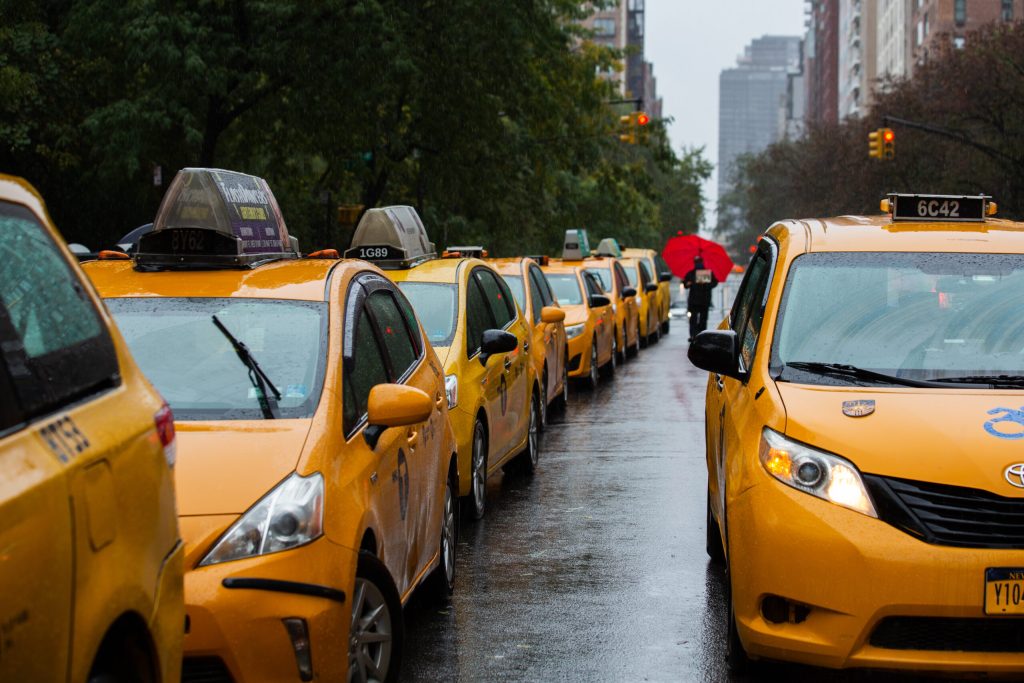
Photo: Drivers park their taxis outside Gracie Mansion in New York. Bloomberg photo.
Interested in Pricing Trends?
Get automatic alerts for this topic.
New York officials have informed rideshare companies, driver representatives, and stakeholders in the for-hire vehicle industry that insurance policy rates are set to increase by an average of 25% over the next three years. This change is expected to lead to higher passenger fares.
The state has urged insurance carriers to adjust their fees to actuarially justified levels as part of efforts to stabilize an industry that has been struggling following the insolvency of its largest provider, American Transit Insurance Co.
American Transit had captured nearly 60% of the market by offering low policy rates, which ultimately contributed to its financial troubles. The company lacked sufficient funds to cover the losses it insured, as reported by Bloomberg News last year.
As part of remedial measures implemented earlier this year, policy rates are projected to increase by approximately 25% on a weighted average over the next three years, according to sources who requested anonymity due to the sensitive nature of the information.
City’s Biggest Taxi Insurer Is Insolvent, Risking Transit Meltdown
This increase could mean an additional $1,500 per year for drivers, as noted by Bhairavi Desai, executive director of the New York Taxi Workers Alliance, which represents over 28,000 drivers.
The phased approach “allows policymakers and the industry an opportunity to collaborate on ways to manage these costs over time, including potential adjustments to passenger fares,” stated the Department of Financial Services, New York’s insurance regulator, in a memo to industry members last week. Both Desai and Uber Technologies Inc. confirmed receipt of this document.
NYC Mayor Adams Signs Bill Lowering For-Hire Vehicles’ Insurance Mandate
Bill Aims to Drive Down New York City Taxi Drivers’ Insurance Costs. But Will It?
In an email to Bloomberg, the department indicated that it is collaborating with carriers to finalize the rate adjustments, which will roll out starting March 1, based on individual drivers’ policy renewal dates. Policyholders may experience varying increases, as the department has only approved average rate changes for each carrier.
While the state cannot mandate fare increases—responsibility for fare rules lies with the city’s Taxi and Limousine Commission—the latest notice highlights concerns raised by driver groups and rideshare companies amid rising inflation in an already expensive city like New York.
The department assured that drivers will receive notifications of any rate changes at least 60 days prior to their policy renewal date.
“Drivers are being asked to bail out ATIC through this steep increase because the state has failed in facilitating alternative carriers,” Desai remarked. Her group has also suggested that the state consider funding a driver-owned mutual insurance company.
Uber Spends Six Figures on Ads in Latest NY Insurance Reform Push
The state’s memo revealed that just five insurance companies control over 95% of the market.
Uber has cautioned that rising costs for drivers could lead to more expensive rides for consumers. The company criticized the state’s measures as insufficient in addressing the underlying issues in the legal system that contribute to fraudulent practices and inflated insurance premiums.
Instead of perpetually raising rates, the government should investigate the reasons behind the escalating costs, stated Uber spokesperson Josh Gold. The company has undertaken a multimillion-dollar lobbying effort for insurance reforms over the past year and has filed racketeering lawsuits nationwide against law firms and clinics exploiting insurance policies for high payouts.
Photo: Drivers park their taxis outside Gracie Mansion in New York. Bloomberg photo.
Interested in Pricing Trends?
Get automatic alerts for this topic.