Older Enrollees and Patients Living in Red States Will Be Hurt Most If ACA Subsidies Lapse
October 09, 2025
Older Enrollees and Patients Living in Red States Will Be Hurt Most If ACA Subsidies Lapse
Americans between the ages of 50 and 64 and those residing in Republican congressional districts are poised to face the most significant challenges if Congress fails to renew the current Affordable Care Act (ACA) tax credits, as highlighted by recent analyses from KFF.
The expansion of tax credits has allowed more middle-income Americans to receive assistance with their health insurance premiums. Notably, 51% of these enrollees fall within the 50 to 64 age bracket. This demographic is particularly vulnerable, as they are not yet eligible for Medicare and often lack health insurance through their employers. With insurers permitted to charge older patients up to three times more for ACA plans, the expiration of subsidies would create a “double whammy.” This group would not only lose financial assistance for premiums but also face the steepest price hikes.
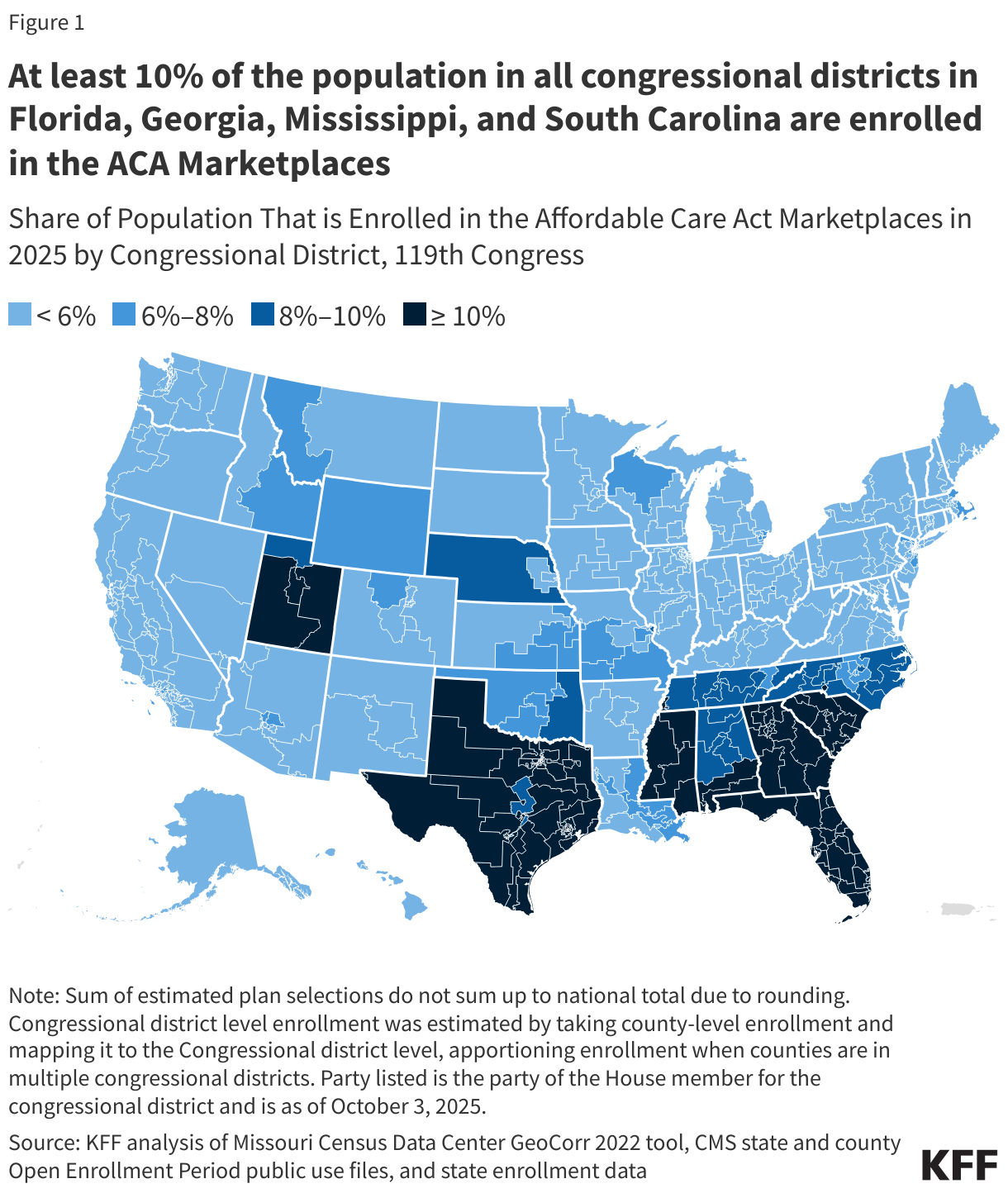 Residents in states that have not expanded Medicaid or that have high rates of uninsured and low-income populations are also more likely to be enrolled in ACA Marketplace plans, benefiting from subsidized coverage. Over half of ACA enrollees reside in Republican congressional districts, particularly in Southern states. In fact, at least 10% of residents in every congressional district in Florida, Georgia, Mississippi, and South Carolina are enrolled in a Marketplace plan.
The five congressional districts with the highest number of ACA enrollees are all located in Florida: FL-27, FL-24, FL-28, FL-09, and FL-26. In each of these districts, at least 30% of residents are enrolled in an ACA plan.
The ACA tax credits are set to expire on December 31, 2025. If Congress does not intervene, health insurance premiums are projected to skyrocket by as much as 114% for 22 million Americans who rely on ACA Marketplace plans. Recently, Democrats attempted to include an extension in a government funding bill, but Republicans favored a “clean” bill that would maintain spending at previous levels for an additional seven weeks.
October 09, 2025
Older Enrollees and Patients Living in Red States Will Be Hurt Most If ACA Subsidies Lapse
Americans between the ages of 50 and 64 and those residing in Republican congressional districts are poised to face the most significant challenges if Congress fails to renew the current Affordable Care Act (ACA) tax credits, as highlighted by recent analyses from KFF.
The expansion of tax credits has allowed more middle-income Americans to receive assistance with their health insurance premiums. Notably, 51% of these enrollees fall within the 50 to 64 age bracket. This demographic is particularly vulnerable, as they are not yet eligible for Medicare and often lack health insurance through their employers. With insurers permitted to charge older patients up to three times more for ACA plans, the expiration of subsidies would create a “double whammy.” This group would not only lose financial assistance for premiums but also face the steepest price hikes.
Residents in states that have not expanded Medicaid or that have high rates of uninsured and low-income populations are also more likely to be enrolled in ACA Marketplace plans, benefiting from subsidized coverage. Over half of ACA enrollees reside in Republican congressional districts, particularly in Southern states. In fact, at least 10% of residents in every congressional district in Florida, Georgia, Mississippi, and South Carolina are enrolled in a Marketplace plan.
The five congressional districts with the highest number of ACA enrollees are all located in Florida: FL-27, FL-24, FL-28, FL-09, and FL-26. In each of these districts, at least 30% of residents are enrolled in an ACA plan.
The ACA tax credits are set to expire on December 31, 2025. If Congress does not intervene, health insurance premiums are projected to skyrocket by as much as 114% for 22 million Americans who rely on ACA Marketplace plans. Recently, Democrats attempted to include an extension in a government funding bill, but Republicans favored a “clean” bill that would maintain spending at previous levels for an additional seven weeks.