Polish Premier Attributes Cyberattack on Energy Facilities to Russia
Poland has successfully defended itself against a series of cyber threats from Russia that targeted its energy infrastructure in December, according to Prime Minister Donald Tusk.
In the final days of the month, a wave of cyberattacks struck two power plants and several renewable energy facilities. Tusk informed reporters that while these attacks were not “massive” and would not have led to a total blackout, they had the potential to disrupt electricity for approximately 500,000 people.
Read more: Poland’s Tusk Says Act of Sabotage Behind Railway Explosion
Expressing his concerns, Tusk stated, “There are many indications that these attacks had been prepared by groups directly linked to the Russian special services.” He emphasized the challenges in pinpointing the exact perpetrators during a news conference held in Warsaw.
Poland’s apprehensions regarding hybrid threats from Moscow are particularly heightened, given its status as a frontline member of both the European Union and NATO. Sharing borders with Russia and its ally Belarus, Poland has emerged as a crucial supporter of Kyiv, serving as a vital conduit for military aid to Ukraine since the onset of Russia’s full-scale invasion in 2022.
In the wake of this conflict, Polish authorities have reported repeated cyberattacks on critical infrastructure, often attributed to hacker groups with ties to the Kremlin. These attacks have targeted essential services, including hospitals, water treatment facilities, and sewage systems.
The situation escalated last September when a swarm of Russian drones breached Polish airspace, raising alarms about Moscow’s willingness to test NATO’s resolve. In November, Warsaw accused Russia of orchestrating explosions along a key rail link to Ukraine, further intensifying tensions.
Currently, Poland ranks as one of the most vulnerable countries to cyberattacks. According to a report by cybersecurity firm Eset, it stands third globally for ransomware attacks and second for malicious email threats in the latter half of 2025.
Additionally, findings from Microsoft’s 2025 Digital Defense Report indicate that Poland is the third most-targeted country in Europe for politically motivated cyberattacks, trailing only Ukraine and the UK.
When queried about the impact of the December cyberattacks, Poland’s grid operator, PSE, informed Bloomberg News that no cybersecurity incidents had been observed that could significantly disrupt the energy supply across the nation.
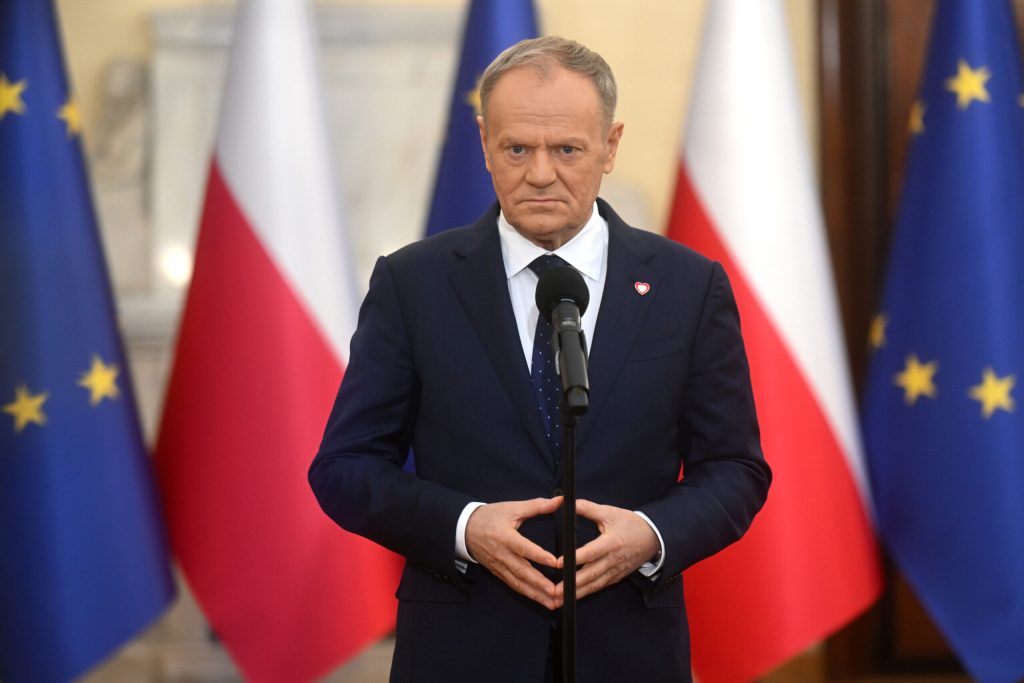
Photograph: Polish Prime Minister Donald Tusk; Photo credit: Omar Marques/Getty
Related:
Copyright 2026 Bloomberg.
Was this article valuable?
Here are more articles you may enjoy.
Interested in Cyber?
Get automatic alerts for this topic.
Poland has successfully defended itself against a series of cyber threats from Russia that targeted its energy infrastructure in December, according to Prime Minister Donald Tusk.
In the final days of the month, a wave of cyberattacks struck two power plants and several renewable energy facilities. Tusk informed reporters that while these attacks were not “massive” and would not have led to a total blackout, they had the potential to disrupt electricity for approximately 500,000 people.
Read more: Poland’s Tusk Says Act of Sabotage Behind Railway Explosion
Expressing his concerns, Tusk stated, “There are many indications that these attacks had been prepared by groups directly linked to the Russian special services.” He emphasized the challenges in pinpointing the exact perpetrators during a news conference held in Warsaw.
Poland’s apprehensions regarding hybrid threats from Moscow are particularly heightened, given its status as a frontline member of both the European Union and NATO. Sharing borders with Russia and its ally Belarus, Poland has emerged as a crucial supporter of Kyiv, serving as a vital conduit for military aid to Ukraine since the onset of Russia’s full-scale invasion in 2022.
In the wake of this conflict, Polish authorities have reported repeated cyberattacks on critical infrastructure, often attributed to hacker groups with ties to the Kremlin. These attacks have targeted essential services, including hospitals, water treatment facilities, and sewage systems.
The situation escalated last September when a swarm of Russian drones breached Polish airspace, raising alarms about Moscow’s willingness to test NATO’s resolve. In November, Warsaw accused Russia of orchestrating explosions along a key rail link to Ukraine, further intensifying tensions.
Currently, Poland ranks as one of the most vulnerable countries to cyberattacks. According to a report by cybersecurity firm Eset, it stands third globally for ransomware attacks and second for malicious email threats in the latter half of 2025.
Additionally, findings from Microsoft’s 2025 Digital Defense Report indicate that Poland is the third most-targeted country in Europe for politically motivated cyberattacks, trailing only Ukraine and the UK.
When queried about the impact of the December cyberattacks, Poland’s grid operator, PSE, informed Bloomberg News that no cybersecurity incidents had been observed that could significantly disrupt the energy supply across the nation.
Photograph: Polish Prime Minister Donald Tusk; Photo credit: Omar Marques/Getty
Related:
Copyright 2026 Bloomberg.
Was this article valuable?
Here are more articles you may enjoy.
Interested in Cyber?
Get automatic alerts for this topic.