States Claim Trump’s Efforts to Defund CFPB Are Undermining the Agency
The Trump administration is facing legal challenges as it attempts to undermine the Consumer Financial Protection Bureau (CFPB) by withholding essential funding from the Federal Reserve. This allegation comes from a coalition of mostly Democratic-led states, which have filed a federal lawsuit to address the issue.
According to the lawsuit, CFPB Acting Director Russell Vought’s actions could lead to the agency running out of funds by January. This would hinder its ability to fulfill critical responsibilities, including addressing thousands of customer complaints regarding financial institutions and their products. The suit, filed in Portland, Oregon, involves 21 states and the District of Columbia, highlighting the urgent need for the CFPB to maintain its operations.
Vought, who also serves as the director of the U.S. Office of Management and Budget, has reportedly concluded that the CFPB cannot request funding because the Treasury lacks profits to allocate. The states, led by New York Attorney General Letitia James, are seeking a court order to prevent the administration from completely defunding the CFPB.
“Vought has worked tirelessly to terminate the CFPB’s operations by any means necessary,” the states assert in their complaint. “The CFPB is the only federal agency authorized to supervise the nation’s largest banks for their compliance with consumer financial protection laws.”
James’ office noted that the CFPB collected over 208,000 complaints from New York consumers alone, resulting in companies returning approximately $8.5 million to state residents. This underscores the agency’s vital role in consumer protection.
Efforts to dismantle the CFPB have long been a priority for conservative factions, and Vought has been actively working to reduce the agency’s staff and funding. In October, he expressed hopes of shutting it down within a few months. Additionally, the CFPB informed a federal court in a separate case that the Justice Department had deemed the agency’s funding mechanism illegal.
This lawsuit represents yet another confrontation between the Trump administration and Democratic state attorneys general, who have consistently challenged the administration’s attempts to defund various departments and agencies. The states argue that the CFPB, established by Congress in the wake of the 2008 financial crisis, must retain funding to comply with U.S. law, which mandates that it provide states with consumer complaint data.
“Beyond its own consumer protection actions, CFPB is legally mandated to provide vital information to states to aid their own consumer protection efforts,” James stated. “States rely on consumer complaints from CFPB to investigate wrongdoing, secure refunds and restitution for consumers, and support their own litigation against financial institutions.”
Representatives from the CFPB and the Treasury Department did not respond immediately to requests for comments regarding the lawsuit.
The states argue that Vought’s determination to refrain from seeking funding from the Federal Reserve contradicts years of established precedent and violates the federal Administrative Procedure Act, which prohibits “arbitrary and capricious” agency actions. The complaint alleges that Vought’s actions are in violation of U.S. law and the Constitution.
“Defendants have changed their position on how and when the CFPB can request funds to operate without an adequate explanation for the change in position,” the states contend.
According to James, the CFPB has returned over $21 billion that was improperly taken from more than 205 million Americans during its 14-year history. Her office has raised concerns about the CFPB potentially abandoning investigations and lawsuits following Trump’s return to office.
The CFPB has indeed collected a significant number of complaints, with 208,305 from New York consumers alone, leading to $8.5 million in refunds. In May, New York filed a lawsuit against Capital One Financial Corp. for allegedly misleading customers about savings-account interest rates, echoing claims from a federal case that the CFPB had dropped.
The case is State of New York v. Vought, 25-cv-2384, US District Court, District of Oregon.
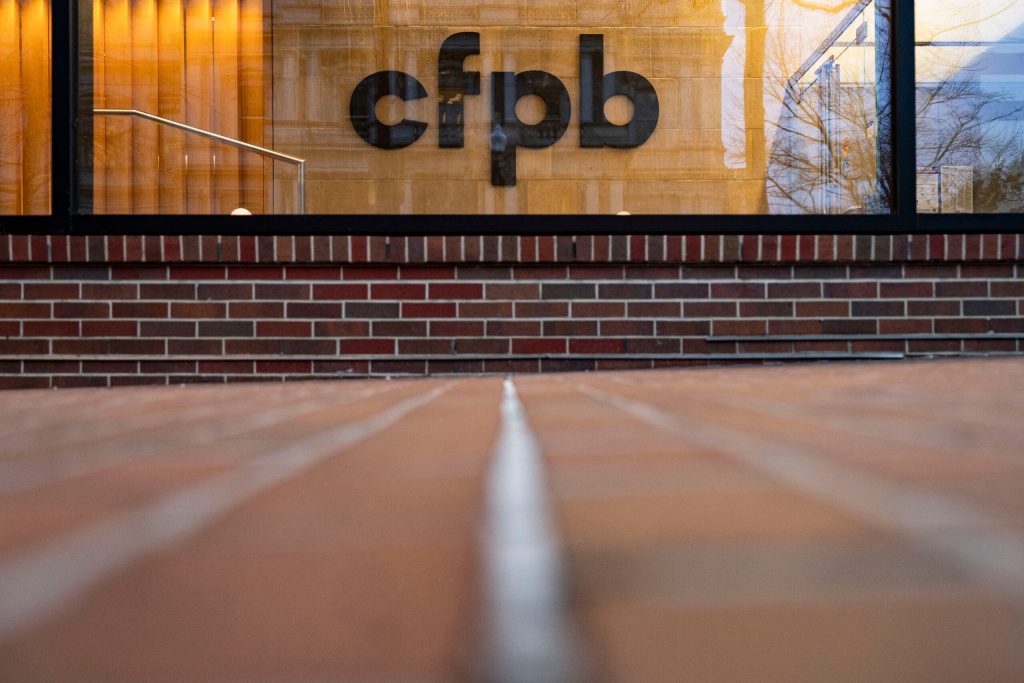
Photo: Photographer: Al Drago/Bloomberg
Copyright 2025 Bloomberg.
The most important insurance news, in your inbox every business day.
Get the insurance industry’s trusted newsletter
The Trump administration is facing legal challenges as it attempts to undermine the Consumer Financial Protection Bureau (CFPB) by withholding essential funding from the Federal Reserve. This allegation comes from a coalition of mostly Democratic-led states, which have filed a federal lawsuit to address the issue.
According to the lawsuit, CFPB Acting Director Russell Vought’s actions could lead to the agency running out of funds by January. This would hinder its ability to fulfill critical responsibilities, including addressing thousands of customer complaints regarding financial institutions and their products. The suit, filed in Portland, Oregon, involves 21 states and the District of Columbia, highlighting the urgent need for the CFPB to maintain its operations.
Vought, who also serves as the director of the U.S. Office of Management and Budget, has reportedly concluded that the CFPB cannot request funding because the Treasury lacks profits to allocate. The states, led by New York Attorney General Letitia James, are seeking a court order to prevent the administration from completely defunding the CFPB.
“Vought has worked tirelessly to terminate the CFPB’s operations by any means necessary,” the states assert in their complaint. “The CFPB is the only federal agency authorized to supervise the nation’s largest banks for their compliance with consumer financial protection laws.”
James’ office noted that the CFPB collected over 208,000 complaints from New York consumers alone, resulting in companies returning approximately $8.5 million to state residents. This underscores the agency’s vital role in consumer protection.
Efforts to dismantle the CFPB have long been a priority for conservative factions, and Vought has been actively working to reduce the agency’s staff and funding. In October, he expressed hopes of shutting it down within a few months. Additionally, the CFPB informed a federal court in a separate case that the Justice Department had deemed the agency’s funding mechanism illegal.
This lawsuit represents yet another confrontation between the Trump administration and Democratic state attorneys general, who have consistently challenged the administration’s attempts to defund various departments and agencies. The states argue that the CFPB, established by Congress in the wake of the 2008 financial crisis, must retain funding to comply with U.S. law, which mandates that it provide states with consumer complaint data.
“Beyond its own consumer protection actions, CFPB is legally mandated to provide vital information to states to aid their own consumer protection efforts,” James stated. “States rely on consumer complaints from CFPB to investigate wrongdoing, secure refunds and restitution for consumers, and support their own litigation against financial institutions.”
Representatives from the CFPB and the Treasury Department did not respond immediately to requests for comments regarding the lawsuit.
The states argue that Vought’s determination to refrain from seeking funding from the Federal Reserve contradicts years of established precedent and violates the federal Administrative Procedure Act, which prohibits “arbitrary and capricious” agency actions. The complaint alleges that Vought’s actions are in violation of U.S. law and the Constitution.
“Defendants have changed their position on how and when the CFPB can request funds to operate without an adequate explanation for the change in position,” the states contend.
According to James, the CFPB has returned over $21 billion that was improperly taken from more than 205 million Americans during its 14-year history. Her office has raised concerns about the CFPB potentially abandoning investigations and lawsuits following Trump’s return to office.
The CFPB has indeed collected a significant number of complaints, with 208,305 from New York consumers alone, leading to $8.5 million in refunds. In May, New York filed a lawsuit against Capital One Financial Corp. for allegedly misleading customers about savings-account interest rates, echoing claims from a federal case that the CFPB had dropped.
The case is State of New York v. Vought, 25-cv-2384, US District Court, District of Oregon.
Photo: Photographer: Al Drago/Bloomberg
Copyright 2025 Bloomberg.
The most important insurance news, in your inbox every business day.
Get the insurance industry’s trusted newsletter